|
Can Parents Be Good Teachers?
© Grace Chapman, 2004
Is it possible for parents to cater for their children's education from tot to teen? Yes! Australia wide, thousands of people are waking up to the possibility. Not only that, it has been proven many times over by families who have already done it (that is, produced well balanced, educated adults). Parents and children combined are certainly capable of educating themselves.
Consider the beginning of schools in Australia which were designed to control the children of the convicts, the lower classes. It was to "improve the morals of the lower orders and develop religious principles in the young" (Governor Macquarie) and make them "dutiful and obedient" and to "separate them as much as possible from the moral influence of their parents". For the Aboriginal people, it was "to transform them into labourers and semi skilled workers".
(* For an excellent account of the history of schooling in Australia, see Otherways , November issue 2003 "Australian Schooling: A History of Social Control" written by Susan Wight.)
Here we stand two hundred years later, knowing that we have choices, knowing that our society has outgrown the current school system and sensing that there is more than one way to get an education. With technology literally at our fingertips, we can access any information and communicate instantly with people around the world. Tens of thousands of parents across Australia are choosing to educate their own children in their own style-some with guidance from their state's education department and some without that guidance. This could be seen as threatening to governments that have ruled our children's upbringing for centuries. Can we be trusted to educate ourselves and maintain a high standard of living? The answer again is a resounding yes!
Parents who have chosen the role make excellent educators for their children. Some do it with confidence and competence. Others believe they can do it but seek guidance from others. Some want to break away from the mainstream altogether and some want to follow the state's guidelines but they want to do the teaching themselves, believing they can provide a better learning environment than a modern day school can.
How can you be your child's teacher if you're not trained or you left school at fifteen? How can you be at home with your children all day? How do you know what to do? What if your kids ask you a question you don't know the answer to? What about when they're teenagers? What about your career?
As soon as I became a parent, I became our child's first teacher - an instant career change! The fifteen years of being a home based learner and the eight years of communicating with home based learners across Australia through Stepping Stones for Home Educators have proven to me many times over that parents do not have to be certified teachers to be an excellent teacher for their children. I know from my own experience that certified teachers tend to set aside their classroom ways in order to be good teachers in their own home. Instead of being at the front of the pack, organising what and how they will learn, the parent/teacher becomes a true facilitator, bringing their full attention, all of their senses to their relationship with the child and making decisions based on their goals as well as the child's interests. The individualised learning program is developed to its fullest potential. The parent/teacher has the added advantage of inside information about the child and doesn't have to cater for the needs of 25 other children at the same time. This allows plenty of scope for a lifestyle that will develop the child emotionally, spiritually and mentally - a well balanced learning program that is not restricted to the confines of a classroom and schoolyard.
What do I see as some of the essential ingredients for being a good teacher at home?
First and foremost, that the parent chooses the position. If the primary caregiver is balanced, then so is the rest of the family. The children's attitudes and beliefs are shaped by our responses to different situations in everyday life. If we're centred then we are likely to handle any incident, conflict or challenge with ease and simplicity. Another reason why home based learning works best if it is chosen rather than forced upon the adult is because of what happens on another level - the adults take responsibility for their actions. The buck stops with you and when you know that, you behave differently.
When I chose home based learning for our family, I made a career choice. That choice was to be our family's primary teacher for as long as my services were required. The first thing I noticed when I made this decision was how differently I walked in our community. I can still recall the sensation. My eyes, although functional for thirty years, had been opened, so too had my ears and my social conscience. I was more aware of child friendly places, I noticed what people were saying about children and themselves and their community, I took note of their skills and talents. I was constantly assessing my community as a learning centre rather than just the place from which to gather food, socialise and be entertained.
Set lofty goals and feel the joy in being with your children; relate to them as worthy beings, not burdens.
Turning within myself, I considered what qualities I would like to see in our children, what I hope to see in them as adults. Basically, I want to see them joyous and appreciative of themselves and the world they live in. This means living consciously, honouring their true feelings and being centred in love. As parent and primary teacher, this means that in every conversation with the children, I share my wisdom about the ways of the world. It means truly being with them, talking about life, being involved with them as much as possible, walking with them, sharing in their discoveries; speaking intelligently about their observations and listening attentively to what they say.
It helps to start off with at least a vague idea of your goals. As you become accustomed to your role as parent/teacher, your goals become clearer and with every day that passes, the ways in which you can reach them become more apparent. Long term goals help keep one on the path in times of confusion and difficulty. You can't feel lost when you know your purpose.
Have faith in what you are doing
You've got to have faith in yourself. There are so many different ways to live on this planet. Be aware of your fears but don't let them undermine your faith. Comparing yourself to other families will undermine your faith in yourself. You can learn by observing other families but you don't have to be like them. Each family has its own personality.
Speak from your own experiences
In speaking with the children, whether they are five or fifteen, I don't have to know all of the facts beforehand. I don't presume to know all the answers. When they were younger it was easy to answer their questions because they were never seeking detailed responses. I only ever gave them as much information as they were asking for. As they've grown older, they are seeking more detailed responses than I can sometimes give. At those times, I stay within my own experiences, sharing what I know and then modelling how we could find out more information. In my role as facilitator, I am modelling how to use their world to get what they want or need. I don't judge myself as stupid or inadequate if I don't know the answers to their questions. I know a lot about some things and very little about other things but what I do know for certain is how to source information. With that particular attitude and skill, I can know anything.
Accept that you are the learner as well as the teacher
When you choose home based learning, it helps to accept that you are a learner as well as a teacher. The potential to learn so much about ourselves through consciously raising our children is enormous. You will also pick up interesting facts along the way. As adults, parents have the advantage of experience of the world but it doesn't necessarily mean that we understand our personal doubts, fears and insecurities. We don't always know what life's about so when we place ourselves in the position of primary teacher of our children, then we are opening ourselves to opportunities for self knowledge. Knowledge is power.
Focus on relationships, the learning of facts will follow
Up to this point it would seem that most of the learning focus and ingredients required are on a personal emotional level. That is correct and there is sound reason for this. Home based learning allows for the development of relationships. Conscious parenting/teaching requires a blend of the use of the head and the heart. When we are happy within ourselves, we can do anything and learning comes easily. As the children mature, the learning material moves from being natural and tangible to more abstract studies.
Observe and be flexible
It helps if the parent is flexible and willing to use their observations of their children to guide them in the best way to facilitate the learning. The observations come from spending time with our children and truly enjoying their company from an early age. The time spent will encourage open communication about what interests them. Listening to the children creates a feeling of value and self worth. They in turn become good listeners, mirroring the ways in which they have been treated. As they mature they will naturally take on more responsibility for planning their learning.
Allow space for yourself
Give your child and yourself the gift of time - to daydream, to plan, to acknowledge the many parts of yourself. You are more than just a parent/teacher. It is crucial to value and allow for those other parts of yourself to shine. Plan to have some time out regularly. It makes you feel fresh. The quickest way to burn-out or to be overwhelmed by your responsibilities is to be out of balance for too long. Your children need time alone to be able to daydream and so do you. Home based learning does allow for this because you really do have all the time you need to achieve your goals.
You can do it if that's what you choose to do. Get started with what you are familiar with and modify your program as you go. You and your family members will set the pace. Relax, have faith in yourself. It's a lifestyle choice.

Grace is a home educating mother of three in far north Queensland. Until recently, Grace was the editor and producer of Stepping Stones For Home Educators. Her articles have appeared in magazines such as Byronchild Magazine and Education Choices .

Was this article helpful? Was it worth $1.00 to you?
Your gift of $1 or more helps to keep this site operating
offering encouragement
and reassurance to families
wanting
better outcomes for their children.
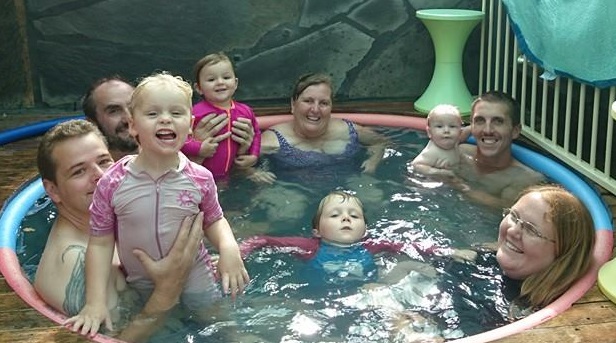
Beverley Paine with her children, and their home educated children, relaxing at home.
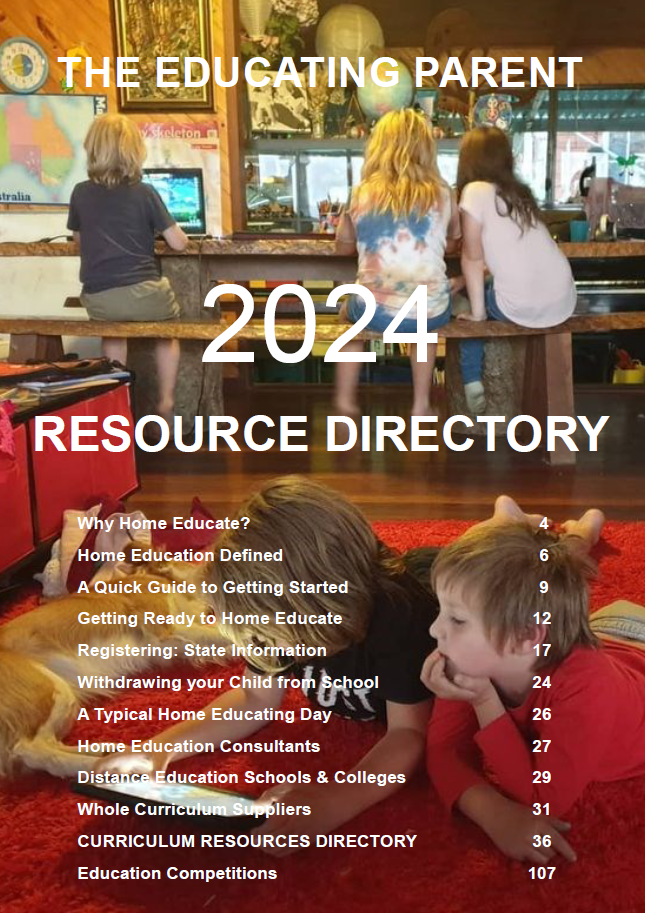
Together with the support of my family, my aim is to help parents educate their children in stress-free, nurturing environments. In addition to building and maintaing this website, I continue to create and manage local and national home educating networks, help to organise conferences and camps, as well as write for, edit and produce newsletters, resource directories and magazines. I am an active supporter of national, state, regional and local home education groups.
"You've been an inspiration to me, I love the way
you really listen to people." Vanessa
"Whenever I read your writing I always come away
with increased confidence in my ability to provide and
share a wonderful learning journey with my family!" Davina
"Your guidance, understanding, support and words of
wisdom changed our lives. We now offer support and
organise many homeschooling events for others." Lesley
"Thank you once again for your prompt and friendly service.
I am convinced that your books are going to add
quality and peace of mind to my journey of teaching my kids
at home! Just from studying your website, until almost
2am
in the morning, I 've been encouraged!" Louisa
"Thank you for all your many,many reassuring words
over many, many years. You probably don't know exactly how
valuable you are to the Australian Home Education community.
I've been reading your stuff for maybe 8 years or more now.
And I'm very grateful." Gythaa

CLICK HERE
if you want to learn
how to write your own education plans
to suit
your unique children's
individual learning needs?
Or you are looking for quality curriculum and teaching tips...
|
|
Welcome to the World of Home Education
and Learning without School!
We began educating our children in 1985, when our eldest was five. In truth, we had helped them learn what they need to learn since they were born. I am a passionate advocate of allowing children to learn unhindered by unnecessary stress and competition, meeting developmental needs in ways that suit their individual learning styles and preferences. Ours was a homeschooling, unschooling and natural learning family! There are hundreds of articles on this site to help you build confidence as a home educating family. We hope that your home educating adventure is as satisfying as ours was! Beverley Paine
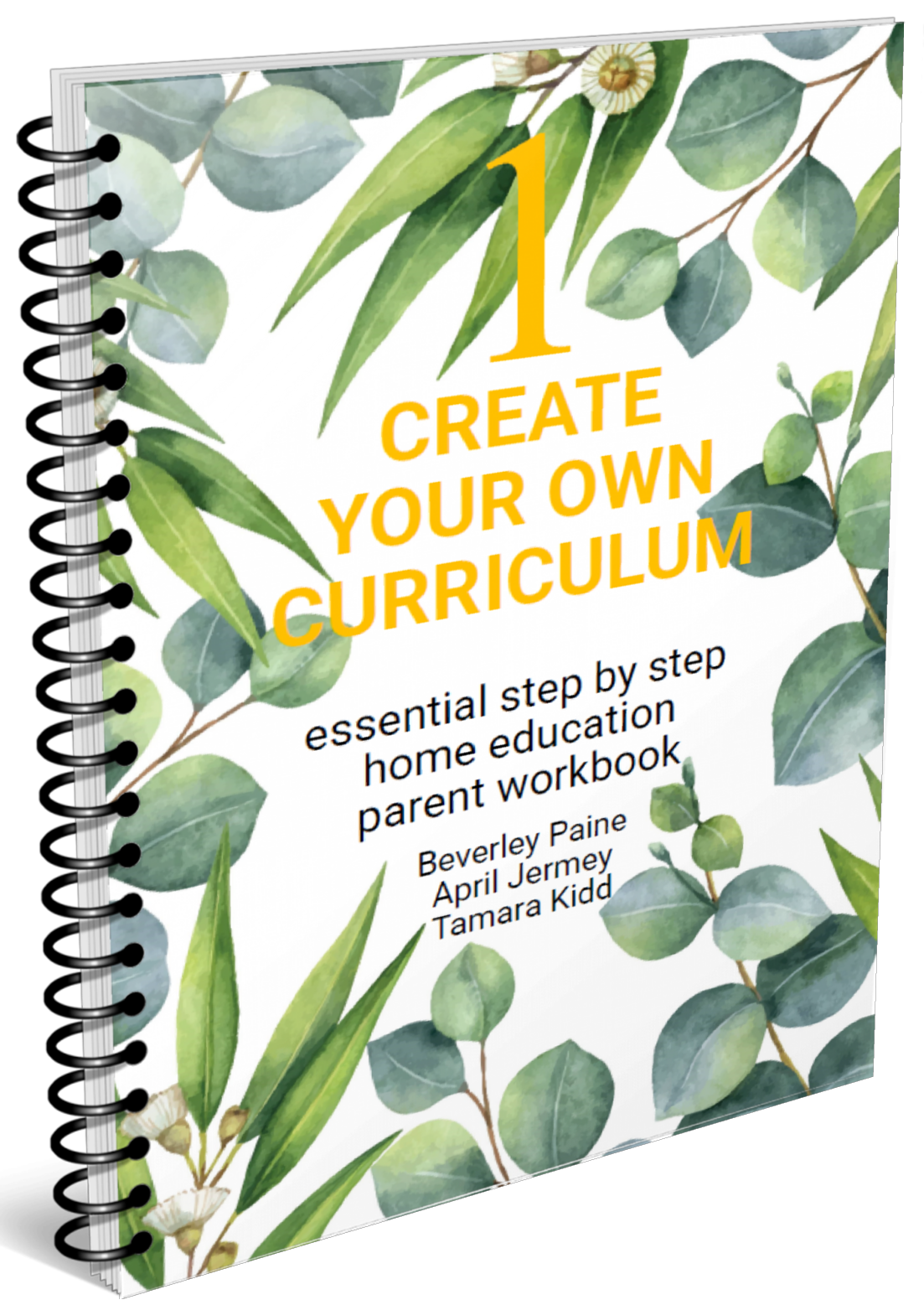
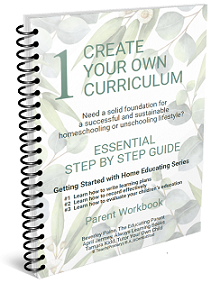
3 ESSENTIAL STEP BY STEP GUIDES
Let experienced home educators Beverley, Tamara and April walk you through HOW to create a learning plan that builds on solid foundations that works for YOUR family AND ticks all the boxes for home educaton registration!
|

Tap into Beverley's
experience
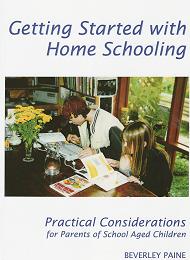
through her books
"Your books, your blogs helped me beyond words... they helped me to find comfort in knowing it is ok to choose exactly what is best for my family." Nisha
"Your books and information are mind blowing and already I am feeling good about this new experience." Diane
"Your guidance, understanding, support & words of wisdom changed our lives." Leslie
"I feel specially inspired by Beverley's words and, the more I read her comments, the more inspired I feel, since my need for support, respect for different parenting styles, and information are fully met." Marijo
|
 |
|

The information on this website is of a general nature only and is not intended as personal or professional advice. This site merges and incorporates 'Homeschool Australia' and 'Unschool Australia'.
The Educating Parent acknowledges the Traditional Aboriginal and Torres Strait Islander Owners, the Custodians of Australia, and pay our respects to Elders past and present and extend that respect to Aboriginal and Torres Strait Islander people viewing this website.
Advertise on this site.





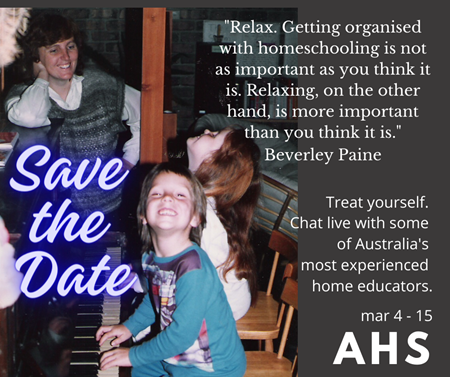
Australia's premier online annual conferences, lifetime access to video and audio recordings, freebies, notes and associated resource guides.
EVERY SUMMIT IS UNIQUE!
$29 each  2023 2023  2022 2021 2022 2021
$25 each 2020 2019 2017
"Biggest and best Aussie homeschool event of the year!"
Home education is a legal alternative
to school education in Australia.
State and Territory governments are responsible
for regulating home education and have different
requirements, however home educating families
are able to develop curriculum and learning programs
to suit the individual needs of their children.

Without revenue from advertising
by educational suppliers and Google Ads
we could not continue to provide information
to home educators. Please support us by letting
our advertisers know that you found them on
The Educating Parent. Thanks!
|
 About
About


 Thank you for visiting!