The Stages of Learning
Susan Priolo
First published on Kerugma, 27 Jan 2007
We don't use grade levels in our home. They are distracting and quite irrelevant. The labels of grade/year level can be of some use but I prefer to view things in stages of learning, rather than grades. Stages of learning is much more individual and personal, allowing for uniqueness to shine in the various subjects and topics of interest.
There are three definite seasons (or stages) in the learning process. They sometimes dovetail with each other and they do not follow a chronological timing. Once an awareness of these stages is understood then knowing how to move on with the learning process is made easier.
While there is a transition that occurs when a child enters from a 'Collecting Knowledge ' stage to the next stage, ' Understanding '. I actually believe that it is the next stage ( Wisdom ) that is very important and most enjoyable.and the one that we parents, need to recognise.
Collecting Knowledge
(Introduction to ideas)
In the Collecting Knowledge stage the child is young, curious and eager to learn as much about the world and the people around him as he can. He is taking it all in, observing as much as he can. This is like the first building blocks in his educational foundation. It is in this stage that memorization is important. The basics of English and Maths may often be learned by rote during this stage, but don't expect them to completely understand it - it is the 'collecting knowledge' stage, not the understanding stage, regardless of how it may look to a first- time parent. (In our home, we prefer to memorise beautiful literary forms like God's word, poetry and various worthy selections of literature, rather than dates, names and events that will one day perish.) This is a time, a season of preparation. The planting of many seeds that will one day bear fruit. Children need exposure to the best things in life via the modes of reading, hearing , seeing - experiencing with all the senses. This stage often is around the K-3 range, although all children are different and may accelerate at different rates.
Understanding Information and Ideas
(Digging Deeper, Examining and Elaborating)
The next stage can start to become apparent around grades 4/5 and developing to around grade 8. After the child has some basic information and rote knowledge in his mind, he is able to piece together those fragments, to make connections of his own.this is when he starts to understand that knowledge.to participate in that prior knowledge. As he matures, this processing of knowledge also starts to manifest itself in the form of discernment . The basic subjects are still studied but it is the student who will view them differently this time around. He will not only know the basic phonographs but will be able to discern when they apply and why. The same concept applies for Maths and History, Science, Geography, etc. The material need not be much different than the earlier years, which is why unit studies and literature based methods are wonderful for many large families, but the student is able to receive and process the information at a different level. Here is where you are watering the many seeds that were planted in the previous stage. This is where exercises or activities such as comparing/contrasting, discussion, debate can be helpful, within reason and under the authority of a parent. Time is also a big factor during this stage. Children need lots of time to think, to process information, to 'join the dots'. This stage or process can't be rushed. Knowledge and Understanding are starting to work parallel-toward the next stage.
Wisdom
(Application or sharing of information)
This next stage usually occurs from grade 9 onward through to grade 12, although individual children are all different. (Are you getting the idea that this is all a very individual approach?) It cannot come before knowledge or understanding as the two stages go together to form the ' Wisdom stage'. Building upon knowledge and understanding/discernment, the student is able to make choices, form opinions, express ideas and thoughts that are based on knowledge, understanding and wisdom. Of course, as Christians, we believe that true wisdom comes from God and so a relationship with God is important in this stage. The later years of this stage are where you begin to harvest the fruits.of course we continue to see this over the course of their lives. It is in this stage that we most desire to see some quality output of some type - creative output of some form, performing,, discussing, writing, etc. Here is where we apply all the information that we have collected , the relationships we have made, the ideas we have connected with, in a meaningful and helpful way.

Do you know someone who is knowledgable in a subject or an area? Do they parrot information or do they actually understand the topic? Are they able to apply their knowledge in a real way? Are they able to coherently share their knowledge in that area with others?
Many people have knowledge of the Bible yet know not God. Others may have knowledge of the Bible, may understand how the Church should operate, how to live a Christian life yet have not wisdom. Wisdom is what we desire most for our children to grow and develop into.
All children, youth and adults go through all these stages when trying to learn new material. These are seasons - there is a season for everything.
Seasons
Natural times of growth
Think back to when you were first considering learning at home. There may have been a seed planted in your mind or conscience. Then, through some discussion or reading those seeds were watered . For some, this process can take longer than others but that's fine- it's the way it should be. Then you start working through homeschooling, tweaking schedules, buying curriculum, trying every new idea that comes along before you come to the Wisdom level where you are more confident in your knowledge and are able to express your ideas, opinions and knowledge of homeschooling in a concise and clear manner. ( Harvest ) You know WHY you are doing WHAT you do. I have been on my own journey of education, through all of these processes or stages, over the last 10 years. There are some aspects of home education that I may finally be entering into the Wisdom stage and other aspects where I am still in the knowledge stage. It doesn't matter- I'm on a journey of self-education and it's fun! But, the point is, it is education .I have tailored my education to suit me, based upon the natural stages of development and learning . Oh, that we should do the same for our children.
Just as a child's knowledge level of one subject may be greater than another subject, so may his transition into the next stage - Understanding and then Wisdom. I believe that an Identity-Directed Approach accommodates and allows for this even more so than a structured, grade leveled approach . It is, I believe, important not to try and rush each stage lest you end up with prematurely grown plants whose root system in not deep or fully established.
There are particular methods for learning about a subject which fir perfectly with the stages of learning. It is called the 4 step learning process and is beneficial for all students, regardless of age or aptitude. If you follow this link , you'll see how it all ties in together.
Read more of Susan's writing on her blog, Kerugma, and also on AussieHomeschool
Was this article helpful? Was it worth $1.00 to you?
Your gift of $1 or more helps to keep this site operating
offering encouragement
and reassurance to families
wanting
better outcomes for their children.
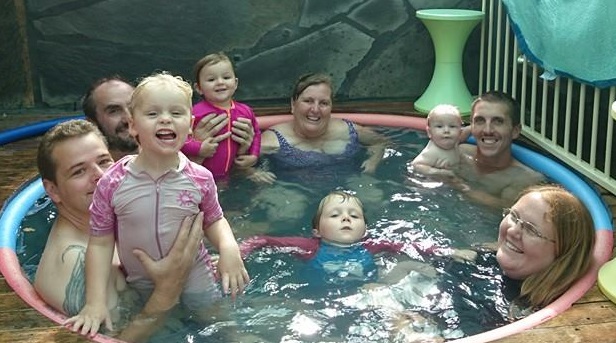
Beverley Paine with her children, and their home educated children, relaxing at home.
Together with the support of my family, my aim is to help parents educate their children in stress-free, nurturing environments. In addition to building and maintaing this website, I continue to create and manage local and national home educating networks, help to organise conferences and camps, as well as write for, edit and produce newsletters, resource directories and magazines. I am an active supporter of national, state, regional and local home education groups.
"You've been an inspiration to me, I love the way
you really listen to people." Vanessa
"Whenever I read your writing I always come away
with increased confidence in my ability to provide and
share a wonderful learning journey with my family!" Davina
"Your guidance, understanding, support and words of
wisdom changed our lives. We now offer support and
organise many homeschooling events for others." Lesley
"Thank you once again for your prompt and friendly service.
I am convinced that your books are going to add
quality and peace of mind to my journey of teaching my kids
at home! Just from studying your website, until almost
2am
in the morning, I 've been encouraged!" Louisa
"Thank you for all your many,many reassuring words
over many, many years. You probably don't know exactly how
valuable you are to the Australian Home Education community.
I've been reading your stuff for maybe 8 years or more now.
And I'm very grateful." Gythaa
 About
About














 Thank you for visiting!