|
Talking About Independent Learning
Heidi Priesnitz and Tracy Robinson were both in their early 20s when this article was written. Heidi is largely self-educated and the eldest daughter of Natural Life's publisher and editor. Tracy was entirely public schooled and was Natural Life's publishing assistant. They interviewed each other about the differences in their educational experiences.
Heidi : My experience with homeschooling was entirely unstructured. No kitchen table classroom. No parent as teacher. No curriculum. No grades. Nothing remotely school-like at all.
I grew up free of the structure of school, choosing my own paths of study, my own schedule, and my own instructors - if I chose any at all! Today, I am self-educated, self confident and happily (and successfully) self-employed partly, I think, because I didn't go to school and partly because I grew up in the family business.
Choice was a big factor in my unschooling experience. My parents helped to guide me through my learning, but ultimately left the choices (and the responsibilities that go with having choices) up to me. I was able to choose what I wanted to learn and when. For that reason learning happened naturally, when I became interested. At one point in my life I chose not to attend school, and at another point (when I was 13) I chose to attend school. I was happy with both realities - in different ways - because they were my choices. To some extent, the experiences complemented each other. And going to school certainly made me appreciate what a wonderful life I had before I went to school!
Tracy: When I was growing up, I was very interested in trying my best at school. The gauge of my efforts was my school chums and the mark a teacher gave me. Did you ever question if you were learning fundamentals well and did you ever seek comparison with other kids?
Heidi: I learned through living. Nothing can prepare you for life nearly as well as living it. My parents recognized that the best learning is learning-by-doing, and they facilitated a lot of interesting experiences for me, whether it was driving me across town, paying for courses and lessons, or just including me in their lives.
So I was never aware of what "fundamentals" were. I learned what was important to me: How to tie my own shoes, how to write love notes to my parents, how to add up how much money was left in my bank account, how to make lasagna and apple crisp, how to ride my bike without falling off. I was completely satisfied with my ability to do the tasks that interested me, or I worked hard at something until I was pleased with my own proficiency.
To say that I never compared myself to anybody else would be inaccurate, but real comparison wasn't something I learned until I went to school. Even then, I had trouble understanding it. Comparison is, to me, competition, and I don't believe in competition. Competition is something that runs rampant at school, and probably in many conventional workplaces. I have tried most of my life to avoid those types of places.
Tracy: I know what you mean about competition for grades, but interacting with a large group of people my own age was one of the joys I derived from school. Did you sometimes miss that?
Heidi: I interacted with many people on a regular basis, both individuals and large groups of people of all different ages. I think that socializing with a large group of people your own age is very unnatural. It was one of the things that really irritated me about high school. Actually, when I was in high school, my friends were rarely in the same grade, or they were teachers or support staff. I enjoy the company of people of all different ages.
Tracy : I, too, had some teachers that were incredible mentors. Other years, I had teachers I didn't like. What was it like having the same adults (your parents) monitor your progress over the years?
Heidi: My parents were two of my greatest mentors, but certainly not my only ones over the years. I was never consciously aware that my parents were monitoring my progress. There were never report cards. (Even at school, I disregarded my report cards. I think they're completely subjective and, actually, quite meaningless.)
My parents and I developed a good long-term relationship. If you have a teacher you don't like, you either switch classes to avoid the teacher or count down the days until the end of the year. But if you're not getting along with one of your parents or family members, you need to resolve the problems. Problem-solving is one of the most necessary skills of all.
Tracy: Once you went to school, were you ever perceived by other students as different?
Heidi : I don't think the other students ever perceived me any differently; it was the teachers who did. Although rumors about the strange girl who'd never gone to school before filled the staff room quickly, none of the teachers could figure out that it was me. They expected a mouse who didn't know how to interact with other students, and who didn't know how to behave herself!
It was later that they started to notice the real differences - the main one being that I was interested in what they had to say, and wanted to be in their classes. Another big difference was that I wanted to be at school, and I knew I could leave school when I no longer wanted to be there. Because of this, I excelled in school - I worked very hard to take advantage of what I perceived to be an interesting opportunity.
Near the end of my high school experience, I wrote: "Although at the beginning I was distressed because I thought my home education was getting in the way of my success at school, I soon learned that I actually had many advantages over my peers. Because I was used to a resource-based style of learning, research and independent thinking came far more easily to me than to others. Also my interest and motivation far exceeded that of my peers. It amazed me, and often frustrated me, that everyone else spent their time and energy trying to avoid things, when I was eagerly awaiting them."
Tracy: A friend of mine recently homeschooled her twins, aged 12, and the next year they were back at the same school. Before the year was out, one of the children had been expelled due to a disagreement with her teacher about methodology. Do you have any comment on this incident?
Heidi: I was a very free-spirited little girl. Although I understand that in many situations - such as school - children who are free-spirited are said to be problematic, disruptive, unruly and a whole host of other terrible things, I was encouraged by my family to do my own thing.
If you are a free-thinker or if you have opinions, school can be a very frustrating and detrimental place to be, because you're told that your opinions have no value and the teacher knows the right way. In order for schools to maintain order, there needs to be structure, and the needs and ideas of individuals must be suppressed, because a classroom full of individual methodologies would be chaotic. Of course, it's those individual methodologies that make the world the beautiful, creative place it is.
School is its own reality, one that is different from the rest of the world. A society filled with children who have learned the lesson that challenging authority is wrong and carries severe punishment is susceptible to the influences of powerful authority figures, whether they're dictators, pharmaceutical companies (ie. prescription drugs, bovine growth hormone), or teachers.
I don't advocate violent or destructive means of questioning authority, but sometimes you have to ask questions, and you have to present your own point of view, and challenge common beliefs. And that shouldn't be punishable.
Tracy: What about creativity? I remember writing a poem when I was a teenager about how school had made me forget how to scribble or draw. How did home-based learning affect your confidence level and creativity?
Heidi : I find it difficult to know what I would have been like had I gone to school all those years. I have been a confident, creative person all my life, and I believe that a lot of that is as a result of not going to school. I've always had the time, freedom and encouragement to explore my creativity.
Maybe self confidence is something that doesn't need to be built as much as it needs to be protected. My unschooling experience helped me to protect my self-confidence.
Tracy: What do you think was the greatest advantage of learning at home?
Heidi: When I was 14 and in grade 10, I wrote: "The place where I think that my education has really paid off is in my attitude and my outlook on life. I feel that because of unschooling, I have a lot more confidence in myself, and in others as well. I also feel that I have a better relationship with my family than I would have otherwise, just because I've been with them a lot more."
I remember as a kid, enjoying the slogan "kids are people too", and in my family we were. We were important - our ideas, our needs and our concerns were listened to and taken seriously. We were included in the very real decisions that families (usually adults) must make. We were treated like full-sized people, even though we were small.
This is one of a limited number of articles from Natural Life Magazine presented on this website for free. To read more, please subscribe.

Wendy Priesnitzis a book author, award winning journalist, editor, former broadcaster and mother of two adult daughters. Along with her husband Rolf, she runs Life Media, an independent publishing business that Rolf founded in 1976 as The Alternate Press to publish books and Natural Life Magazine. Life Media now also publishes Life Learning Magazine and Natural Child Magazine, and a variety of websites about natural family living.
Wendy is an agent of change who, when she was barely out of her teens, recognized the need for rethinking how we work, play and educate ourselves in order to restore the planet's social and ecological balance. For the last forty years, her mission has been to help people understand the interconnections within the web of life on Earth and to encourage them to challenge the assumptions inherent in the often conflicting choices we make in our daily lives.

Was this article helpful? Was it worth $1.00 to you?
Your gift of $1 or more helps to keep this site operating
offering encouragement
and reassurance to families
wanting
better outcomes for their children.
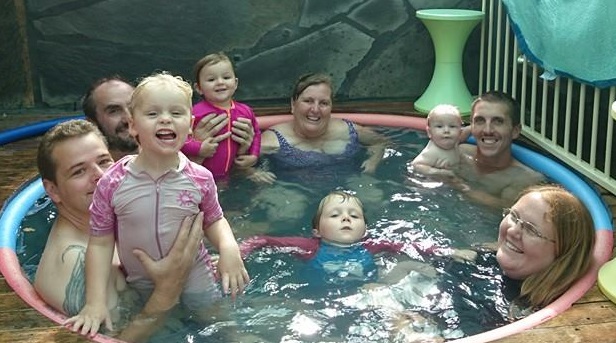
Beverley Paine with her children, and their home educated children, relaxing at home.
Together with the support of my family, my aim is to help parents educate their children in stress-free, nurturing environments. In addition to building and maintaing this website, I continue to create and manage local and national home educating networks, help to organise conferences and camps, as well as write for, edit and produce newsletters, resource directories and magazines. I am an active supporter of national, state, regional and local home education groups.
"You've been an inspiration to me, I love the way
you really listen to people." Vanessa
"Whenever I read your writing I always come away
with increased confidence in my ability to provide and
share a wonderful learning journey with my family!" Davina
"Your guidance, understanding, support and words of
wisdom changed our lives. We now offer support and
organise many homeschooling events for others." Lesley
"Thank you once again for your prompt and friendly service.
I am convinced that your books are going to add
quality and peace of mind to my journey of teaching my kids
at home! Just from studying your website, until almost
2am
in the morning, I 've been encouraged!" Louisa
"Thank you for all your many,many reassuring words
over many, many years. You probably don't know exactly how
valuable you are to the Australian Home Education community.
I've been reading your stuff for maybe 8 years or more now.
And I'm very grateful." Gythaa

CLICK HERE
if you want to learn
how to write your own education plans
to suit
your unique children's
individual learning needs?
Or you are looking for quality curriculum and teaching tips...
|
|
Welcome to the World of Home Education
and Learning without School!
We began educating our children in 1985, when our eldest was five. In truth, we had helped them learn what they need to learn since they were born. I am a passionate advocate of allowing children to learn unhindered by unnecessary stress and competition, meeting developmental needs in ways that suit their individual learning styles and preferences. Ours was a homeschooling, unschooling and natural learning family! There are hundreds of articles on this site to help you build confidence as a home educating family. We hope that your home educating adventure is as satisfying as ours was! Beverley Paine
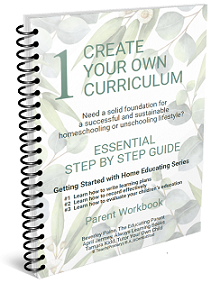
3 ESSENTIAL STEP BY STEP GUIDES
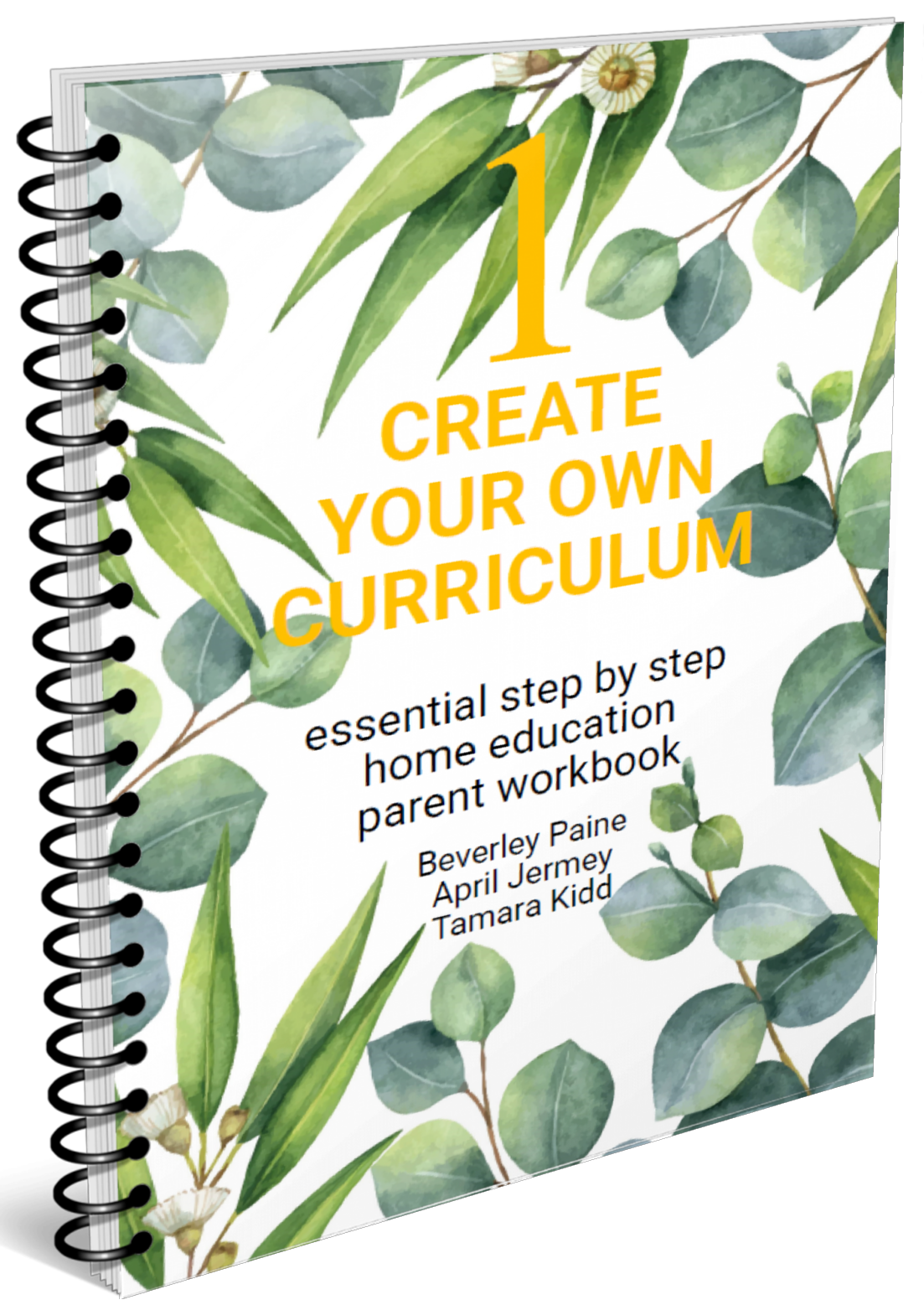
Let experienced home educators Beverley, Tamara and April walk you through HOW to create a learning plan that builds on solid foundations that works for YOUR family AND ticks all the boxes for home educaton registration!
|

Tap into Beverley's
experience
through her books
"Your books, your blogs helped me beyond words... they helped me to find comfort in knowing it is ok to choose exactly what is best for my family." Nisha
"Your books and information are mind blowing and already I am feeling good about this new experience." Diane
"Your guidance, understanding, support & words of wisdom changed our lives." Leslie
"I feel specially inspired by Beverley's words and, the more I read her comments, the more inspired I feel, since my need for support, respect for different parenting styles, and information are fully met." Marijo
|
 |
|

The information on this website is of a general nature only and is not intended as personal or professional advice. This site merges and incorporates 'Homeschool Australia' and 'Unschool Australia'.
The Educating Parent acknowledges the Traditional Aboriginal and Torres Strait Islander Owners, the Custodians of Australia, and pay our respects to Elders past and present and extend that respect to Aboriginal and Torres Strait Islander people viewing this website.
Advertise on this site.





Australia's premier online annual conferences, lifetime access to video and audio recordings, freebies, notes and associated resource guides.
EVERY SUMMIT IS UNIQUE!
$29 each  2023 2023  2022 2021 2022 2021
$25 each 2020 2019 2017
"Biggest and best Aussie homeschool event of the year!"
Home education is a legal alternative
to school education in Australia.
State and Territory governments are responsible
for regulating home education and have different
requirements, however home educating families
are able to develop curriculum and learning programs
to suit the individual needs of their children.

Without revenue from advertising
by educational suppliers and Google Ads
we could not continue to provide information
to home educators. Please support us by letting
our advertisers know that you found them on
The Educating Parent. Thanks!
|
 About
About


 Thank you for visiting!