|
Home Educating and Bullying
By Beverley Paine
Have you ever encountered incidences of bullying at homeschool support group gatherings or events? For this article I'm defining bullying as actions by individuals that deliberately target others for the purpose of hurting, embarrassing or humiliating them.
As a child I was bullied by my parents and siblings and school teachers. No one considered it bullying. Being threatened or yelled at wasn't considered bullying. Getting beaten up on the way home from school was, but only if the guy doing it was bigger than me. If he was smaller, then it was considered that I wasn't standing up for myself! Times have changed . or have they?
As a parent, I've witnessed plenty of bullying occurring around my children. It was hard to know what to do, especially if the parent of the bully was a good friend. If my child did the bullying, I'd take her aside and we'd talk about the behaviour, causes, effects and consequences. And then I'd think long and hard about our behaviour as parents and if, as parents, we were inadvertently modelling bullying to our children.
Bullying is a fact of life. We all do it at some stage in our lives and most of us continue to bully others in more or less acceptable ways. I am often slow to detect my own bullying behaviour and when I do I feel ashamed and quickly do my best to apologise or make amends. Why do I bully? Largely because I don't realise that my behaviour is in fact of a bullying nature. And I think that is the main reason bullying persists in society. Few people recognise their own tendencies to bully others which results in it being modeled and accepted by all.
Sometimes it is hard in homeschooling groups to get the balance right. Older children often play roughly and resent the intrusion by younger children, especially when asked to 'tone down' their play to accommodate the younger children's needs. Transitions from boisterous, noisy activity can present problems. Different family values and parenting practices can also translate into conflicts arising between children. Some children manage well without constant supervision whereas others need to work and play within clear boundaries, reassured that they are not totally responsible. When different people come together we can't expect everyone to think and act the same. Although home education is a celebration of difference, it still takes effort to make group gatherings harmonious and safe for everyone.
By recognising and accepting that it does happen, both in our homes and when we get together as homeschoolers, I hope that we can share some of the strategies we've each devised over the years to lessen the incidences of bullying.
Geradine writes that she has often found herself in the difficult situation of witnessing older children act in a verbally aggressive way towards her toddler during play sessions. Like most homeschooling parents, Geradine feels torn between protecting her child and having compassion for the other child. We've all witnessed the angst and discomfort of mothers of children with aggressive tendencies, as well as having to personally deal with our own children's private and public outbursts of aggression. Geradine remarks that although considered normal, it is still a difficult experience for any parent.
Geradine is glad that as a homeschooling parent she is nearby to witness and support her child through incidents of bullying by calmly and firmly diffusing the situation, setting appropriate behavioural boundaries and offering compassion for the underlying needs being expressed. Despite her discomfort, she sees such interactions as learning opportunities for all concerned. Compassion for everyone is important, as is promoting an attitude of inclusiveness and focusing on effective communication
Lori reflects that the bullying she sometimes sees happening in homeschooling circles when parents are present is different from the type she witnessed in the school playground and classroom.
"Often parents make a choice based on interest or likeability in befriending other Mums and hoping the kids will get along too. I personally always found it very frustrating that the Mums I got along with, generally had kids my kids didn't get along with ... the kids they got along with had parents that I was fine to talk to, however, not the type I'd make friends with if the kids weren't around."
Lori found that the bullying stopped when she "let the kids choose their friends totally". She saw that her children also started to better understand social rules when they weren't socialising with others with whom they had nothing in common. She noted that they weren't always on guard and defensive. As 'new mum' in a homeschooling group, Lori often felt awkward and could appreciate how her children felt when asked to play with children they didn't know or didn't particularly like. This empathy for how children feel and see the world is critical in helping us handle conflict between children when it arises. Rather than telling children how to behave we can relate to why they are behaving the way they do and be more sympathetic and understanding.
Faye made an important observation that it's important to consider that there may be something happening with the 'bully' that we're not aware of. We need to hesitate when making judgments and gather some information first. Children with autism and Asperger's Syndrome, especially when coupled with sensory processing/integration disorders can appear as if they are deliberately behaving aggressively, when in fact they may be exhibiting symptoms of intense anxiety. To label these children as bullies is extremely unfair. Faye has witnessed parents of injured children verbally attacking the other child as well as the other's child's parent as she tries to deal with the situation. When emotions run high it is wise to take a few deep breaths, make sure the children are safe and then start solving the issue by asking questions.
The key, Faye believes, is to not accept inappropriate behaviour and to be there, supervising children's activities, ready to intervene or guide the play or activity appropriately. Children look to adults for protection and guidance - that is our role. Inclusive behaviour requires everyone to build bridges. Compassion, understanding and empathy are the tools we can use to do that.
One of the consequences of bullying can be social isolation. Jane wrote about a good friend whose children experienced bullying at every homeschooling event at which another family was present. Despite the matter being discussed, the other parent refused to believe that her children could behave in such a
manner and claimed that the bullied children were lying. This is an awkward and difficult situation and I'm sure we've all experienced something similar. As nothing constructive was done to remedy the situation it meant that the bullied children withdrew from attending various events, resulting in a loss of opportunity for everyone. Sometimes aggressive behaviour is acknowledged by the parents of the offending child, but written off as normal. Valerie reported that she witnessed one such situation where the parents dismissed the inappropriate behaviour as "boys being boys". Such attitudes do nothing to protect children or build a sense of community and a feeling of belonging. She asked, "What do you do when inclusion and communication fail?"
Children who have been bullied have trouble trusting that it won't happen again. The resultant anxiety can affect all levels of their well being, resulting in long-term health and developmental issues. This is an important issue. We all need answers to Valerie's question.
Other articles in this series on Bullying and Home Education by Beverley Paine
Useful Websites

Was this article helpful? Was it worth $1.00 to you?
Your gift of $1 or more helps to keep this site operating
offering encouragement
and reassurance to families
wanting
better outcomes for their children.
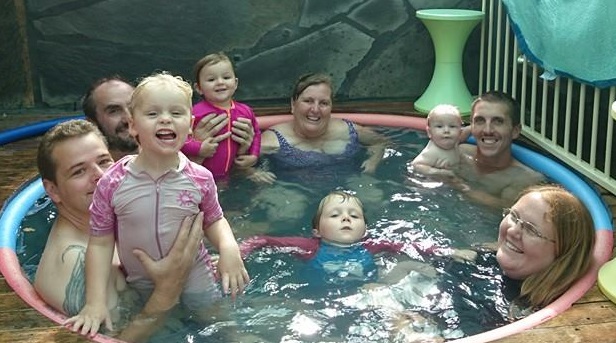
Beverley Paine with her children, and their home educated children, relaxing at home.
Together with the support of my family, my aim is to help parents educate their children in stress-free, nurturing environments. In addition to building and maintaing this website, I continue to create and manage local and national home educating networks, help to organise conferences and camps, as well as write for, edit and produce newsletters, resource directories and magazines. I am an active supporter of national, state, regional and local home education groups.
"You've been an inspiration to me, I love the way
you really listen to people." Vanessa
"Whenever I read your writing I always come away
with increased confidence in my ability to provide and
share a wonderful learning journey with my family!" Davina
"Your guidance, understanding, support and words of
wisdom changed our lives. We now offer support and
organise many homeschooling events for others." Lesley
"Thank you once again for your prompt and friendly service.
I am convinced that your books are going to add
quality and peace of mind to my journey of teaching my kids
at home! Just from studying your website, until almost
2am
in the morning, I 've been encouraged!" Louisa
"Thank you for all your many,many reassuring words
over many, many years. You probably don't know exactly how
valuable you are to the Australian Home Education community.
I've been reading your stuff for maybe 8 years or more now.
And I'm very grateful." Gythaa

CLICK HERE
if you want to learn
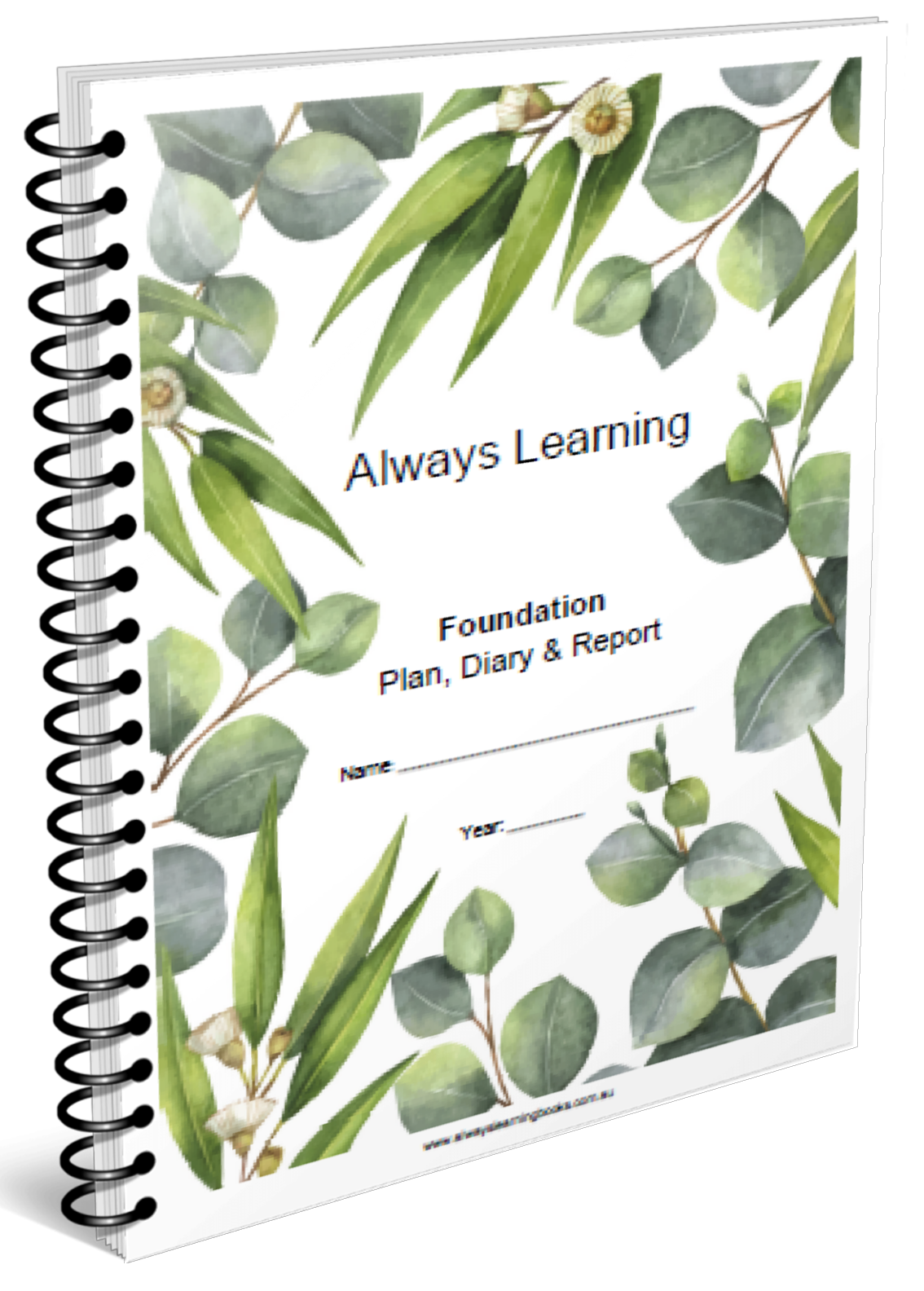
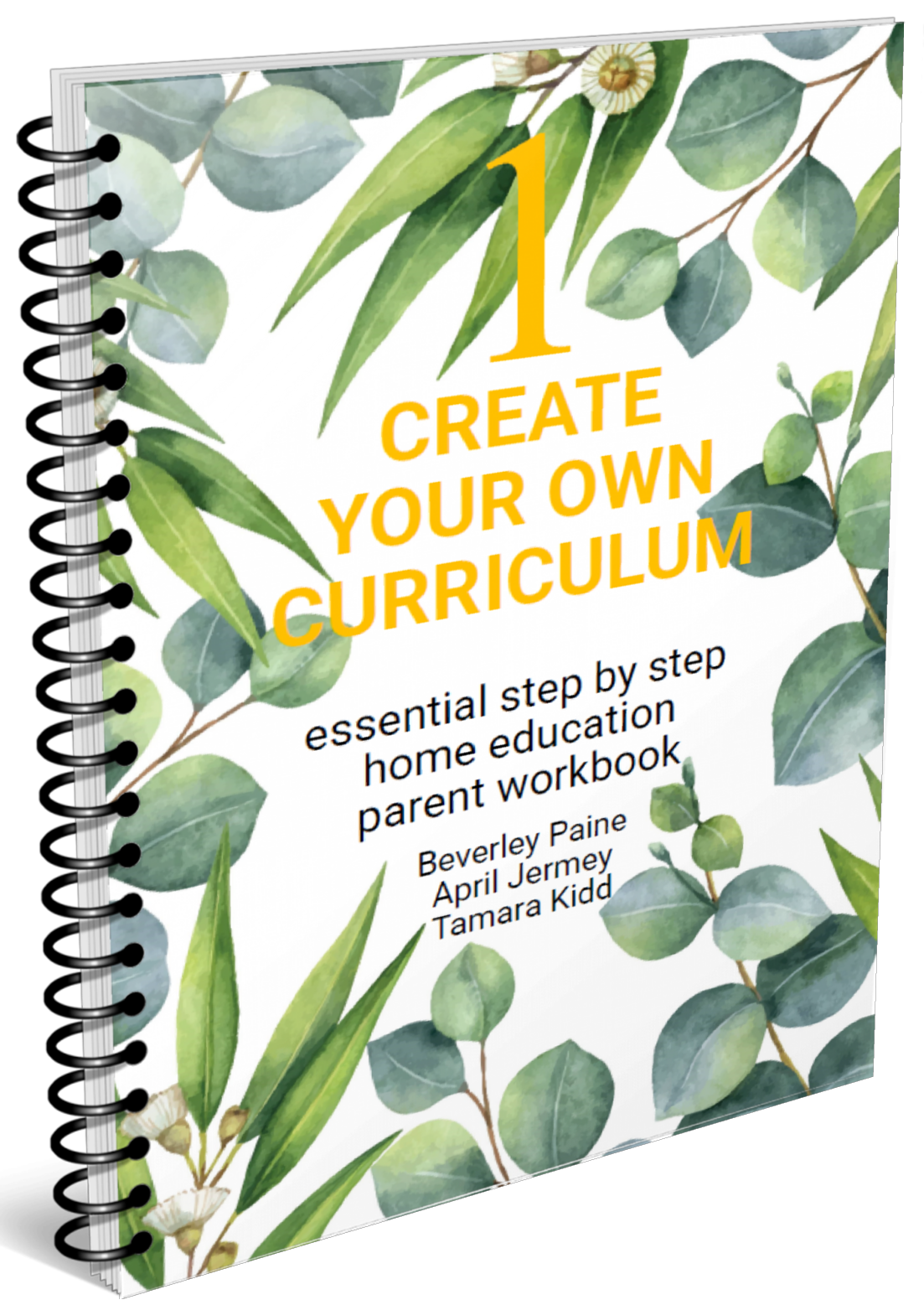
how to write your own education plans
to suit
your unique children's
individual learning needs?
Or you are looking for quality curriculum and teaching tips...
|
|
Welcome to the World of Home Education
and Learning without School!
We began educating our children in 1985, when our eldest was five. In truth, we had helped them learn what they need to learn since they were born. I am a passionate advocate of allowing children to learn unhindered by unnecessary stress and competition, meeting developmental needs in ways that suit their individual learning styles and preferences. Ours was a homeschooling, unschooling and natural learning family! There are hundreds of articles on this site to help you build confidence as a home educating family. We hope that your home educating adventure is as satisfying as ours was! Beverley Paine
3 ESSENTIAL STEP BY STEP GUIDES
Let experienced home educators Beverley, Tamara and April walk you through HOW to create a learning plan that builds on solid foundations that works for YOUR family AND ticks all the boxes for home educaton registration!
|

Tap into Beverley's
experience
through her books
"Your books, your blogs helped me beyond words... they helped me to find comfort in knowing it is ok to choose exactly what is best for my family." Nisha
"Your books and information are mind blowing and already I am feeling good about this new experience." Diane
"Your guidance, understanding, support & words of wisdom changed our lives." Leslie
"I feel specially inspired by Beverley's words and, the more I read her comments, the more inspired I feel, since my need for support, respect for different parenting styles, and information are fully met." Marijo
|
 |
|

The information on this website is of a general nature only and is not intended as personal or professional advice. This site merges and incorporates 'Homeschool Australia' and 'Unschool Australia'.
The Educating Parent acknowledges the Traditional Aboriginal and Torres Strait Islander Owners, the Custodians of Australia, and pay our respects to Elders past and present and extend that respect to Aboriginal and Torres Strait Islander people viewing this website.
Advertise on this site.






Australia's premier online annual conferences, lifetime access to video and audio recordings, freebies, notes and associated resource guides.
EVERY SUMMIT IS UNIQUE!
$29 each  2023 2023  2022 2021 2022 2021
$25 each 2020 2019 2017
"Biggest and best Aussie homeschool event of the year!"
Home education is a legal alternative
to school education in Australia.
State and Territory governments are responsible
for regulating home education and have different
requirements, however home educating families
are able to develop curriculum and learning programs
to suit the individual needs of their children.

Without revenue from advertising
by educational suppliers and Google Ads
we could not continue to provide information
to home educators. Please support us by letting
our advertisers know that you found them on
The Educating Parent. Thanks!
|
 About
About


 Thank you for visiting!