|
Home Education and Incidences of Child Abuse
© Nov 2007, John Barratt-Peacock BA., PGCE., BA., MSc., PhD.
Two things need to be carefully defined before we start to discuss home education and child abuse: they are child abuse and sources of information.
The author on the Australian Homeschooling Legal Advisory Service web site does not define what she means by child abuse and quotes a number of unacknowledged sources with no context. This is simply mischievous gossip rather than credible reportage and should be thrown out. I accept the legal definitions of physical and sexual abuse as they apply to children, though subject to some qualifications. First, they may vary from state to state and my knowledge has to do with the law in Tasmania.
Second, one person's child abuse may be another's caring parenting. For example, a relatively recent Mercury newspaper article listed saying "No" to a child as a form of abuse that is outlawed in government child care centres. The same article reported that one was also not allowed to commend children by saying "Good boy" or "Good girl" in government child care centres because such expressions are inherently sexist. I think this is patent nonsense and distracts attention from the very real abuse that does go on. I also support the view that parents are the primary care givers and people responsible for the well being of their children and that governments should only intervene when there is a prima facie case for doing so.
None of this has anything to do with registration, as I shall show below.
The second important introductory point that needs to be made is that it is misleading to transfer data from one culture and apply it in another without some qualification. A part of my thesis that had to be rejected to meet word limits was a comparison of the development of schooling in the U.S. and Australia together with some examination of the different meanings and attitudes represented by words we use in common. The bottom line is that, whether in support of home education or against it, there is no validity in taking data from the U.S. situation and applying it here. Thank God we are not yet an integral part of U.S. government or society!
Over the 37 years I have been studying home education in Australia and overseas I have interviewed, in depth, parents and children from a very wide cross section of society. I have stayed in their homes and observed their families and I have corresponded with home educating families, parents and children separately, over extended periods. I do not have a record of the total numbers involved but it is in the thousands.
In addition I conducted a formal, supervised, doctoral study of Australian home educating families over a four year period from 1994 to 1997 visiting families in every state and territory, except the Northern Territory, and corresponding with many more. I selected the material I used for the thesis from a much more extensive data bank obtained through formal and informal interviews of parents and children, formal observations and informal correspondence.
Because the question of possible child abuse in home educating families comes up from time to time this was one of the minor aspects of my study that did not make it into the final thesis. The stimulus for this aspect of my work was the claim commonly made in Tasmania by child protection agencies and support groups that 1 in 3 Tasmanian children is abused. I had researched this claim earlier and found the facts to be that 1 out of 3 people accused of child abuse and brought to court are found guilty. Because of the way courts operate it was very difficult to obtain hard statistical data on numbers of children proven to have been abused but the figure was of the order of 1 in 130 to 150 maximum of those that came to the courts. This was a far cry from the alarmist 1 in 3 raised by activists in order to obtain funding and government attention. That figure is now totally discredited.
In my formal research of Australian home education I came across two specific claims of child abuse.
The first had more to do with the reporter than the child and thorough investigation convinced me that there was no child abuse.
The other claim was brought to my attention second hand and there was considerable doubt about the outcome among home educators who knew the person. The family in question was not particularly religious and certainly not fundamentalist Christian. The prison authorities were not able to arrange for me to interview the alleged abuser in the time frame that I had available, but it is important to note that, innocent or guilty, he had been through the judicial system and sentenced at a time when there was no monitoring or effective registration process in his state.
Assuming that this person was actually guilty, that indicated a child abuse rate among Australian home educating families of about 0.001%. While even this is too much it compares very favourably with the proportion among schooled children.
Recent reports from DOCS in NSW and rather more sensational reports in the press confirm what the situation was when my wife and I briefly worked for DOCS. That is, that there are more reports of child abuse from the general schooled population than they can adequately cope with.
An ex-social worker friend from Victoria paints a similar picture for that state.
In southern Tasmania there is currently something like 200 unallocated cases involving the abuse of children in the general schooled population.
While it is fine to have a zero tolerance of child physical and sexual abuse, and that is my tolerance level, the situation is that authorities are simply not coping with the numbers they face at the moment on a daily basis from the schooled population. Adding a possible, but unconfirmed, 0.001% from home educators is not going to do anything much to improve the situation.
It is important to remember that in the school situation everyone who comes into contact with children has a statutory duty to report anything that could possibly indicate child abuse. This is a much stricter situation than any home education registration/monitoring system yet devised and yet significant numbers of abuse of schooled children are dropping through the net. Of those that are reported significant numbers are not getting sufficient support and help, if any. Clearly to use the possibility of child abuse by unregistered home educating families to get them to register is simply a furphy.
Having said that, I never felt any qualms about anyone visiting my home during the period that I was home educating my children. For many years I refused to register them as being home educated but, when we had negotiated a reasonable system of registration and monitoring, I did register and found the experience no threat.
I was at the time a fundamentalist Christian and considered that my responsibility to God and my children for their proper care and education came before any claims by governments. I still believe that but it does not mean that the government is my enemy, that I have to lock them out of my house and hide from their scrutiny.
On the contrary, as a home educator I have done a better job than schools. I have been better resourced and had a better child to adult ratio. I am always happy to share my experience with people who are interested whether they come from the Education Department, the government or wherever. My children are all now adults and living fulfilling lives and making significant contributions to society in Tasmania.
This response is based on solid data and professional research governed by the ethical standards of the La Trobe University Graduate Faculty of Social Sciences Human Ethics Committee.
In addition I hold post graduate degrees in Child and Adult Psychology and in Psychiatry from London University.
"A little knowledge is a dangerous thing:
Drink deep, or taste not the Pierian Spring:
There shallow draughts intoxicate the brain,
And drinking largely, sobers us again."
Alexander Pope
An Essay on Criticism 1709
John Barratt-Peacock BA., PGCE., BA., MSc., PhD.

Was this article helpful? Was it worth $1.00 to you?
Your gift of $1 or more helps to keep this site operating
offering encouragement
and reassurance to families
wanting
better outcomes for their children.
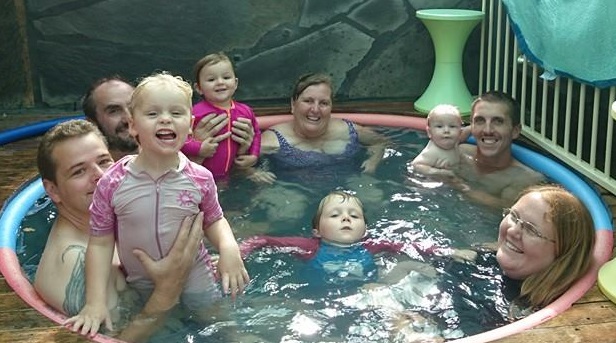
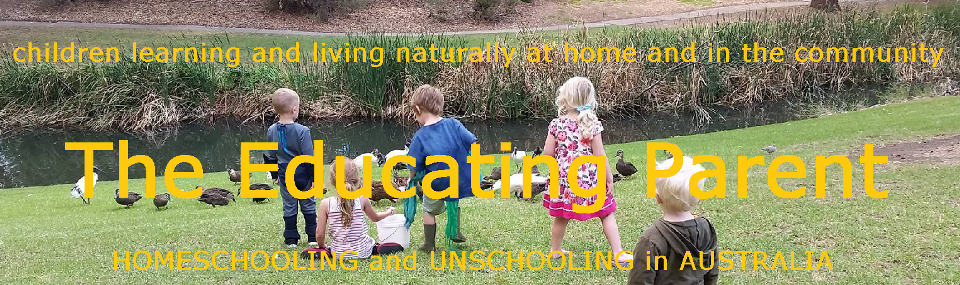
Beverley Paine with her children, and their home educated children, relaxing at home.
Together with the support of my family, my aim is to help parents educate their children in stress-free, nurturing environments. In addition to building and maintaing this website, I continue to create and manage local and national home educating networks, help to organise conferences and camps, as well as write for, edit and produce newsletters, resource directories and magazines. I am an active supporter of national, state, regional and local home education groups.
"You've been an inspiration to me, I love the way
you really listen to people." Vanessa
"Whenever I read your writing I always come away
with increased confidence in my ability to provide and
share a wonderful learning journey with my family!" Davina
"Your guidance, understanding, support and words of
wisdom changed our lives. We now offer support and
organise many homeschooling events for others." Lesley
"Thank you once again for your prompt and friendly service.
I am convinced that your books are going to add
quality and peace of mind to my journey of teaching my kids
at home! Just from studying your website, until almost
2am
in the morning, I 've been encouraged!" Louisa
"Thank you for all your many,many reassuring words
over many, many years. You probably don't know exactly how
valuable you are to the Australian Home Education community.
I've been reading your stuff for maybe 8 years or more now.
And I'm very grateful." Gythaa

CLICK HERE
if you want to learn
how to write your own education plans
to suit
your unique children's
individual learning needs?
Or you are looking for quality curriculum and teaching tips...
|
|
Welcome to the World of Home Education
and Learning without School!
We began educating our children in 1985, when our eldest was five. In truth, we had helped them learn what they need to learn since they were born. I am a passionate advocate of allowing children to learn unhindered by unnecessary stress and competition, meeting developmental needs in ways that suit their individual learning styles and preferences. Ours was a homeschooling, unschooling and natural learning family! There are hundreds of articles on this site to help you build confidence as a home educating family. We hope that your home educating adventure is as satisfying as ours was! Beverley Paine
3 ESSENTIAL STEP BY STEP GUIDES
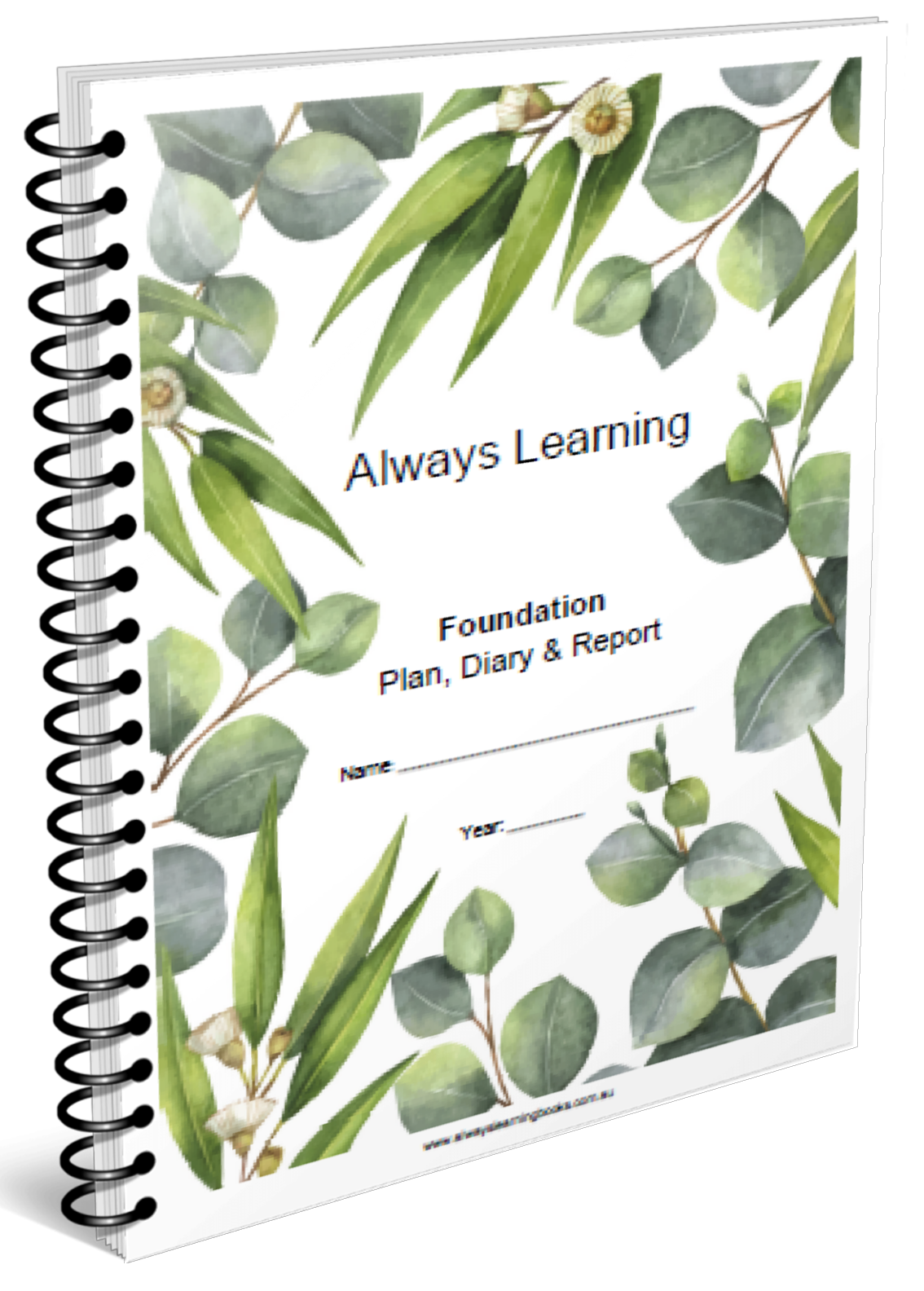
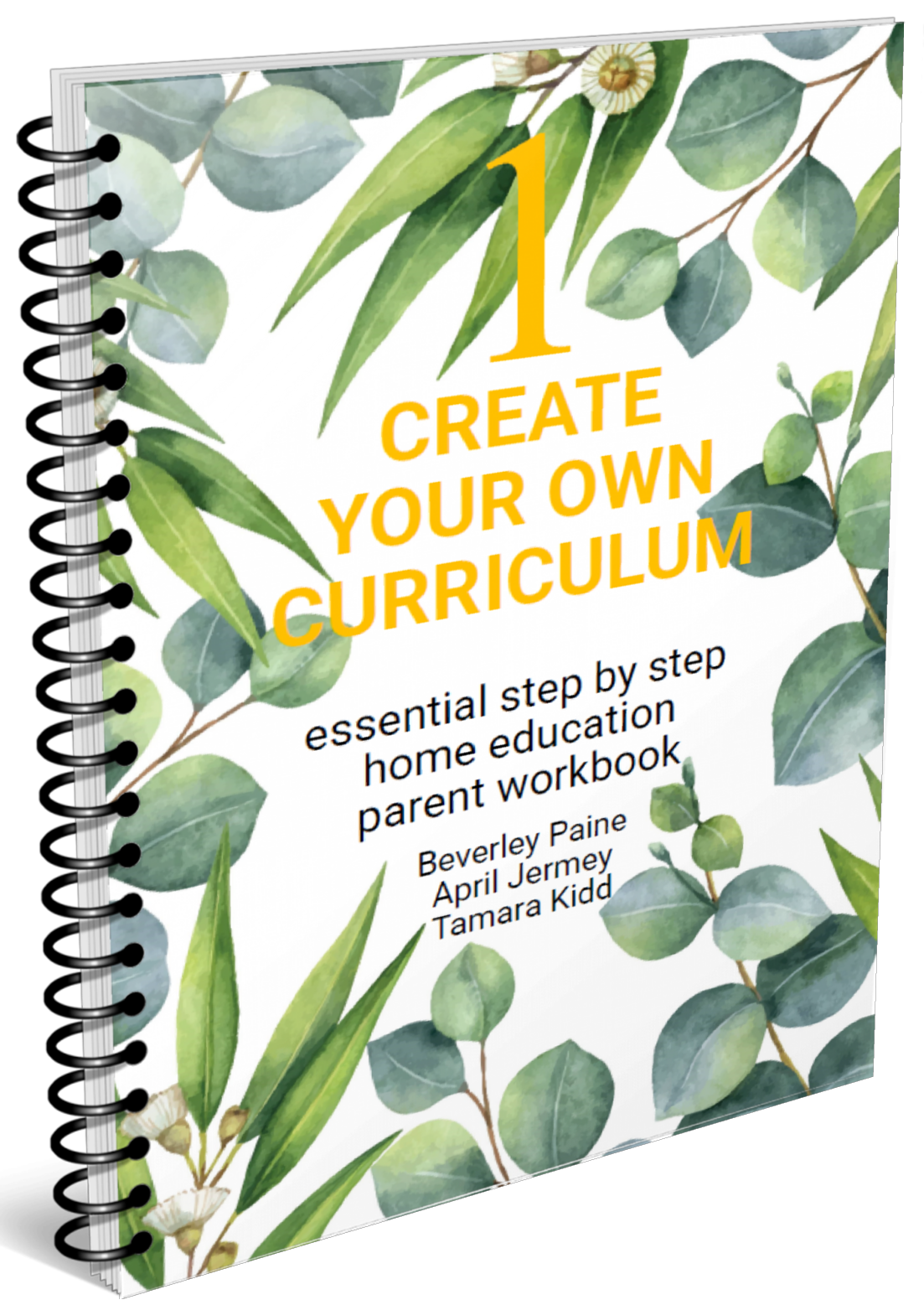
Let experienced home educators Beverley, Tamara and April walk you through HOW to create a learning plan that builds on solid foundations that works for YOUR family AND ticks all the boxes for home educaton registration!
|

Tap into Beverley's
experience
through her books
"Your books, your blogs helped me beyond words... they helped me to find comfort in knowing it is ok to choose exactly what is best for my family." Nisha
"Your books and information are mind blowing and already I am feeling good about this new experience." Diane
"Your guidance, understanding, support & words of wisdom changed our lives." Leslie
"I feel specially inspired by Beverley's words and, the more I read her comments, the more inspired I feel, since my need for support, respect for different parenting styles, and information are fully met." Marijo
|
 |
|

The information on this website is of a general nature only and is not intended as personal or professional advice. This site merges and incorporates 'Homeschool Australia' and 'Unschool Australia'.
The Educating Parent acknowledges the Traditional Aboriginal and Torres Strait Islander Owners, the Custodians of Australia, and pay our respects to Elders past and present and extend that respect to Aboriginal and Torres Strait Islander people viewing this website.
Advertise on this site.






Australia's premier online annual conferences, lifetime access to video and audio recordings, freebies, notes and associated resource guides.
EVERY SUMMIT IS UNIQUE!
$29 each  2023 2023  2022 2021 2022 2021
$25 each 2020 2019 2017
"Biggest and best Aussie homeschool event of the year!"
Home education is a legal alternative
to school education in Australia.
State and Territory governments are responsible
for regulating home education and have different
requirements, however home educating families
are able to develop curriculum and learning programs
to suit the individual needs of their children.

Without revenue from advertising
by educational suppliers and Google Ads
we could not continue to provide information
to home educators. Please support us by letting
our advertisers know that you found them on
The Educating Parent. Thanks!
|
 About
About


 Thank you for visiting!