|
Enhancing Creativity Through Play
© Beverley Paine
Many homeschooling parents are frightened to let their children "play all day" - they feel the need to introduce structured activities which lead their children in the pursuit of knowledge of skills. For many this is the definition of education. Children have a vary different view of what learning is and how it happens.
Play is a very important aspect of it and as a parent you can capitalise on your children's natural tendency toward play in many ways by becoming more involved in the play process. A natural spin off derived from doing this in a conscious way is to increase the creative potential of your children. It also can lead to gains in mental age, ideational fluency and intelligence.
Definitions of creativity are many and varied, and relate either to personal traits and characteristics of the creative person, the creative process itself, or in terms of the product or outcome of the creativity. The creatively gifted child has been described as "the child who comes up with many, different, unusual, or detailed solutions to conventional tasks", indicating an ability to engage fluency, flexibility, originality and elaboration in the thought process. Playfulness has been characterised by freedom, spontaneity, joy, and exploratory actions, with motives and processes involved in play similar to those attributed to the creative process.
Becoming involved in the play process includes direct and deliberate participation in all facets of play. It means considering evaluating your present attitudes, rules and other controls you place on play, and those of other adults who have access to your children. It also means looking critically at the physical environment. Do all those things foster and nurture creativity in your children?
Research into play and creativity have revealed that parents who foster creativity within their children tend to:
- be more conceptually abstract in their thinking;
- promote fantasy and curiosity in early childhood, providing a context as well as a model for play;
- take personal satisfaction in parenting, have patience in communicating with;
- their children, are willing to play with their youngsters and tell them stories, and enjoy make-believe themselves;
- de-emphasise sex roles in relating to their children's play preferences;
- exhibit low compulsivity, low dominance, and low authoritarianism;
- be high in acceptance of regression and high in independence-granting;
- be flexible and open-minded in accepting alternative and unusual uses and procedures that children can often adopt for toys and games;
- be able to see things from the perspective of the child and in turn interpret his or her needs;
- possess the ability to depart from routine procedures in purchasing toys, and
- helping the child to use toys and games in ways that increase the child's range of associations to different play objects and procedures.
The nature of the play environment is also very important, and a less restrictive environment increases not only the range of your children's potential responses, but also their later motivation to respond to novelty. Such environments are:
- safe and encourage children to freely explore;
- open infinite possibilities for co-operative, role playing games that continuously change after old themes are exhausted;
- permit children to create games spontaneously without guidance and dependence on adults;
- permit the child to succeed at play tasks at his/her own level of ability;
- contain abstract play forms that can stimulate creative, make-believe play, and
- include equipment that satisfies the child's instincts for "secretive" play with sheltered places that still maintain a degree of visibility from outside.
Which toys you select for your children can help enhance creativity too. Toys and equipment which are especially useful are those which encourage exploration and discovery and include;
- blocks and like toys of varying shapes, sixes, colours, textures and materials, both interlocking and plain;
- dolls and equipment used for role-play;
- access to free play with water and sand;
- dress-ups and dramatic play props;
- puppets;
- building centres where toys are "real" and work, enhancing creativity and physical co-ordination;
- art and craft supplies;
- musical instruments, and
- math and science oriented devices.
The research also found that too much emphasis on academics and test performance, and a discouraging of free play tends to result in a squelching of creativity. So it is important to balance such activities with structured play episodes, both with and without your involvement, and to allow lots of opportunity for free play and times where individual children can be alone, either in play or contemplation.
Increased opportunities for play has been shown to reduce frustration and boredom in learners in classroom situations. When parents actively promote and value children's playing, and integrate play with learning opportunities, children are able to develop more fully their creative potential, and the benefits are felt across all areas of growth and development, especially academic.
Reference: D. Ellermeyer "Enhancing creativity through play: a discussion of parental and environmental factors", 1993, published in Early Child Development and Care.)

Was this article helpful? Was it worth $1.00 to you?
Your gift of $1 or more helps to keep this site operating
offering encouragement
and reassurance to families
wanting
better outcomes for their children.
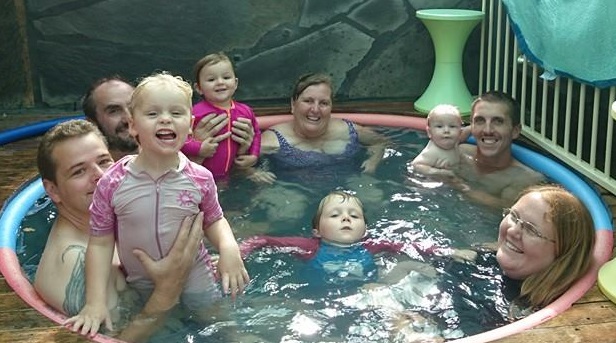
Beverley Paine with her children, and their home educated children, relaxing at home.
Together with the support of my family, my aim is to help parents educate their children in stress-free, nurturing environments. In addition to building and maintaing this website, I continue to create and manage local and national home educating networks, help to organise conferences and camps, as well as write for, edit and produce newsletters, resource directories and magazines. I am an active supporter of national, state, regional and local home education groups.
"You've been an inspiration to me, I love the way
you really listen to people." Vanessa
"Whenever I read your writing I always come away
with increased confidence in my ability to provide and
share a wonderful learning journey with my family!" Davina
"Your guidance, understanding, support and words of
wisdom changed our lives. We now offer support and
organise many homeschooling events for others." Lesley
"Thank you once again for your prompt and friendly service.
I am convinced that your books are going to add
quality and peace of mind to my journey of teaching my kids
at home! Just from studying your website, until almost
2am
in the morning, I 've been encouraged!" Louisa
"Thank you for all your many,many reassuring words
over many, many years. You probably don't know exactly how
valuable you are to the Australian Home Education community.
I've been reading your stuff for maybe 8 years or more now.
And I'm very grateful." Gythaa

CLICK HERE
if you want to learn
how to write your own education plans
to suit
your unique children's
individual learning needs?
Or you are looking for quality curriculum and teaching tips...
|
|
Welcome to the World of Home Education
and Learning without School!
We began educating our children in 1985, when our eldest was five. In truth, we had helped them learn what they need to learn since they were born. I am a passionate advocate of allowing children to learn unhindered by unnecessary stress and competition, meeting developmental needs in ways that suit their individual learning styles and preferences. Ours was a homeschooling, unschooling and natural learning family! There are hundreds of articles on this site to help you build confidence as a home educating family. We hope that your home educating adventure is as satisfying as ours was! Beverley Paine
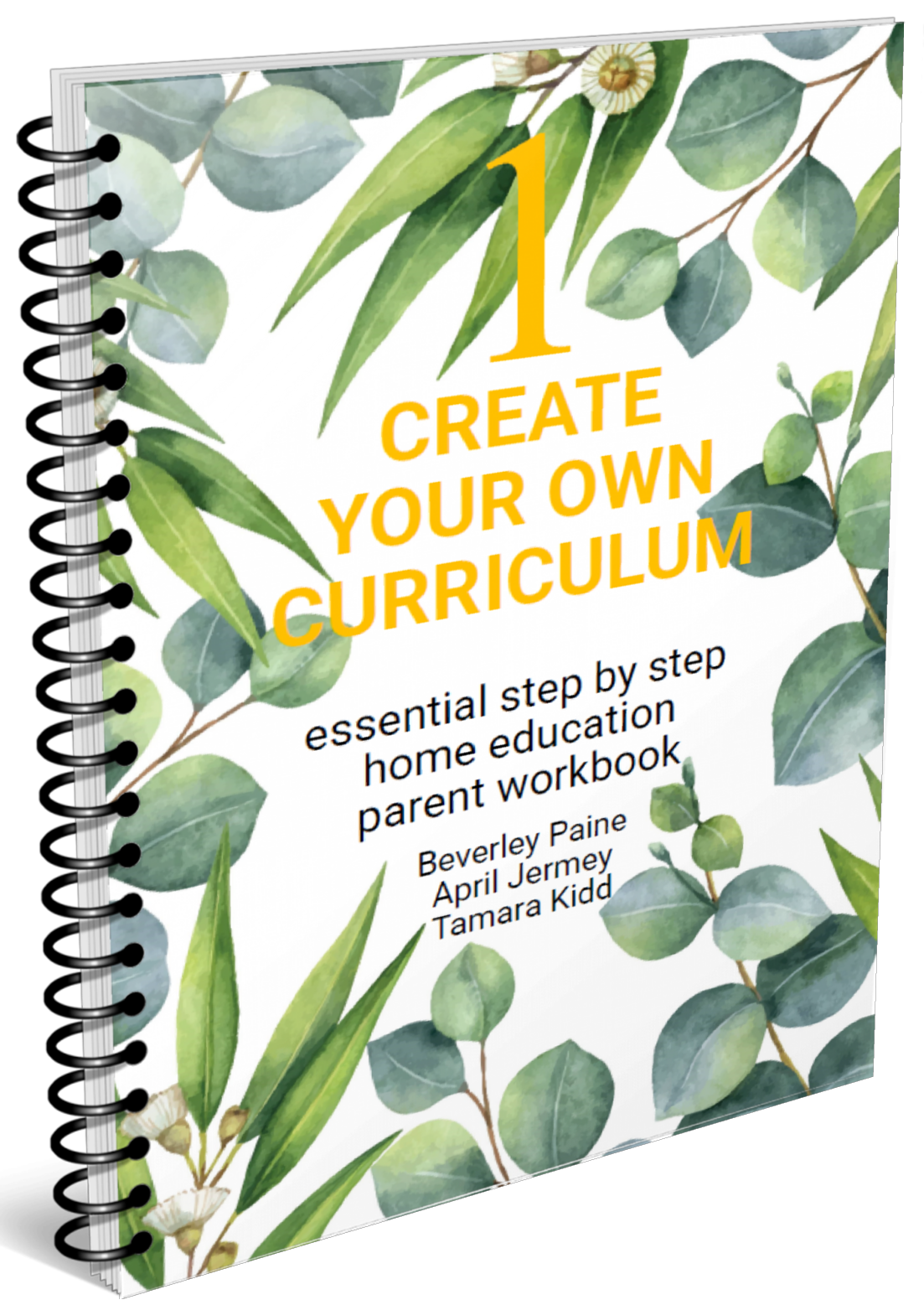
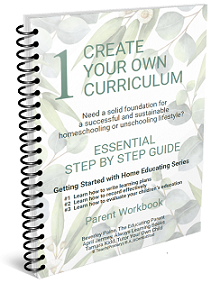
3 ESSENTIAL STEP BY STEP GUIDES
Let experienced home educators Beverley, Tamara and April walk you through HOW to create a learning plan that builds on solid foundations that works for YOUR family AND ticks all the boxes for home educaton registration!
|

Tap into Beverley's
experience
through her books
"Your books, your blogs helped me beyond words... they helped me to find comfort in knowing it is ok to choose exactly what is best for my family." Nisha
"Your books and information are mind blowing and already I am feeling good about this new experience." Diane
"Your guidance, understanding, support & words of wisdom changed our lives." Leslie
"I feel specially inspired by Beverley's words and, the more I read her comments, the more inspired I feel, since my need for support, respect for different parenting styles, and information are fully met." Marijo
|
 |
|

The information on this website is of a general nature only and is not intended as personal or professional advice. This site merges and incorporates 'Homeschool Australia' and 'Unschool Australia'.
The Educating Parent acknowledges the Traditional Aboriginal and Torres Strait Islander Owners, the Custodians of Australia, and pay our respects to Elders past and present and extend that respect to Aboriginal and Torres Strait Islander people viewing this website.
Advertise on this site.





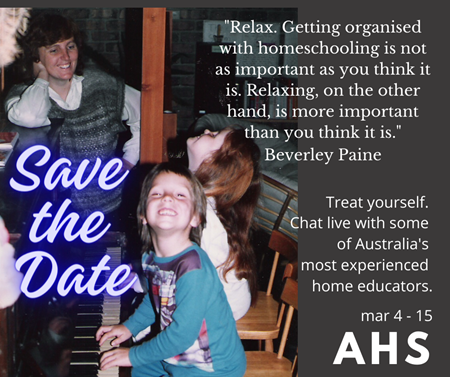
Australia's premier online annual conferences, lifetime access to video and audio recordings, freebies, notes and associated resource guides.
EVERY SUMMIT IS UNIQUE!
$29 each  2023 2023  2022 2021 2022 2021
$25 each 2020 2019 2017
"Biggest and best Aussie homeschool event of the year!"
Home education is a legal alternative
to school education in Australia.
State and Territory governments are responsible
for regulating home education and have different
requirements, however home educating families
are able to develop curriculum and learning programs
to suit the individual needs of their children.

Without revenue from advertising
by educational suppliers and Google Ads
we could not continue to provide information
to home educators. Please support us by letting
our advertisers know that you found them on
The Educating Parent. Thanks!
|
 About
About


 Thank you for visiting!