|
Tips on How to Cope with Homeschool Stress
© Beverley Paine
The first thing my non-homeschooling friends or extended family used to say when I looked tired or over-stretched was "Why not put the children into school?" It wasn't very helpful, though at times did tempt us...
I decided to hang on to homeschooling as it was too precious to give up and gradually learn some stress management techniques instead. Learning to cope with what life has to throw at us is, I believe, a task that lasts a lifetime, so don't be disheartened if the same problems come back to haunt you a regular basis. Eventually you'll get there - we did!
There's a simple strategy that you can use to tackle your stressful thinking almost as soon as it happens. The easiest way to demonstrate these is if I give you a few examples and how to use the simple stategy to diffuse the stressful thoughts that enter your consciousness.
"I don't have enough time"
How many times per week, per day even, do you tell yourself that one? It has to be my all time favourite! The first thing to do is to turn it into a positive, stress-free thought. Instead of saying "I don't have enough time," say "I have all the time I need."
This is where my thoughts usually come to a dead stop. "No I don't," my brain usually throws back at me instantly and then lists all the things I have to do or should be doing... Okay, easily fixed. Repeat the sentence, "I have all the time I need," over and over until the clamour settles into a manageable whisper. Don't be alarmed that you don't believe this statement straight away. You need to now ask yourself, "What needs to change for me to believe this?"
Often the key to answering this question is knowing where our priorities lie. Managing our time is not really about managing time at all, because time is not something we have the freedom to change. It's only how and what we try to cram into it that we can change. So, the key to having more time is to only spend time on what is important to us. This is often called working out our priorities. There is a great analogy where a teacher, after placing several small rocks in a glass jar until they reach the brim, asks his students if the jar is full.
They agreed that it was full. Without a word, he then picked up a box of small pebbles and poured them into the jar and shook it gently, allowing them to settle past the larger rocks until no more pebbles would fit. "Is it full now?" he asked. A few students hesitated. There was some talk and then all agreed, it was full.
The teacher then picked up a bag of sand and poured it into the jar, gently shaking the jar so that the sand filled the spaces between the pebbles and rocks. "Now," said the teacher, "I want you to recognize that this jar signifies your life. The rocks are the truly important things, such as family, health and relationships. If all else was lost and only the rocks remained, your life would still be meaningful. The pebbles are the other things that matter in your life, such as work and hobbies. The sand signifies the remaining "small stuff" and material possessions. If you put sand into the jar first, there is no room for the rocks or the pebbles. The same can be applied to your lives. If you spend all your time and energy on the small stuff, you will never have room for the things that are truly important."
The students nodded, clearly impressed by the demonstration. The teacher picked up a jug of water. "Even when we think our lives are full to the brim and we can't fit another thing into our busy lives, there is always more time." He poured the water into the jar and it disappeared into the sand. Eventually a tiny flow of water spilled over the brim of the jar.
It can be really hard to let go of the small things in life, especially if we are in the habit of paying them more attention than they deserve. "Don't sweat the small stuff" is a motto I have pinned to my wall. "Let it go", is another. These help to remind me to regularly look at what is important and to set priorities that work for me.
We can easily become attached to our thoughts, especially those we consider to be important, or those that underpin our assumptions and beliefs.Think carefully about yoru the thoughts that regularly flit across your mind. Which of these is causing you stress, and can you let them go because they no longer benefit you? Practice letting go of stressful thoughts and enjoy the space and time you make in your life as a result!
"I'm not motivated" or "I can't be bothered"
These two phrases dog my life. I know that depression looms just beyond the horizon when either of these thoughts start hanging around. In my children they often heralded a bout of boredom. Thoughts like this are always accompanied by feelings of lethagy or exhaustion. In fact, when we are exhausted, either from ill health or pure physical exertion, it can be easy to let our minds slip into this damaging state.
So how can we turn these into something positive? What about telling yourself, "I feel passionate and excited about ...."? What needs to change for you to believe this?
For most people, offering themselves a reward seems like a good idea because ninety percent of the time it appears to work. Not so for the very lazy at heart - and I'm one of those types! We need something much stronger than a reward to get us going and beat the motivation blues. We need a change in attitude... and that comes from genuinely drumming up some passion and enthusiasm for either what needs to be done, or something else that will kickstart our motivation.
Because, you see, once you've motivated yourself even a tiny bit you've already mastered the negative thoughts!
It's no good coming up with a bunch of strategies that will only increase your stress load, such as rewards, punishments, enforced deadlines and so on. Sometimes they work and sometimes they don't. Pushing yourself where you don't want to go will increases stress. Stress isn't always bad and we all surprise ourselves every now and then, but our aim is to reduce stress levels in our life, and, with luck, start to feel like every moment is one of joy...
What needs to change is your level of inspiration. When you feel inspired your stress levels rapidly decrease and you feel lighter. The drained, lethargic feeling you had at the beginning disappears. And that's good. Inspiration is the key to changing the attitudes that give rise to the negative thoughts. Inspiration nourishes our minds with wholesome thoughts. Think about the things that inspire you and then surround yourself with anything and everything that will help put those inspiring thoughts into your head.
Read inspiring books and quotes, or poetry, say prayers or meditate, spend time with inspiring people, watching inspiring films, dance or exercise, or practice yoga and T'ai Chi. Make time and room in your daily routine for inspirational thoughts and activities. Don't forget that the action of physically de-cluttering your space can also help to shift negative attitudes and thoughts and lead to a less stressful life. Spending time outdoors, in touch with nature, or where you can hear running water, also is uplifting and calming.
" There is a thought in your mind right now. The longer you hold on to it, the more you dwell upon it, the more life you give to that thought. Give it enough life, and it will become real. So make sure the thought is indeed a great one."
Ralph Marston
this article inspired by Sally Lever's Fruitful magazine.

Was this article helpful? Was it worth $1.00 to you?
Your gift of $1 or more helps to keep this site operating
offering encouragement
and reassurance to families
wanting
better outcomes for their children.
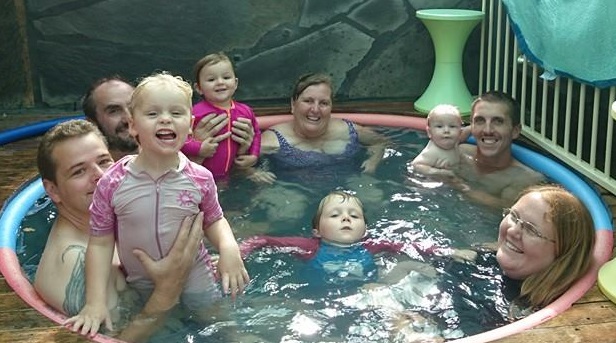
Beverley Paine with her children, and their home educated children, relaxing at home.
Together with the support of my family, my aim is to help parents educate their children in stress-free, nurturing environments. In addition to building and maintaing this website, I continue to create and manage local and national home educating networks, help to organise conferences and camps, as well as write for, edit and produce newsletters, resource directories and magazines. I am an active supporter of national, state, regional and local home education groups.
"You've been an inspiration to me, I love the way
you really listen to people." Vanessa
"Whenever I read your writing I always come away
with increased confidence in my ability to provide and
share a wonderful learning journey with my family!" Davina
"Your guidance, understanding, support and words of
wisdom changed our lives. We now offer support and
organise many homeschooling events for others." Lesley
"Thank you once again for your prompt and friendly service.
I am convinced that your books are going to add
quality and peace of mind to my journey of teaching my kids
at home! Just from studying your website, until almost
2am
in the morning, I 've been encouraged!" Louisa
"Thank you for all your many,many reassuring words
over many, many years. You probably don't know exactly how
valuable you are to the Australian Home Education community.
I've been reading your stuff for maybe 8 years or more now.
And I'm very grateful." Gythaa

CLICK HERE
if you want to learn
how to write your own education plans
to suit
your unique children's
individual learning needs?
Or you are looking for quality curriculum and teaching tips...
|
|
Welcome to the World of Home Education
and Learning without School!
We began educating our children in 1985, when our eldest was five. In truth, we had helped them learn what they need to learn since they were born. I am a passionate advocate of allowing children to learn unhindered by unnecessary stress and competition, meeting developmental needs in ways that suit their individual learning styles and preferences. Ours was a homeschooling, unschooling and natural learning family! There are hundreds of articles on this site to help you build confidence as a home educating family. We hope that your home educating adventure is as satisfying as ours was! Beverley Paine
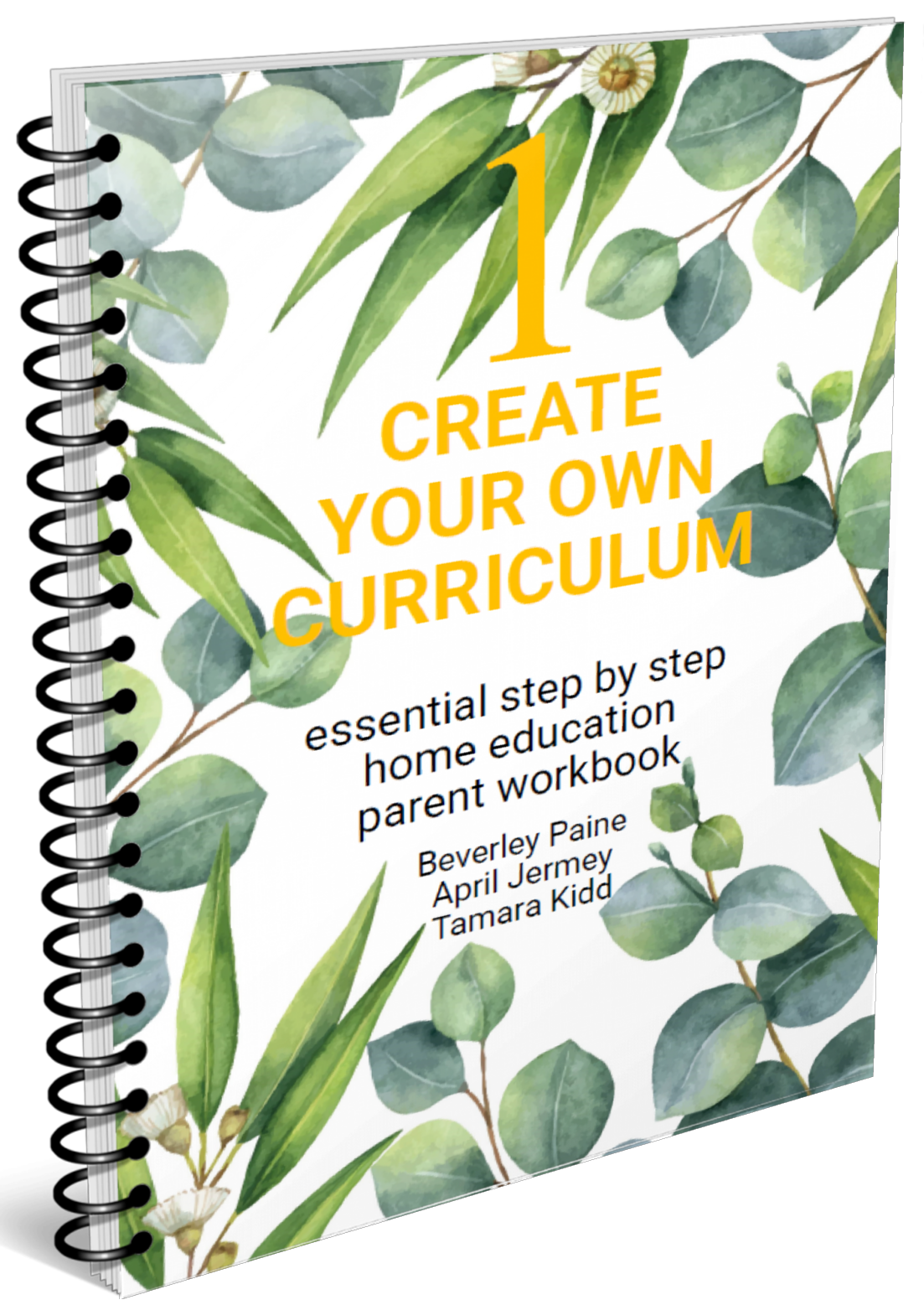
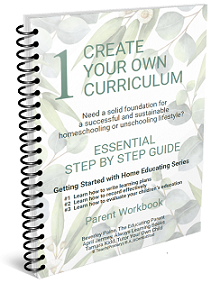
3 ESSENTIAL STEP BY STEP GUIDES
Let experienced home educators Beverley, Tamara and April walk you through HOW to create a learning plan that builds on solid foundations that works for YOUR family AND ticks all the boxes for home educaton registration!
|

Tap into Beverley's
experience
through her books
"Your books, your blogs helped me beyond words... they helped me to find comfort in knowing it is ok to choose exactly what is best for my family." Nisha
"Your books and information are mind blowing and already I am feeling good about this new experience." Diane
"Your guidance, understanding, support & words of wisdom changed our lives." Leslie
"I feel specially inspired by Beverley's words and, the more I read her comments, the more inspired I feel, since my need for support, respect for different parenting styles, and information are fully met." Marijo
|
 |
|

The information on this website is of a general nature only and is not intended as personal or professional advice. This site merges and incorporates 'Homeschool Australia' and 'Unschool Australia'.
The Educating Parent acknowledges the Traditional Aboriginal and Torres Strait Islander Owners, the Custodians of Australia, and pay our respects to Elders past and present and extend that respect to Aboriginal and Torres Strait Islander people viewing this website.
Advertise on this site.







Australia's premier online annual conferences, lifetime access to video and audio recordings, freebies, notes and associated resource guides.
EVERY SUMMIT IS UNIQUE!
$29 each  2023 2023  2022 2021 2022 2021
$25 each 2020 2019 2017
"Biggest and best Aussie homeschool event of the year!"
Home education is a legal alternative
to school education in Australia.
State and Territory governments are responsible
for regulating home education and have different
requirements, however home educating families
are able to develop curriculum and learning programs
to suit the individual needs of their children.

Without revenue from advertising
by educational suppliers and Google Ads
we could not continue to provide information
to home educators. Please support us by letting
our advertisers know that you found them on
The Educating Parent. Thanks!
|
 About
About


 Thank you for visiting!