|
Playing the Netiquette Game as a Yahoo Group Owner and/or Moderator
By Beverley Paine
I joined my first Yahoo group in 2001 and I remember it took some time to get the hang of being the member of an internet based social group. People forget that the normal rules of conversation don't apply because most communicate between people is non-verbal. That, though, doesn't come through on email, even with a liberal dose of emoticons (those little smiley or not so smiley faces) or acronyms that spell out a reaction, like LOL (laugh out loud).
Communicating by email is a cross between writing and speaking. If we write the thoughts as we think them, our messages often come across confused, because our brains usually think in fragments, sometimes in pictures or 'feelings' rather than words - and seldom in whole, perfectly grammatically constructed sentences and paragraphs! Few of us have the time or inclination to write emails the way we would write a letter or an article. Some of us don't bother with punctuation or grammar. Some of us are two finger typists - email is not a medium we're comfortable with because it takes forever to type. All of these reasons, and more, account for why emails we send are sometimes not received the way we want them to be!
Email communication is a difficult medium to get right. I'm not a fan of the saying 'practice makes perfect' but, in the case of emailing, frequent emailing is probably the easiest way to get the hang of how to use the medium effectively. But it can be fraught with problems, some of which can quickly escalate into conflict and, most worrisome of all, 'flame wars'.
Becoming a group owner takes a few minutes and usually seems like a good idea at the time. It does involve taking on responsibility for the way members of the group behave. It's like inviting a whole group of strangers into your home, or your friend's house. There are some basic standards and ground rules you want everyone to comply with so that you can all achieve the group's goals or purpose.
Plus, if you have started a Yahoo Group, as owner or moderator you need some measure of control to abide by the guidelines and conditions set by Yahoo. I don't think Yahoo checks groups, but it will follow up on complaints. You can find the guidelines on this page: http://groups.yahoo.com/local/guidelines.html . In addition, Yahoo Group Help Topics has information for group owners and moderators. Have a read of the topics under 'Inviting, Promoting and Managing' on this page: http://help.yahoo.com/l/us/yahoo/groups/original/ownmod/inviting/
I started my own group shortly after being a member of a Yahoo group. It is important to me to work at keeping my groups on-topic and pleasant places so that members get what they need from interacting with others in the group. These are some of the things I do:
- I think my personality comes through and sets the tone of the groups. In order to achieve this I need to post frequently and reply to posts. This is a gentle 'example setting' moderating technique similar to how we behave as adults around children. That's not to say that I think of the members of my group as children, but that if I wouldn't do or say something in the presence of a child because it isn't behaviour I'd want that child to emulate, then it isn't appropriate for my group either.
- I am very careful about who I allow to join the group. I have set my groups to require me to approve members before joining. This helps to keep the 'scammers' out. If there isn't enough information entered about why someone wants join the group, I email and ask them to supply more. If I'm not satisfied that their intention is in keeping with the group's purpose, I don't join them.
- When people get off-topic I skillfully bring the subject back on topic without needing to say 'that's off-topic'. For example, in my main groups, I work at cultivating my ability to relate almost any conversation to learning - and home education is about learning. It is easy to focus on what is being learned or needs to be learned. By bringing the subject back to learning, I'm reminding people of the group's reason for being. Different groups have different purposes - if people get too off-topic, simply post one or more on-topic posts and swamp them that way. Rather than point out where people are straying, remind them by example of the group's purpose by creating a few on-topic posts.
- I remove posts that I think are controversial. I've only had to do that once, and then I had to apologise because I'd completely misread it. Luckily the poster forgave me. I publicly posted my apology. I think it is important for people to see that I am a learner, rather than an expert. And if I feel that someone is scamming, I ask them both on and off the group to use the group appropriately and give them the chance to reply.
- Most groups set up a regular email reminding posters of the group's rules (netiquette), but I haven't yet had the need to do this. It is a popular and useful method of reinforcing appropriate email communication behaviour. Many group users are not familiar with emailing and appreciate an explanation of terms, acronyms, how to search archives, etc.
- I don't encourage nitpicking, particularly about spelling and grammar. I accept that people who come to the group come from different backgrounds and abilities. I see this kind of nitpicking happening on other groups and it can get nasty quickly. If someone engages in nitpicking behaviour I usually email the 'victim' privately to check that they haven't been offended. I don't start up a conversation on the group unless others jump on the bandwagon. My aim then is to encourage tolerance.
- Looking through the archives shows that I am the person that posts the most on my groups. I believe that kind of 'hands-on' gentle moderation is necessary. I believe that one of the reasons homeschooling works well for children is that, as parents, we're there most of the time, gently supervising, 'keeping an eye on the play', always ready to 'head-off' potential or escalating conflicts. Sometimes however we do need to sit down and go through the ground rules.

Was this article helpful? Was it worth $1.00 to you?
Your gift of $1 or more helps to keep this site operating
offering encouragement
and reassurance to families
wanting
better outcomes for their children.
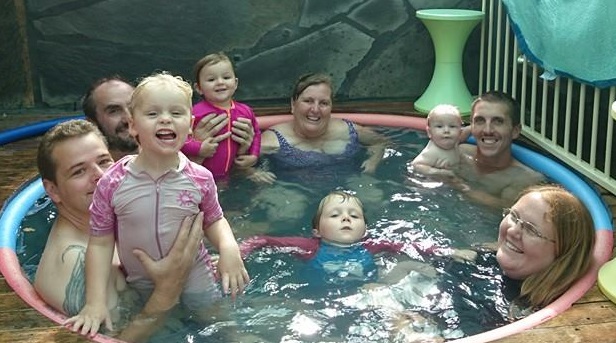
Beverley Paine with her children, and their home educated children, relaxing at home.
Together with the support of my family, my aim is to help parents educate their children in stress-free, nurturing environments. In addition to building and maintaing this website, I continue to create and manage local and national home educating networks, help to organise conferences and camps, as well as write for, edit and produce newsletters, resource directories and magazines. I am an active supporter of national, state, regional and local home education groups.
"You've been an inspiration to me, I love the way
you really listen to people." Vanessa
"Whenever I read your writing I always come away
with increased confidence in my ability to provide and
share a wonderful learning journey with my family!" Davina
"Your guidance, understanding, support and words of
wisdom changed our lives. We now offer support and
organise many homeschooling events for others." Lesley
"Thank you once again for your prompt and friendly service.
I am convinced that your books are going to add
quality and peace of mind to my journey of teaching my kids
at home! Just from studying your website, until almost
2am
in the morning, I 've been encouraged!" Louisa
"Thank you for all your many,many reassuring words
over many, many years. You probably don't know exactly how
valuable you are to the Australian Home Education community.
I've been reading your stuff for maybe 8 years or more now.
And I'm very grateful." Gythaa

CLICK HERE
if you want to learn
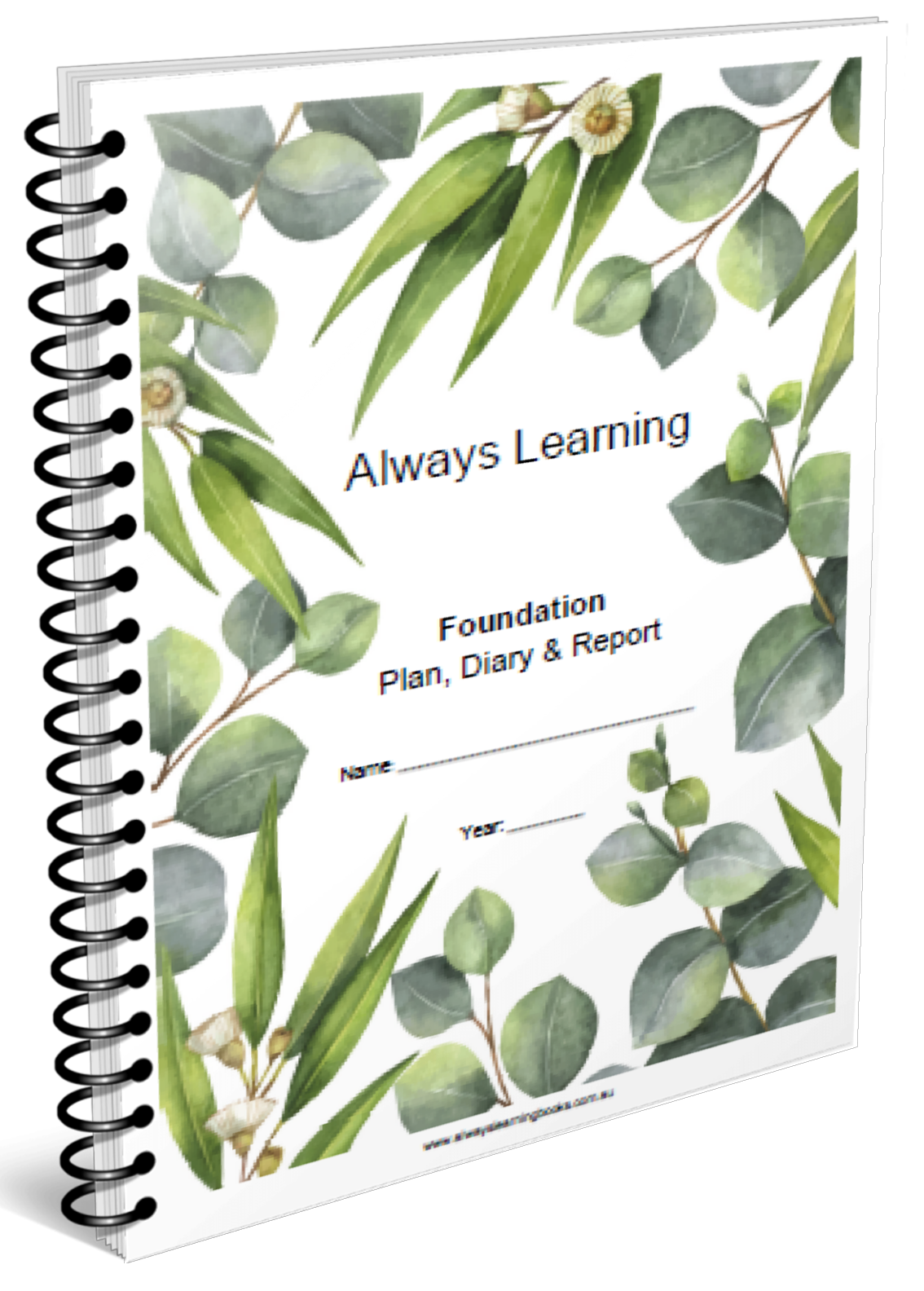
how to write your own education plans
to suit
your unique children's
individual learning needs?
Or you are looking for quality curriculum and teaching tips...
|
|
Welcome to the World of Home Education
and Learning without School!
We began educating our children in 1985, when our eldest was five. In truth, we had helped them learn what they need to learn since they were born. I am a passionate advocate of allowing children to learn unhindered by unnecessary stress and competition, meeting developmental needs in ways that suit their individual learning styles and preferences. Ours was a homeschooling, unschooling and natural learning family! There are hundreds of articles on this site to help you build confidence as a home educating family. We hope that your home educating adventure is as satisfying as ours was! Beverley Paine
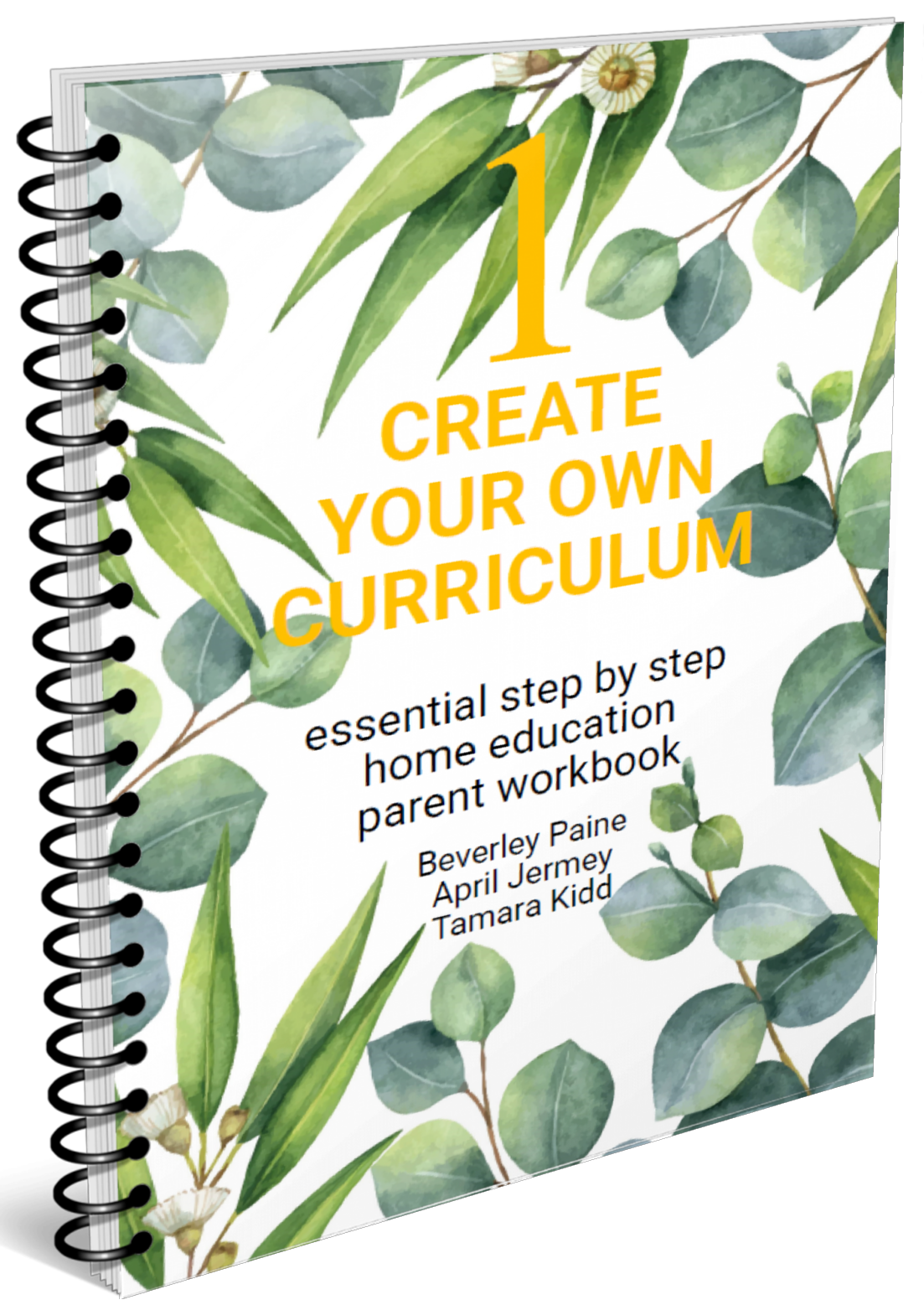
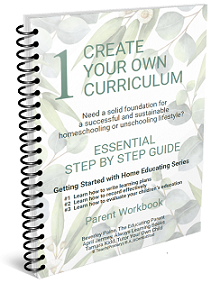
3 ESSENTIAL STEP BY STEP GUIDES
Let experienced home educators Beverley, Tamara and April walk you through HOW to create a learning plan that builds on solid foundations that works for YOUR family AND ticks all the boxes for home educaton registration!
|

Tap into Beverley's
experience
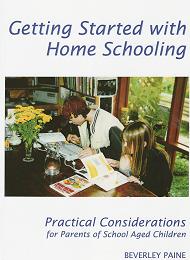
through her books
"Your books, your blogs helped me beyond words... they helped me to find comfort in knowing it is ok to choose exactly what is best for my family." Nisha
"Your books and information are mind blowing and already I am feeling good about this new experience." Diane
"Your guidance, understanding, support & words of wisdom changed our lives." Leslie
"I feel specially inspired by Beverley's words and, the more I read her comments, the more inspired I feel, since my need for support, respect for different parenting styles, and information are fully met." Marijo
|
 |
|

The information on this website is of a general nature only and is not intended as personal or professional advice. This site merges and incorporates 'Homeschool Australia' and 'Unschool Australia'.
The Educating Parent acknowledges the Traditional Aboriginal and Torres Strait Islander Owners, the Custodians of Australia, and pay our respects to Elders past and present and extend that respect to Aboriginal and Torres Strait Islander people viewing this website.
Advertise on this site.






Australia's premier online annual conferences, lifetime access to video and audio recordings, freebies, notes and associated resource guides.
EVERY SUMMIT IS UNIQUE!
$29 each  2023 2023  2022 2021 2022 2021
$25 each 2020 2019 2017
"Biggest and best Aussie homeschool event of the year!"
Home education is a legal alternative
to school education in Australia.
State and Territory governments are responsible
for regulating home education and have different
requirements, however home educating families
are able to develop curriculum and learning programs
to suit the individual needs of their children.

Without revenue from advertising
by educational suppliers and Google Ads
we could not continue to provide information
to home educators. Please support us by letting
our advertisers know that you found them on
The Educating Parent. Thanks!
|
 About
About


 Thank you for visiting!