|
Homeschooling an Only Child
© Beverley Paine
Most of us know of home educating families that gave up because of lack of social opportunities for 'only' children. This is a situation I am quicly moving into myself - my eldest children are now 17 and 19, leaving 13 year old Thomas alone for considerable periods. His siblings have been his close friends and ever-ready play mates all of his life. Adjusting to the new situation isn't easy. I have seen similar problems with children newly taken out of school to home educate. Accustomed to being with friends on a regular or continuous basis develops a dependence on peers for activities, companionship and entertainment.
I don't think regular or continuous access to close friends is a bad thing overall, as it is a source of social skill and identity development. But dependence on it is a problem and escalates when friends are withdrawn for any reason. It manifests its problematic head mainly as boredom. This happens to the parents of many school children during the holiday periods.
I often observe Thomas hanging around a lot now, looking for something to do, and more importantly someone to do it with. He has too long relied on his older brother to provide activity ideas and challenges. I can see my complicity in this, though, often using Roger as a 'babysitter' while I attended to my compulsive daily writing!
As an 'only child' I can see that Thomas wouldn't be excessively happy with mum and dad for company as replacements for his siblings. He is beginning to really value friendships outside of the home, looking for compatible children among the homeschooling community we associate with on a regular basis. Unfortunately these families live too far away to make regular play sessions viable. And children need access to regular play sessions, especially on an adhoc basis, rather than planned days out.
Ideally we would all live in communities where homeschooling was accepted and every third house down in street was a homeschooling house. Children would meet in the park and at each other's houses for fun and games. Some homeschooling children happily integrate in this way with school children. I rarely see this happening though and often wonder why homeschool children and school children seldom mix. I used to complain that schools locked children up during the day, making access to them really difficult for our children. It is a sad fact that some homeschooling children opt to go back to school because they long for company, or have a social need, like my eldest, April, did. She was prepared to take the 'bad' with the 'good' for this reason. It is a decision I regret, but in a small country town where the nearest homeschooling friend her own age lived more than an hour away there was little I could offer her. In retrospect I now realise I didn't work hard enough to produce alternative solutions.
Extracurricula and after school activities satisfy some children, but not all. The long hours during the day are often hard to fill, despite the best efforts of caring parents. Younger children and older adolescents don't seem to have as much problem. Younger ones because they are more than happy to have continuous attention from mum or dad and older ones because they are capable of becoming immersed in personal interests for long periods, and don't generally want a lot of interest or interference from their parents.
I am trying to remedy the situation at home before it develops into a major problem. I am spending less time on my writing, usually only picking times Thomas is engaged with other activities. I am putting more time into doing things together, with him and with the whole family, like walking, swimming, gardening (not as a chore, but as relaxation and a time to talk whilst being busy) and cooking. I am making myself remember to play a board game or cards during the day with him, drawing in the older children wherever possible. They can still play together if we concentrate on games the whole family enjoys. Continuing the close bonds, but in a different way, is really important to us.
I can really appreciate the problems parents of single chidlren have. I know that homeschooling is successful because generally children learn to be content with their own company more than school children do, even in the presence of siblings. Self motivation increases, as does self discipline and self esteem. But this doesn't happen by itself and parents need to guide the development of these aspects of personal growth in their children. I can see that I have been remiss in some areas of this in Thomas's life.
The result is that I now need to put in extra effort, and it is worth it. I'd do anything to spare him the school experience. After three years of full time high school experience April finally succumbed to some peer pressure to conform, something that pulls a young person quite strongly during adolescence, even in homeschooling children. It was very difficult watching April during these years as she gradually lost her sense of self and direction in life.
I know that no matter how uncomfortable it is for Thomas and us during this transission period he is learning how to be by himself, how to like himself, how to feel comfortable with his own company and how to keep himself busy. I think these are very important attributes to learn. At the same time I recognise that having a 'special best friend' is an important part of life (at any age) and will continue to do my best to help Thomas meet and find new friends, even if it does meaning travelling many miles each week. I know that school doesn't guarantee the provision of happy or fulfilling social relationships so I don't see it as a solution.
I'd encourage any home educating parent of an only child who is missing social contact with friends, or is demonstrating a need for it, to work hard at providing opportunities to find and make friends. In the past I've organised local networking gatherings, and these have always produced 'best friends'. In addition I plan and organise at least one monthly homeschooling activity with many families, advertising them in advance in newsletters. Currently we go ice skating monthly and to circus skills training weekly. We like to trek off to homeschooling educational excursions and outings as we can, but the tryanny of distance prevents many of these.
Once we've made some good friendships we cement these by inviting families over to shared meals, go on picnics together and plan outings for our two families, and sometimes even organise a camp or sleep over. Over the years these activities have kept my children happy, but I know I will need to step them up over the next year to help wean Thomas off his dependence on his older brother as his closest friend.
My children have never been inclined to participate in traditional after school activities. I've not fathomed out why, except perhaps that I never did these as a child and have maybe subconsciously sabotaged my own efforts to get my children interested! But I know that if they had shown interest we'd be involved in many local activities - scouts, nippers (surf life saving), dance, drama, art and craft, skate boarding, bmx, tennis, cricket, football, hockey, table tennis, martial arts - are just a few I can think off within cycling distance. A lot of homeschooling children make good friends through children's church groups as well, another avenue we didn't pursue for religious reasons. I think the opportunities to provide social contact for homeschooling children are out there in the community, both the homeschooling community and general community. It really is just a matter of reaching out and making it happen for our children. School is really a second rate alternative.
The long hours each day can be easily filled if we encourage our children to be masters of their own time. I gave a pep talk to my boys just the other day, telling them that boredom is mastered by not choosing which activity to do but by just doing the first one on offer... once you get started it is easy to find something you really want to do. I never come up with suggestions any more - they are usually only rejected - but insist that they find something to do pronto or I will organise some undesirable task for them!
I've also recognised a trend to boredom if there is something the children want to do but can't just yet, or if they are waiting for something. I'm not prepared to put up with their complaints during this time, and demand that they use their waiting time more productively and constructive - even if it is just sitting and thinking. Anything but complaining.
I also tell my children regularly that their social life is their responsibility and that I will do my best to help them, but only if they make their needs clear to me. Sometimes I will anticipate these, 'reading' the signs before the children are aware of their needs themselves. We then have a little chat and talk about things. In this way the children learn to take more responsibility without any conflict developing.
Most importantly I've found talking to other parents, both school parents and homeschooling parents, about the issues relating to our children's social lives and our own expectations around this, to be really helpful. I don't expect my mind to come up with all the solutions and suggestions and happily comb the minds of others for ideas! I plan social situations as much for myself as for my children. And no matter how hard I try I know I can be doing more... if only there were more hours in every day!

Was this article helpful? Was it worth $1.00 to you?
Your gift of $1 or more helps to keep this site operating
offering encouragement
and reassurance to families
wanting
better outcomes for their children.
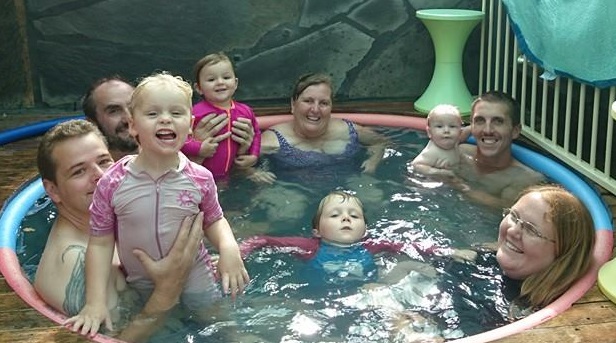
Beverley Paine with her children, and their home educated children, relaxing at home.
Together with the support of my family, my aim is to help parents educate their children in stress-free, nurturing environments. In addition to building and maintaing this website, I continue to create and manage local and national home educating networks, help to organise conferences and camps, as well as write for, edit and produce newsletters, resource directories and magazines. I am an active supporter of national, state, regional and local home education groups.
"You've been an inspiration to me, I love the way
you really listen to people." Vanessa
"Whenever I read your writing I always come away
with increased confidence in my ability to provide and
share a wonderful learning journey with my family!" Davina
"Your guidance, understanding, support and words of
wisdom changed our lives. We now offer support and
organise many homeschooling events for others." Lesley
"Thank you once again for your prompt and friendly service.
I am convinced that your books are going to add
quality and peace of mind to my journey of teaching my kids
at home! Just from studying your website, until almost
2am
in the morning, I 've been encouraged!" Louisa
"Thank you for all your many,many reassuring words
over many, many years. You probably don't know exactly how
valuable you are to the Australian Home Education community.
I've been reading your stuff for maybe 8 years or more now.
And I'm very grateful." Gythaa

CLICK HERE
if you want to learn
how to write your own education plans
to suit
your unique children's
individual learning needs?
Or you are looking for quality curriculum and teaching tips...
|
|
Welcome to the World of Home Education
and Learning without School!
We began educating our children in 1985, when our eldest was five. In truth, we had helped them learn what they need to learn since they were born. I am a passionate advocate of allowing children to learn unhindered by unnecessary stress and competition, meeting developmental needs in ways that suit their individual learning styles and preferences. Ours was a homeschooling, unschooling and natural learning family! There are hundreds of articles on this site to help you build confidence as a home educating family. We hope that your home educating adventure is as satisfying as ours was! Beverley Paine
3 ESSENTIAL STEP BY STEP GUIDES
Let experienced home educators Beverley, Tamara and April walk you through HOW to create a learning plan that builds on solid foundations that works for YOUR family AND ticks all the boxes for home educaton registration!
|

Tap into Beverley's
experience
through her books
"Your books, your blogs helped me beyond words... they helped me to find comfort in knowing it is ok to choose exactly what is best for my family." Nisha
"Your books and information are mind blowing and already I am feeling good about this new experience." Diane
"Your guidance, understanding, support & words of wisdom changed our lives." Leslie
"I feel specially inspired by Beverley's words and, the more I read her comments, the more inspired I feel, since my need for support, respect for different parenting styles, and information are fully met." Marijo
|
 |
|

The information on this website is of a general nature only and is not intended as personal or professional advice. This site merges and incorporates 'Homeschool Australia' and 'Unschool Australia'.
The Educating Parent acknowledges the Traditional Aboriginal and Torres Strait Islander Owners, the Custodians of Australia, and pay our respects to Elders past and present and extend that respect to Aboriginal and Torres Strait Islander people viewing this website.
Advertise on this site.







Australia's premier online annual conferences, lifetime access to video and audio recordings, freebies, notes and associated resource guides.
EVERY SUMMIT IS UNIQUE!
$29 each  2023 2023  2022 2021 2022 2021
$25 each 2020 2019 2017
"Biggest and best Aussie homeschool event of the year!"
Home education is a legal alternative
to school education in Australia.
State and Territory governments are responsible
for regulating home education and have different
requirements, however home educating families
are able to develop curriculum and learning programs
to suit the individual needs of their children.

Without revenue from advertising
by educational suppliers and Google Ads
we could not continue to provide information
to home educators. Please support us by letting
our advertisers know that you found them on
The Educating Parent. Thanks!
|
 About
About


 Thank you for visiting!