|
Organising Homeschooling Camps
© Beverley Paine
This year a few of us have decided that we'd like to go camping more often as a group. To kickstart our camping odyssey we're getting together at Port Elliot Caravan Park from the 3rd to 8th February. If you'd like to join us phone the caretaker 08 8554 2134 and book your site. There are half a dozen families booked in so far. The caravan park is nestled in the protected picturesque Horseshoe Bay close to Victor Harbor about 80km south of Adelaide.
To keep up to date with plans for future homeschooling camps and to join in friendly chatter about camps, you are most welcome to join: http://groups.yahoo.com/group/SAHomeschoolCamps.
What happens at a homeschooling camp? Here are some of the things we've done at past camps:
Concert: this is always a lot of fun, not only for those participating but also for the audience. Usually lasts an hour or so and includes both children and parents having a go at either singing, dancing, telling jokes, mimes, skits, magic, recitals, charades, or playing a musical instrument (including air guitars!) The acts are often devised during the camp with rehearsals taking part on the afternoon of the concert. Costumes and props are often also made during the camp. It's all a lot of fun!
Quiz night: these can be simply or elaborately prepared, usually by a couple of mums or dads, and are always a big hit with everyone. We tend to start the quiz as soon as possible after dinner before the little ones get really tired. Campers split into equal teams, with 'littlies' and 'oldies' evenly dispersed. There are questions to suit all ages and games to break up the concentration!
Games Night: families bring card, dice and board games and we usually set aside the first afternoon or evening to play games. This is a really great ice breaker. The children will often continue to play the games throughout the camp.
Fancy Dress Parade: we've done this a couple of times, either bringing costumes to the camp or making them during the camp. The younger children always enjoy dressing up and playing with a box of props and costumes afterwards.
Art and Craft activities: Families usually bring an activity or two they'd like to share with others. Costs can be reimbursed by participants for expensive activities where resources need to be purchased before the camp. The yahoo group is a great way to keep in touch to help plan activities of this nature. We normally don't have a schedule or time table for activities. We've found that allowing families to offer the activity when they are ready usually works best, with everyone feeling comfortable about joining in if they want. You'll generally find something happening at a homeschooling camp!
Games: at some of our camps we've had organised 'morning circles' where we 'warm up' with fun activities or gentle exercises, Tai Chi or Yoga. During the day some of the parents have motivated children by starting ball games such as soccer or cricket. Some venues have equipment such as half-court tennis, archery, mini-golf, swimming pool or table tennis and we'll either organise structured sessions or use the equipment when we want. Beach camps always involve time spent building sandcastles, swimming, sunset walks, exploring reefs or fun and games in the dunes. Families bring sports equipment to share with other families and there's usually lots to do throughout the camps.
Bon Fire: during the non-fire risk season we usually have a bon fire on one night, roasting marshmallows, making and eating damper, cooking over the fire, baked potatoes, etc.
Other activities: At some camps different parents or children offer to teach the rest of us (those that want to) different skills. This has included circus skills, first aid, tracking and other environmental activities, astronomy and star gazing, cooking and baking, basket weaving, making kites, making cards, painting, making name/button badges, making and decorating a camp banner, horse riding lessons, feeding animals, demonstrations, canoeing, marbling, massage, and lots more!
Homeschooling workshops: Can be run on any topic relating to homeschooling. I've been to ones on reporting and recording, getting approval, different styles and approaches to homeschooling, networking with other homeschoolers, We've also had great sessions where we've just sat around and talked and talked about anything and everything related to homeschooling while the children happily busied themselves playing.
Excursions. Several of the camps we've been on have included excursions to nearby tourist features, including natural features such as gorges, islands, lakes, bushwalks. We've visited museums, walked around historical towns, gone underground and gazed in wonder at stalactites and bats, visited mines, wineries, cheese and chocolate factories! Every area has something wonderful or educational to visit.
Homeschooling camps are as good as families attending want them to be. To get the most out of a camp I've often found I've had to ease out of my social comfort zone and go up boldly to strangers and start a conversation. Doing an activity together is a great way to start the social ball rolling! At my first ever homeschooling camp I organised a marbling activity, bringing enough resources for about 40 people. I timidly set up the equipment and with my own family began marbling, laying out our colourful pictures to dry. In no time others joined us and we had great fun as we busily created amazing pictures together. Someone produced a rheam of paper as we quickly run out. The activity was a huge hit and by the end of the afternoon I'd made several new friends. The next day we went bushwalking, swimming and canoeing together and those friendships endured for several years.
Camps aren't complete without everyone sharing in the tidying and cleaning of the camp site or venue on the last day. Families leaving early usually chip in, doing whatever they can to help make the job easier for those leaving last.
Organising homeschooling camps can be simple or complex: a lot depends on the venue and what kinds of activities you want to run. Venues such as Camp Coorong and Narnu Farm offer a range of educational activities (for extra cost per person). Someone will need to act as coordinator for these activities and draw up a time table, put together numbers and ages of participants, collect money and liase with the camp owners. Some camps are held at venues with dormitory, cottage or cabin accomodation, while other camps are simply bush camps. I find that providing families with a basic list of what to bring is usually appreciated: it's easy to forget something. At our last beach camp, on the Fleuriue Peninsula I forgot to remind everyone that the weather can be changeable and that although it's midsummer fmailies needed to bring jumpers and jackets as it can often turn cold and rainy!
To organise a camp the first thing you need to do is find a few families who are keen on getting together for more than one day. The next step is to pick a place you all want to visit. Someone checks out the camping venues and a decision is made whether your camp will be a venue such as the Anglican Diocesan Centre at Melrose in the southern Flinders Ranges, a caravan park or bush camp in a National Park. A lot depends on how much people are willing to spend and what level of comfort and facilities you want to enjoy. Camps which offer a central place or hall for families to gather help to engender a great social atmosphere and are ultimately more satisfying as families tend to gather together more often.
If you want to run a structured camp it's best to work as a team, rather than leave all the organisation to one person. Camping at caravan parks is the easiest to organise: each family books a site for themselves and no money is collected by any one person. Camping at a venue with dormitory such as Camp Coorong requires a camp coordinator who will have her hands full simply keeping track of who is coming and if there is enough accomodation, or promoting the camp to make sure the minimum requirement is met (thus keeping costs down to a reasonable level for all). It helps if someone else takes on the role of organising specific activities or setting up a timetable. If meals are to shared or communally cooked, another person should take on the task of organising this. The more helpers during the planning stage the more successful and stress free the eventual camp will be.
There will be families attending your homeschooling camp that have never been to one before, and quite likely will have only just begun homeschooling a few weeks before! It's a good idea to encourage everyone to wear name badges, especially for the first couple of days, until people get to know each other. I find sending out a list of camp rules (based on common sense practice and the golden rule) helps to avoid unnecessary confusion or conflict. It's best to find out if the venue has any specific rules too: such as speed limits or car parking requirements, tolerance for pets, alcohol, etc. Most of the camps I've attended emphasise that parents are responsible for their own children at all times. The Home Education Association of Australia does offer insurance for camps but participants will need to be either members or pay an attendence fee and the camp has to be advertised as a HEA event beforehand.
Our family has attended over a dozen fantastic camps over the years. Although the children are now adults, Robin and I continue to participate in homeschooling camps as they are great fun and the company is simply wonderful! We love hanging out with people who cherish and enjoy the company of children. With luck we'll be turning up to camps with grandchildren in a few years - a great way to keep us both young at heart.

Was this article helpful? Was it worth $1.00 to you?
Your gift of $1 or more helps to keep this site operating
offering encouragement
and reassurance to families
wanting
better outcomes for their children.
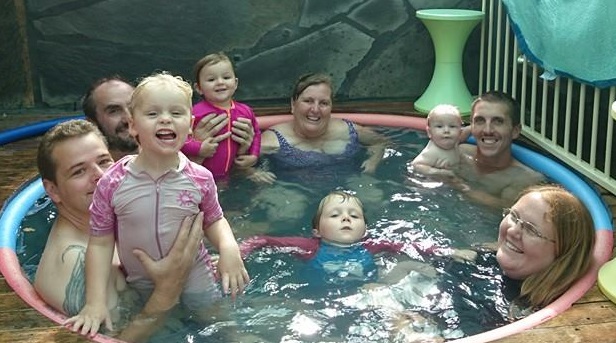
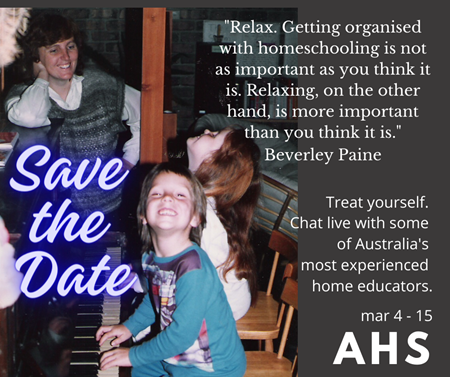
Beverley Paine with her children, and their home educated children, relaxing at home.
Together with the support of my family, my aim is to help parents educate their children in stress-free, nurturing environments. In addition to building and maintaing this website, I continue to create and manage local and national home educating networks, help to organise conferences and camps, as well as write for, edit and produce newsletters, resource directories and magazines. I am an active supporter of national, state, regional and local home education groups.
"You've been an inspiration to me, I love the way
you really listen to people." Vanessa
"Whenever I read your writing I always come away
with increased confidence in my ability to provide and
share a wonderful learning journey with my family!" Davina
"Your guidance, understanding, support and words of
wisdom changed our lives. We now offer support and
organise many homeschooling events for others." Lesley
"Thank you once again for your prompt and friendly service.
I am convinced that your books are going to add
quality and peace of mind to my journey of teaching my kids
at home! Just from studying your website, until almost
2am
in the morning, I 've been encouraged!" Louisa
"Thank you for all your many,many reassuring words
over many, many years. You probably don't know exactly how
valuable you are to the Australian Home Education community.
I've been reading your stuff for maybe 8 years or more now.
And I'm very grateful." Gythaa

CLICK HERE
if you want to learn
how to write your own education plans
to suit
your unique children's
individual learning needs?
Or you are looking for quality curriculum and teaching tips...
|
|
Welcome to the World of Home Education
and Learning without School!
We began educating our children in 1985, when our eldest was five. In truth, we had helped them learn what they need to learn since they were born. I am a passionate advocate of allowing children to learn unhindered by unnecessary stress and competition, meeting developmental needs in ways that suit their individual learning styles and preferences. Ours was a homeschooling, unschooling and natural learning family! There are hundreds of articles on this site to help you build confidence as a home educating family. We hope that your home educating adventure is as satisfying as ours was! Beverley Paine
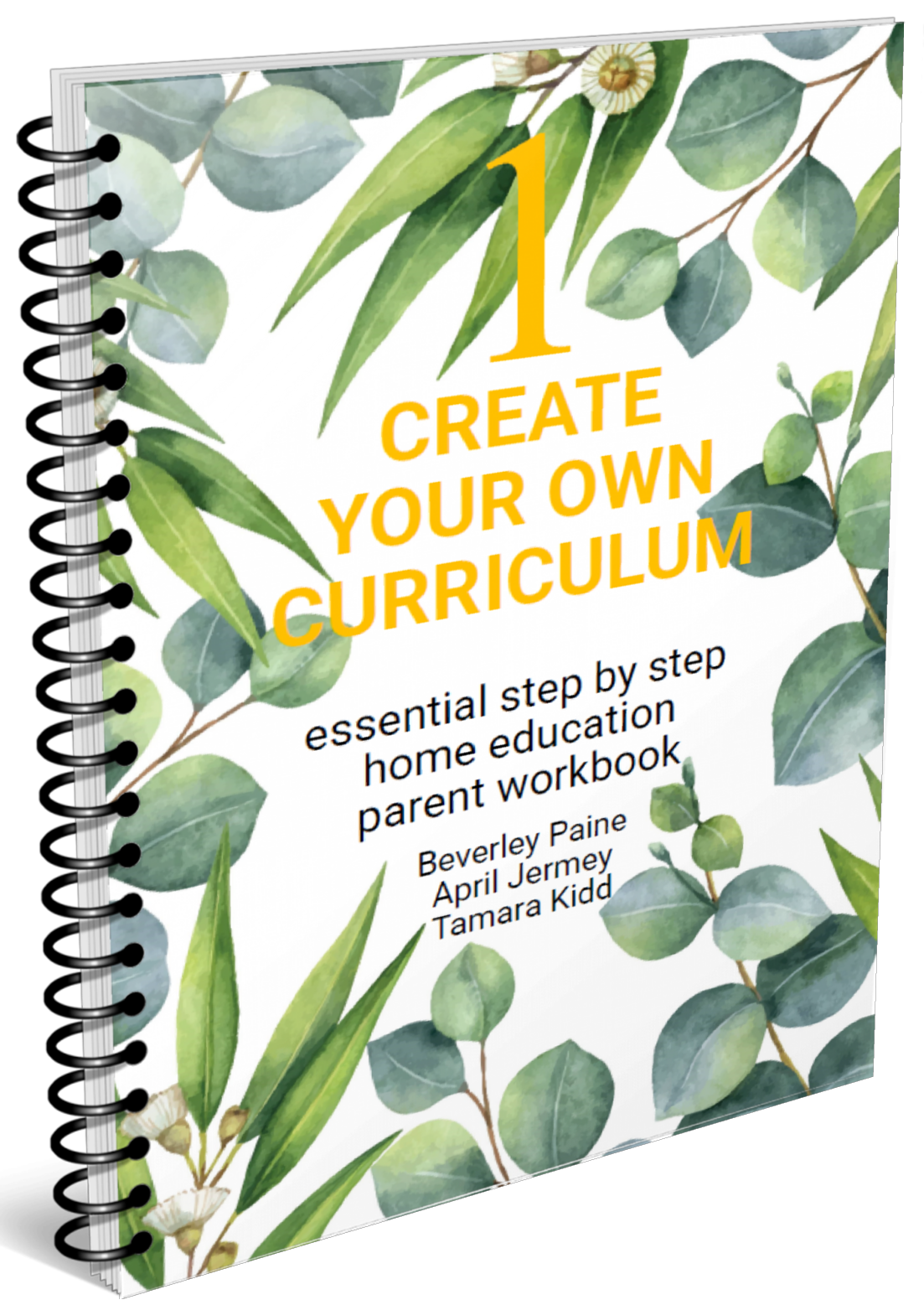
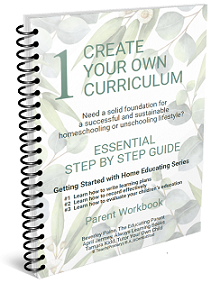
3 ESSENTIAL STEP BY STEP GUIDES
Let experienced home educators Beverley, Tamara and April walk you through HOW to create a learning plan that builds on solid foundations that works for YOUR family AND ticks all the boxes for home educaton registration!
|

Tap into Beverley's
experience
through her books
"Your books, your blogs helped me beyond words... they helped me to find comfort in knowing it is ok to choose exactly what is best for my family." Nisha
"Your books and information are mind blowing and already I am feeling good about this new experience." Diane
"Your guidance, understanding, support & words of wisdom changed our lives." Leslie
"I feel specially inspired by Beverley's words and, the more I read her comments, the more inspired I feel, since my need for support, respect for different parenting styles, and information are fully met." Marijo
|
 |
|

The information on this website is of a general nature only and is not intended as personal or professional advice. This site merges and incorporates 'Homeschool Australia' and 'Unschool Australia'.
The Educating Parent acknowledges the Traditional Aboriginal and Torres Strait Islander Owners, the Custodians of Australia, and pay our respects to Elders past and present and extend that respect to Aboriginal and Torres Strait Islander people viewing this website.
Advertise on this site.









Australia's premier online annual conferences, lifetime access to video and audio recordings, freebies, notes and associated resource guides.
EVERY SUMMIT IS UNIQUE!
$29 each  2023 2023  2022 2021 2022 2021
$25 each 2020 2019 2017
"Biggest and best Aussie homeschool event of the year!"
Home education is a legal alternative
to school education in Australia.
State and Territory governments are responsible
for regulating home education and have different
requirements, however home educating families
are able to develop curriculum and learning programs
to suit the individual needs of their children.

Without revenue from advertising
by educational suppliers and Google Ads
we could not continue to provide information
to home educators. Please support us by letting
our advertisers know that you found them on
The Educating Parent. Thanks!
|
 About
About


 Thank you for visiting!