|
How To Avoid Becoming Overwhelmed
© Beverley Paine, Sep 1999
I never avoid 'burn out' - I usually go headlong into it! I see it as a valuable learning experience and one that I don't always heed the lesson from! Not that I always felt this way, but after thirteen years of homeschooling and nearly nineteen years of parenting and many, many harrowing sessions of burn out, I now recognise the lessons and gifts derived from each. Needless to say I don't go out of my way to encourage a bout of burn out, but when it becomes unavoidable I simply try to take things as they come and accept that I have brought another valuable lesson to my doorstep. If we consider burn out to be an expected aspect of life then we can better prepare for it, by having in our survival kit strategies that help us cope with the confusion and stress it brings.
When thinking about how to deal with impending burn out I think the all important word to remember is RELAX! When you have finished doing that, relax some more! With our homeschooling practice I always find that burn out is something that usually only threatens when my expectations of what my children can or 'should' be doing is out of whack with their overall development, or when I am too busy comparing them against other children.
This always makes life more stressful, not only for the children, whom I suddenly feel are not productive enough, or not academically challenged enough, or simply not talented enough, and sometimes lazy, but also for myself. I judge myself harshly, feelin g inadequate, questioning my ability to facilitate their learning programs, sometimes unfit to be a mother even! I find the best cure for this special kind of insanity is a close and dear friend, someone to remind me just how wonderful I am. Nurturing friendships in life like this are absolutely essential - a really important tool in my homeschooling toolbox. Of course, if I relax just a little and take time out for a hug the children quickly remind me!
I find that the are things that frequently cause burn out in my life are generally unrelated to our homeschooling practice, though homeschooling always gets the blame. Just recently I completely fell apart again, but only because of changing work situations, job insecurity, sudden financial difficulties, and recurring illness in the family, finally worked me down to a drivelling heap! It had nothing to do with homeschooling, but suddenly I found yself fretting about Thomas's education and socialisation, adding yet more worries to my ever increasing pile.
At times like this I take a deep breath, stand back, and really look hard at what is actually happening. Seeing reality, so to speak, uncoloured by my current mood. In this way I can more easily see just where the burn out and the problems are stemming from. I often seek feedback from friends now, and talk to them about what is going on. Their objectivity is a useful shortcut to sorting my problems out. I find I have to do this before I can begin to apply bandage solutions or permanent remedies.
Another source of burn out that many homeschooling parents don't recognise until well into their second or third year is over-socialisation. We all readily concur that the level of school socialisation is bad for most children, but what we don't realise is that children, when given a choice, (and if they haven't already fallen victim to peer addiction) will quickly find a balance in their social development. I try to not offer social opportunities unless they are asked for or I feel the children need it to advance their social development. And then we go carefully, hardly ever booking up more than two social outings a week, and guarding the children's private time fiercely . I know many homeschoolers who do this now.
Just like children need time out to assimilate all aspects of their social engagement so do adults. Hanging out with other homeschooling families too often just offers more opportunity to compare and contrast, and then feel inadequate! Finding that essential balance early is a good idea, and usually means a least one session of social burn out.
I must say that I have found that being a homeschooling mum has held me together through many desperate times. In the early years of homeschooling I suffered from chronic depression, and was unable to work due to health problems. If I had sat at home all day while my children went to school I may not have survived. My children were always building my self esteem as I built theirs, and I found that becoming involved in their educational development gave me a passion about learning and how people learn. It became a hobby of sorts, and helped to connect me with some very wonderful people who continue to support me today.
Some people ask about the stress and strain that comes from the daily juggling of chores and education. Many homeschoolers simply neglect the bulk of the housework, waiting until the children are older. Spending time with the children, helping them follow their interests is far more important, and comes but once in life. I have found that this relaxed way of life has not taught my children laziness or neglected their own housekeeping or personal hygiene skill building. On the contrary, as the children have grown they are more than happy to help out with chores that were simply to hard, or took to long, to involve them in when they were younger.
Other families cannot operate unless the house is organised and spotless. Some arrange complex routines, and if this has always been part of their lives burn out will not occur. Burn out comes when you try to do something that isn't quite you, to fit into someone else's idea of the perfect homeschooling mum or family!
Housekeeping and homeschooling can work very well together, and do, in many homes. The secret lies in creating priorities. You may need to do this on a daily or weekly basis. We even have yearly goals. Next year is 'bathroom' year - we will finally finish all three bathrooms! I don't care when or how, but I know that having named that goal we will steadily work towards it. Weekly goals are much the same. A certain amount of work needs to be done and if it is named, or put on a list, or posted on the wall, then it will get done. Some people use timetables, either in their head or on a chart. Any way works, so long as you remember that everyone has to know what needs to be done, and that it helps if the work is shared. Setting priorities, realistic ones, and learning how to delegate tasks, are two very important lessons I have learned from the dozens of burn out sessions over the years!
When totally stressed I usually fall back on the following method of staying sane. I choose four things I need to do each day to make me feel okay. One is a household task. This may be the laundry, or doing the dishes from the night before. Cleaning windows and polishing floors can wait until I feel better and more balanced, thank you very much! The next thing I choose is child related, and usually means taking some time to play with the children. It could be a board game or help with building a cubby. It has to last more than an hour though to be effective. The next thing is educational in nature - sitting down with a child and reading with them, doing a science experiment, completing a maths puzzle or teaching a new concept. This reassures me my children are learning and all is well in homeschooling land! The last, and probably most important thing, and that which is hardest to do, is time for me. I might have a bubble bath, or read something for pleasure, or go for a walk, or pour myself a glass of wine, sit on the verandah and just watch the flowers and birds.
Each day I aim to complete these four things. If I feel really bad I just allow myself to sit and wallow, knowing that this mood will pass.... sometimes it takes a week or two, but over the years the children have learned that a good hug will help mum out of the largest of holes. So I 'trained' them to hug me!
If you do these four things it will help you climb out of the doldrums, and take those first crucial steps up out of burn out. I bet you will feel very satisfied at the end of the day, so long as you don't let anything else get in the way of doing them. Put a sign on the door saying 'don't interrupt', or 'no visitors today'. Put the answering machine on. Don't open the mail!
By the way, when I said one educational thing, I meant one. Concentrate on one child at a time. You'll get around to them all eventually. Remember that just one hour a day for each child will give them far more individual attention than any school can. And you are not neglecting the others.
This reminds me of another way we bring burn out upon ourselves when first homeschooling. All too often we compare our home learning situation with school, usually dragging up half forgotten memories of our own schooling experience from decades before. It doesn't help if your sister or mother is a school teacher too, and feels a need to help by either offering expert advice or criticisms of homeschooling! Learn to forget about school. There has never been any comparison between school and home learning environments that was actually meaningful and did justice to how children really learn. The quickest way to bolster your confidence is to read only homeschooling stories - leave the school stuff on the shelf!
I think we all tend to bust a gut when first homeschooling. Comparing our homeschooling programs with school education is often the reason why. We don't have to teach our kids everything there is to know and how to do everything there is to do this week, next week, this year, next year or even in the next decade. They have their lifetimes ahead of them. What is the hurry? If you must compare school at home, remember not all children make it through the school system intact. I sometimes think of Thomas at school, of what it would do to him. There isn't a teacher in a classroom who can do a better job than I am. The evidence is in the classrooms, and in my friends' homes. For the majority of children school does not work - at best it offers a mediocre, one size fits all education. Is that what we want for our children? No. Consider this - if you gave your children three mediocre days a week, they still get over two hundred excellent days each year. Compare that to school. So give yourself a break. Relax for three days a week.
Learn to cover the basics only - work out what these are for your family - don't take them from a curriculum somewhere or from what other people do. And yep, relax, take it easy, be kind to yourself, and know that there is plenty of time. Do a positive parenting course. I did. It changed so much in my life. Learn to be positive and creative, and to enjoy homeschooling. It is a great time to rekindle the child within yourself, to take time to play, to learn to be spontaneous and to look at the world with awe and wonder. So few adults take this opportunity. Begin to see homeschooling as a gift.

Was this article helpful? Was it worth $1.00 to you?
Your gift of $1 or more helps to keep this site operating
offering encouragement
and reassurance to families
wanting
better outcomes for their children.
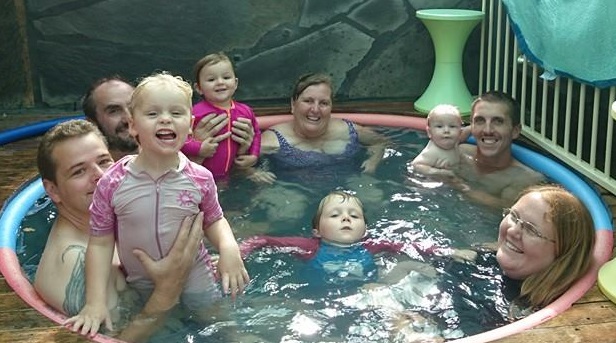
Beverley Paine with her children, and their home educated children, relaxing at home.
Together with the support of my family, my aim is to help parents educate their children in stress-free, nurturing environments. In addition to building and maintaing this website, I continue to create and manage local and national home educating networks, help to organise conferences and camps, as well as write for, edit and produce newsletters, resource directories and magazines. I am an active supporter of national, state, regional and local home education groups.
"You've been an inspiration to me, I love the way
you really listen to people." Vanessa
"Whenever I read your writing I always come away
with increased confidence in my ability to provide and
share a wonderful learning journey with my family!" Davina
"Your guidance, understanding, support and words of
wisdom changed our lives. We now offer support and
organise many homeschooling events for others." Lesley
"Thank you once again for your prompt and friendly service.
I am convinced that your books are going to add
quality and peace of mind to my journey of teaching my kids
at home! Just from studying your website, until almost
2am
in the morning, I 've been encouraged!" Louisa
"Thank you for all your many,many reassuring words
over many, many years. You probably don't know exactly how
valuable you are to the Australian Home Education community.
I've been reading your stuff for maybe 8 years or more now.
And I'm very grateful." Gythaa

CLICK HERE
if you want to learn
how to write your own education plans
to suit
your unique children's
individual learning needs?
Or you are looking for quality curriculum and teaching tips...
|
|
Welcome to the World of Home Education
and Learning without School!
We began educating our children in 1985, when our eldest was five. In truth, we had helped them learn what they need to learn since they were born. I am a passionate advocate of allowing children to learn unhindered by unnecessary stress and competition, meeting developmental needs in ways that suit their individual learning styles and preferences. Ours was a homeschooling, unschooling and natural learning family! There are hundreds of articles on this site to help you build confidence as a home educating family. We hope that your home educating adventure is as satisfying as ours was! Beverley Paine
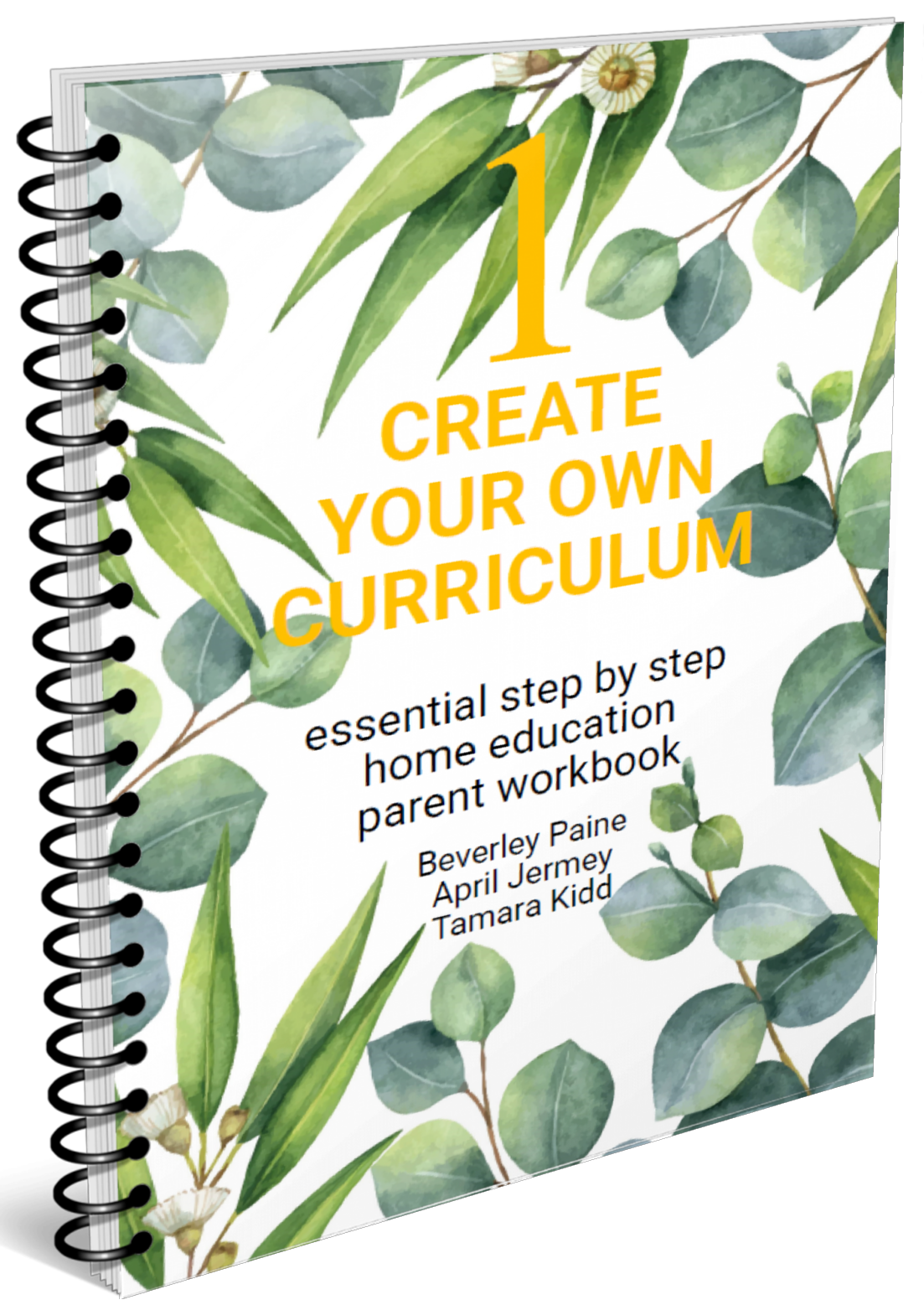
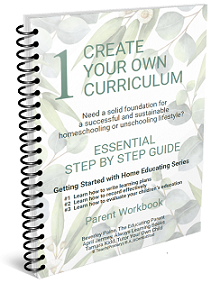
3 ESSENTIAL STEP BY STEP GUIDES
Let experienced home educators Beverley, Tamara and April walk you through HOW to create a learning plan that builds on solid foundations that works for YOUR family AND ticks all the boxes for home educaton registration!
|

Tap into Beverley's
experience
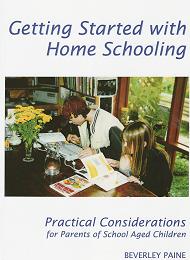
through her books
"Your books, your blogs helped me beyond words... they helped me to find comfort in knowing it is ok to choose exactly what is best for my family." Nisha
"Your books and information are mind blowing and already I am feeling good about this new experience." Diane
"Your guidance, understanding, support & words of wisdom changed our lives." Leslie
"I feel specially inspired by Beverley's words and, the more I read her comments, the more inspired I feel, since my need for support, respect for different parenting styles, and information are fully met." Marijo
|
 |
|

The information on this website is of a general nature only and is not intended as personal or professional advice. This site merges and incorporates 'Homeschool Australia' and 'Unschool Australia'.
The Educating Parent acknowledges the Traditional Aboriginal and Torres Strait Islander Owners, the Custodians of Australia, and pay our respects to Elders past and present and extend that respect to Aboriginal and Torres Strait Islander people viewing this website.
Advertise on this site.








Australia's premier online annual conferences, lifetime access to video and audio recordings, freebies, notes and associated resource guides.
EVERY SUMMIT IS UNIQUE!
$29 each  2023 2023  2022 2021 2022 2021
$25 each 2020 2019 2017
"Biggest and best Aussie homeschool event of the year!"
Home education is a legal alternative
to school education in Australia.
State and Territory governments are responsible
for regulating home education and have different
requirements, however home educating families
are able to develop curriculum and learning programs
to suit the individual needs of their children.

Without revenue from advertising
by educational suppliers and Google Ads
we could not continue to provide information
to home educators. Please support us by letting
our advertisers know that you found them on
The Educating Parent. Thanks!
|
 About
About


 Thank you for visiting!