|
Children Learning Naturally at Home the Permaculture Way
© Beverley Paine, August 1998
"The core of permaculture is design. Design is a connection between things ... It's the very opposite of what we are taught in school. Education takes everything and pulls it apart and makes no connections at all. Permaculture makes the connection ... " Bill Mollison
"We can think of ourselves not as teachers but as gardeners. A gardener does not 'grow' flowers; he tries to give them what he thinks they need and they grow by themselves." John Holt
I love gardening, and I love my children. I love watching things grow. But all too often confusing messages that have filtered down through well-meaning generations get in the way of plain old common sense. I find myself trying to bend the plants and the children to my suit my needs, often distorting their natural shape, twisting and bending them, destroying the very essence of liveliness within them...
Luckily I found John Holt and Bill Mollison, two very wise and clever mentors, at around about the same time in my life. Both have dared to challenge the status quo and both have founded self-sustaining alternative movements. On the surface they appear to be talking about two very different things. However, both are talking about connections, about patterns of living, about attitudes: how we go about the process of living. And both espouse a natural way. And for me, both celebrate natural learning.
Education has become a monstrous bureaucracy, no longer serving the noble cause of enabling and empowering individuals. It doesn't recognise the intelligence and worth of individuals. It is more concerned with its own survival than anything else. No one can truly say in what 'direction' education is heading, and who, or what, is accountable or responsible for the results imposed on our young people.
Because I love my children I liberated them from the tired, broken down education system and set them free. This took guts. Back in 1985 I knew of no one else who dared to educate their children at home. School is the accepted norm: how could we 'teach' our children at home and guarantee their successful integration into adult society many years into the future? But nature always finds a way, and soon enough I found other 'weeds' daring to grow in the otherwise carefully restrained and cultivated garden bed!
Drawing strength from the observations I made about my own children's progress and that of other children in home learning situations, and from the wisdom of Holt, Mollison and many other authors, who all demonstrated in their writing a respect for children as young people, I developed a confidence in allowing my children to pursue a different way of learning, natural learning.
In developed industrialized nations opportunities for children to learn naturally are difficult to find. Some places in the world still practise and honour natural learning: schools have not taken a complete hold on their societies, dictating how children should grow into model citizens, ready to take their places in factories that no longer exist. As a product of the industrial age schools may have had a legitimate role to play in the education process, but this is no longer pertinent in our rapidly changing economic and social environment. It is time to re-evaluate the old values, and to encourage a return to community and family based education.
Community - real rather than contrived - is where education really flourishes, matters and makes a difference and has meaning. Families are where a child's first connections are made. These are vital connections, essential to the child's survival. They are social connections. Nobody consciously determines the structure and content of these early 'lessons': they happen naturally. In this way a child learns to talk and walk, survive and thrive, mastering complex skills naturally. This early learning is taken for granted by parents and society, it is expected: everything is progressing as nature intended. Why, then, must we change the recipe for success just because a child turns five years of age?
These vital connections and early lessons are all social ones: infants do not learn in social isolation. Nor do they progress if surrounded by masses of tiny babes all the same age. Children learn by emulating the behaviour of others, by studying it, by desiring to be like others. This is quiet learning that takes place in the background, what Alan Thomas calls informal learning and what I call natural learning. The learning that happens when no one is watching: much like how my vegetables and flowers grow!
Recognising the power of these connections is the key to successfully facilitating the learning of young children, and indeed, people of all ages. We all have the potential to learn new skills, to develop latent talents and abilities. All too often the voices of the 'experts' get in the way of our enthusiasm and innate drive to learn, telling us that we are not ready, don't have the prerequisite skills, haven't done the right 'course', a continual litany dumbing us down, and our children.
Education systems break learning into small, supposedly digestible chunks. But no one knows how much I can eat at one time, or what I like to eat, or how my body will react. Given time and space to grow and learn in a wild garden, I have come to realise what nutrients plants need, and when and how I need them. I do the same for my children. It is impossible to predict the growth of each individual child, especially in educational terms, and so I tend each child carefully, using my powers of observation to determine how best to help the growth along.
Naturally, love is the most powerful fertiliser for growth there is. At home this flows freely and in abundance. I have never witnessed this expression of love in any school environment.
Respect is the other powerful fertiliser I use abundantly. I respect the right of my children to follow their own paths, much like I have learned to allow my plants to flourish in the microclimate and position best suited to each individual plant. Instead of 'giving' my children an 'education', I look for what each child needs, what elements I can bring together to help fulfill those needs, and I joyfully accept and capitalise on those wonderful bonuses this approach always produces! Through permaculture I have learned to recognise and respect the innate characteristics and needs of each plant, and this has helped me understand my children's educational process.
In my 'wild' permaculture garden I am mindful of those things I desire to achieve, and things are no different with parenting and education. Although I have an overall design or plan held in my mind, I focus on what is happening now. I have never been able to understand the mentality of worrying about a child's university education a decade before it is even likely to happen! Kahil Gibran said it most eloquently when he spoke of our children being like " living arrows ... sent forth" into the realms of "tomorrow", which we cannot visit, or even presume to know what it will be like.
Permaculture offers us a set of principles we can use when designing gardens . I have never considered these limited to landscape planning! I believe them to be a design paradigm for living. Offering our young people the opportunity to learn in their own homes is a wonderful way to help them understand their place in the natural world. It discourages feelings of disconnection and isolation, and builds a natural social life, from the centre out. It allows the child to socially unfold from the egocentric toddler, into the co-operative family member, then comfortably and confidently into the social world of family friends, before finally choosing to participate in the wider community, with self esteem and confidence intact.
An essential aspect of natural learning is the absence of an artificial hierarchy. I trust my children will control and direct their learning to meet their own needs. This gives them confidence to grow in independence, a vital lesson for all young people. My children find themselves perfectly placed to learn what they need to learn at every given point in their day. In assisting them I am guided by their moods, their requests, their questions, their desires, their physical needs, their responses to the people, environment and actions of the day. It takes very little effort to see their needs, in much the same way that, as a gardener watching my plants grow every day I know what to do next to keep them healthy and help them prosper. All this is achieved by simply being available, and learning from the interactions between all elements as the day progresses. It is a wonderful dynamic process, and as it knits together over time it becomes even more effortless.
I recognise the edge is where maximum growth occurs: in a garden the weeds cluster thickest close to the pathways, looking abundant and untidy. Learning is no different. We can't control its appearance or its voracity. Often the edge is the point at which conflict occurs and we are challenged to resolve or solve difficult problems, often needing to overcome past fears. Children have a natural instinct to challenge themselves in their development. At home we respect and honour that and wait patiently for our children to succeed at their own pace in their own chosen way. Schools can rarely, if ever, offer all children this chance. Life, if given space to grow, will be abundant. It is up to us to value the result!
Although our home education began as a tentative experiment with only 'education' as the goal, we have seen the harvest of many wonderful yields. For me it has been reclaiming the dignity of motherhood in a society which encourages women to be workers away from home and children for long hours. I have reclaimed my children from a sy stem of child care and education which will not stand up and be responsible and accountable for its outcomes. I have also reclaimed the right to be in control of my own education, celebrating that education is not only a process of training for employment or to produce conforming 'citizens', but one of abundant growth and potential. We have discovered that the definition of success and failure is very personal, and that to judge performance and ability by arbitrary standards is demeaning and destructive of self esteem.
But best of all, we have grown together as a family, in love and friendship, drawing our strength from the abundance of nature, and its powerful example of natural learning.

Was this article helpful? Was it worth $1.00 to you?
Your gift of $1 or more helps to keep this site operating
offering encouragement
and reassurance to families
wanting
better outcomes for their children.
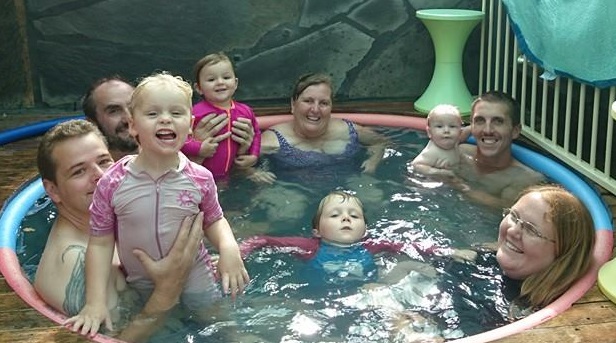
Beverley Paine with her children, and their home educated children, relaxing at home.
Together with the support of my family, my aim is to help parents educate their children in stress-free, nurturing environments. In addition to building and maintaing this website, I continue to create and manage local and national home educating networks, help to organise conferences and camps, as well as write for, edit and produce newsletters, resource directories and magazines. I am an active supporter of national, state, regional and local home education groups.
"You've been an inspiration to me, I love the way
you really listen to people." Vanessa
"Whenever I read your writing I always come away
with increased confidence in my ability to provide and
share a wonderful learning journey with my family!" Davina
"Your guidance, understanding, support and words of
wisdom changed our lives. We now offer support and
organise many homeschooling events for others." Lesley
"Thank you once again for your prompt and friendly service.
I am convinced that your books are going to add
quality and peace of mind to my journey of teaching my kids
at home! Just from studying your website, until almost
2am
in the morning, I 've been encouraged!" Louisa
"Thank you for all your many,many reassuring words
over many, many years. You probably don't know exactly how
valuable you are to the Australian Home Education community.
I've been reading your stuff for maybe 8 years or more now.
And I'm very grateful." Gythaa

CLICK HERE
if you want to learn
how to write your own education plans
to suit
your unique children's
individual learning needs?
Or you are looking for quality curriculum and teaching tips...
|
|
Welcome to the World of Home Education
and Learning without School!
We began educating our children in 1985, when our eldest was five. In truth, we had helped them learn what they need to learn since they were born. I am a passionate advocate of allowing children to learn unhindered by unnecessary stress and competition, meeting developmental needs in ways that suit their individual learning styles and preferences. Ours was a homeschooling, unschooling and natural learning family! There are hundreds of articles on this site to help you build confidence as a home educating family. We hope that your home educating adventure is as satisfying as ours was! Beverley Paine
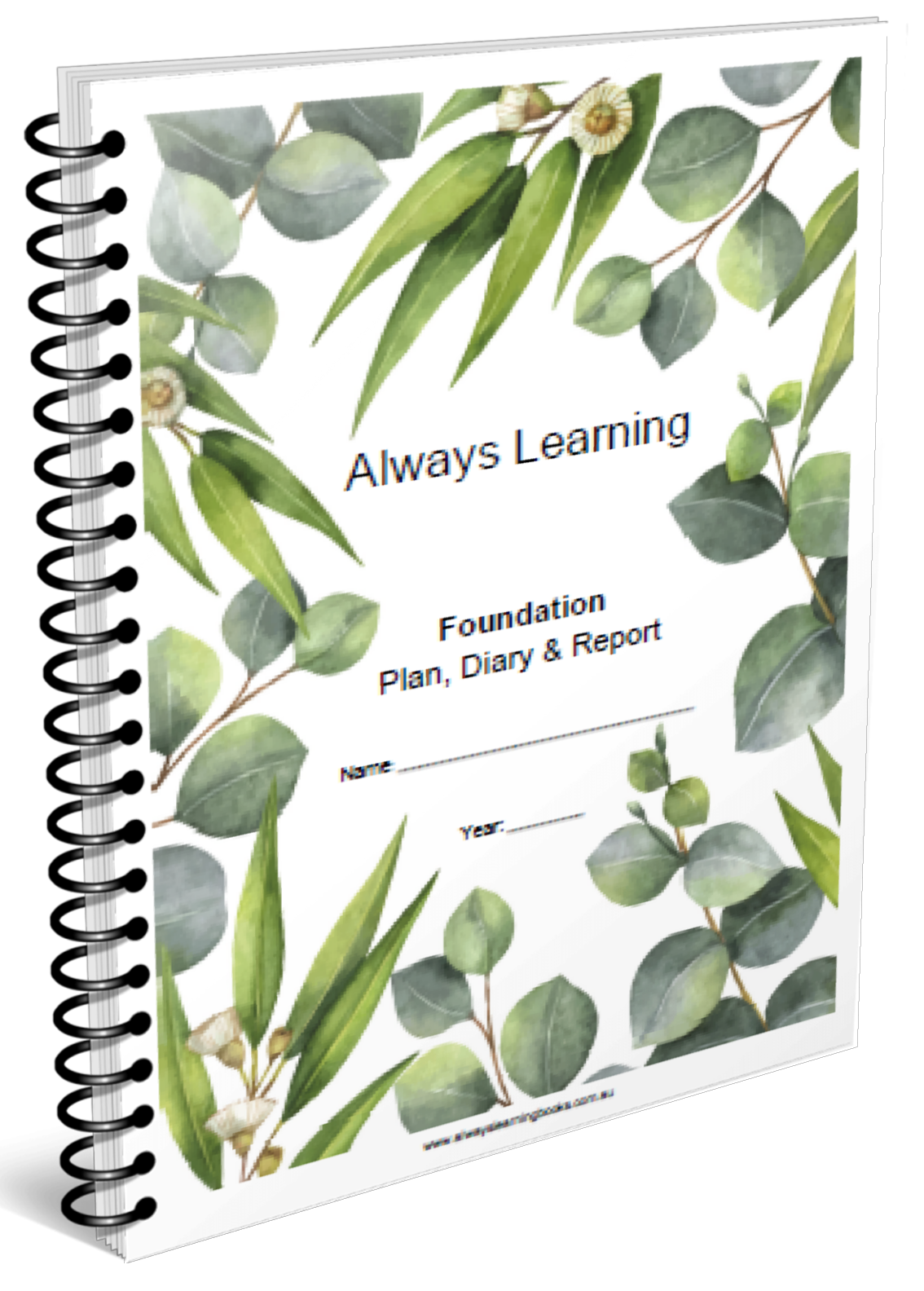
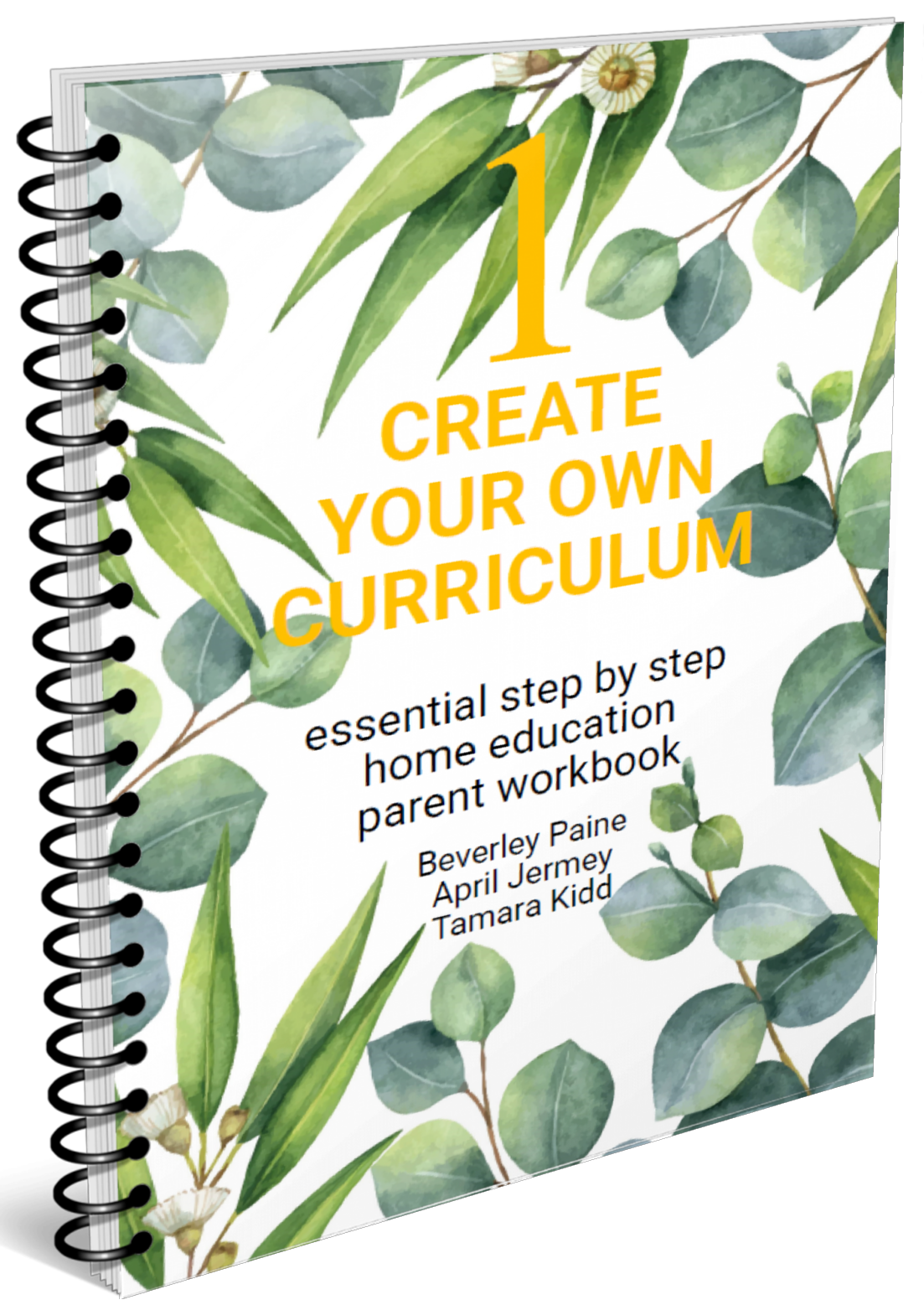
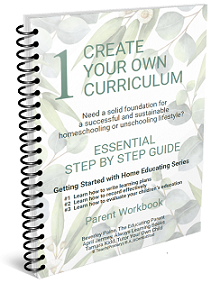
3 ESSENTIAL STEP BY STEP GUIDES
Let experienced home educators Beverley, Tamara and April walk you through HOW to create a learning plan that builds on solid foundations that works for YOUR family AND ticks all the boxes for home educaton registration!
|

Tap into Beverley's
experience
through her books
"Your books, your blogs helped me beyond words... they helped me to find comfort in knowing it is ok to choose exactly what is best for my family." Nisha
"Your books and information are mind blowing and already I am feeling good about this new experience." Diane
"Your guidance, understanding, support & words of wisdom changed our lives." Leslie
"I feel specially inspired by Beverley's words and, the more I read her comments, the more inspired I feel, since my need for support, respect for different parenting styles, and information are fully met." Marijo
|
 |
|

The information on this website is of a general nature only and is not intended as personal or professional advice. This site merges and incorporates 'Homeschool Australia' and 'Unschool Australia'.
The Educating Parent acknowledges the Traditional Aboriginal and Torres Strait Islander Owners, the Custodians of Australia, and pay our respects to Elders past and present and extend that respect to Aboriginal and Torres Strait Islander people viewing this website.
Advertise on this site.






Australia's premier online annual conferences, lifetime access to video and audio recordings, freebies, notes and associated resource guides.
EVERY SUMMIT IS UNIQUE!
$29 each  2023 2023  2022 2021 2022 2021
$25 each 2020 2019 2017
"Biggest and best Aussie homeschool event of the year!"
Home education is a legal alternative
to school education in Australia.
State and Territory governments are responsible
for regulating home education and have different
requirements, however home educating families
are able to develop curriculum and learning programs
to suit the individual needs of their children.

Without revenue from advertising
by educational suppliers and Google Ads
we could not continue to provide information
to home educators. Please support us by letting
our advertisers know that you found them on
The Educating Parent. Thanks!
|
 About
About


 Thank you for visiting!