|
How Important is it for Homeschooled Children to Be Around Other Children?
© Beverley Paine
It is very important. Children live in a child's universe as well as in our adult universe. As adults we have forgotten how to think like children - for most of us it's impossible to recapture that perspective. Occasionally I'll find myself enjoying a few genuine childish moments but as soon as I realise it the moment has gone! Awareness of self as a separate identity robs us of the innocent playfulness of childhood... With awareness comes responsibility. Childhood is a journey toward adulthood and we leave much behind. And that's okay, it's natural.
So, having other children around affirms to children that living in that childish universe is okay. They relate and speak to each other on very many levels that we, as adults, can't. The pressure to become adults is huge in a child's life: it's the goal of childhood after all. In our consumer and growth economy driven society we push children to grow up too quickly. In war torn societies children suffer much the same fate, but for different reasons. Children have been pressured into growing up too fast forever. Australia is the lucky country - surely we can afford our children a leisurely childhood?
Have you noticed how children play at different ages and stages of their development and growth? I find it fascinating to watch them.
Many of us, both adults and children, like to hang around in the parallel stage of play development - even in conversations, in our working lives as well as in play. This is most noticeble in children under three or four years of age, where toddlers don't actually play with each other, but side-by-side, getting on with whatever it is they are individual doing, sometimes competing for a play object, sometimes playing cooperatively (giving and asking for play objects, helping each other) but usually doing their own thing and watching what others are doing. The way I see it parallel play is completely underrated as the most common way of learning anything at any time througout our lives.
How does this fit in with socialisation? Socialisation isn't the same as acquiring a set of social skills. You can develop adequate and acceptable social skills and still not 'fit' into society: even with perfectly adequate and pleasant social skills you can be rejected. Socialisation is the process upon which we learn to belong to a group. This is an innate survival need and is the primary driver for most of how society arranges or disarranges itself. So the question for home educators is: which groups do we want our children (and ourselves) to belong to?
Most of us seek balance: we look for different groups to fulfill different socialising needs within us. I hang out with home educators because they affirm my parenting practice (not my educational aspirations for myself or my children!). Home educators love their children and want to be with them, a LOT. Very few parents want to be with their children as much as I do, so I have found a social group that does. We all find groups that affirm our personal and family values. These groups give us reassurance and help us to feel safe.
The following is a little bit simplistic and I'm sure there is much more to it than I'm relating but I find it a useful way to think about learning. We learn when we are challenged in not so pleasant ways and have to learn. These are often the basic lessons we all learn in life and are usually related to personal survival. In a child's world this could be a lesson about staying close to mum and dad so that she doesn't get lost when out shopping, or not touching the iron to see if it's on. We also learn when we have the leisure to do so: this type of learning extends us and our world view - it's what schools call education! Learning is also essentially a social process. Although there are things we learn on our own, in private, these are always couched within a social context. This is especially true in early childhood.
We learn best from others. Which is why copying (or as it is often known in educational jargon - 'cheating') is so effective and forms the basis of the ancient practice of apprenticeship. We may not show others what we have learned and we may practice in private until we feel competent to impress others with our skill. This forms a huge part of what children do when they are playing childish games. Children playing together practice on each other the skills and knowledge they need to learn in order to become adults. In the world of imagination anything is possible. And the judgement that children practice on each other is far more forgiving that the judgement found in the adult world. It's a much freeer social environment in which to learn.
A parent can learn to play with their children in such a way but it's hard to sustain it for hours on end. And our children don't want us to be children, they want us to be adults, even when we are playing childish games. They are pretty finicky about the natural order of life.
So in answer to Marijo's question, I believe it is very important for children to play with other children, and children of their own age as well as children of different ages, on a regular basis. Watching my three children I discovered that they required access to other children no more than once or twice a week and that they preferred sustained play periods where extensive games can be played out and evolve into new games. I observed that they prefer attentive adult supervision from afar: they play more cooperatively and can sort out their own conflicts when it is obvious that they aren't responsible for doing so alone.
What is a sustained play period? My children seemed most happy when they could play for four or more hours. They liked at least one to two hours of free play with their friends if there was structured play or activities arranged for them. This gives them the opportunity to learn the particular set of social skills that relate directly to learning how to belong in group: the process of socialisation.
What I found was that if children spend long hours every day playing with other children, especially children of their own age, they have too much time learning how to belong to a group and not enough time learning how to get along with themselves. The development of their sense of self-identity is given a back seat. They become conformist and pleasers (or rebels) and can't say why they feel compelled to behave in such a way. As parents we need to look for social activity that balances our children's social development.
In single child families, especially in single parent families, it is very hard to find this balance. That's one of the reasons it is really important to find social groups that share the family's values. Humans are dependent on the extended family for healthy social development. In the absense of the extended family in our society we need to continually work on creating a suitble substitute. It isn't easy, but then living with and among our relatives, was never easy either!
If you liked this article and want more of the same, read:

Was this article helpful? Was it worth $1.00 to you?
Your gift of $1 or more helps to keep this site operating
offering encouragement
and reassurance to families
wanting
better outcomes for their children.
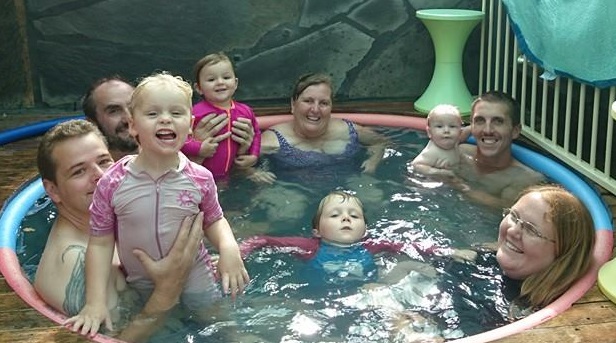
Beverley Paine with her children, and their home educated children, relaxing at home.
Together with the support of my family, my aim is to help parents educate their children in stress-free, nurturing environments. In addition to building and maintaing this website, I continue to create and manage local and national home educating networks, help to organise conferences and camps, as well as write for, edit and produce newsletters, resource directories and magazines. I am an active supporter of national, state, regional and local home education groups.
"You've been an inspiration to me, I love the way
you really listen to people." Vanessa
"Whenever I read your writing I always come away
with increased confidence in my ability to provide and
share a wonderful learning journey with my family!" Davina
"Your guidance, understanding, support and words of
wisdom changed our lives. We now offer support and
organise many homeschooling events for others." Lesley
"Thank you once again for your prompt and friendly service.
I am convinced that your books are going to add
quality and peace of mind to my journey of teaching my kids
at home! Just from studying your website, until almost
2am
in the morning, I 've been encouraged!" Louisa
"Thank you for all your many,many reassuring words
over many, many years. You probably don't know exactly how
valuable you are to the Australian Home Education community.
I've been reading your stuff for maybe 8 years or more now.
And I'm very grateful." Gythaa

CLICK HERE
if you want to learn
how to write your own education plans
to suit
your unique children's
individual learning needs?
Or you are looking for quality curriculum and teaching tips...
|
|
Welcome to the World of Home Education
and Learning without School!
We began educating our children in 1985, when our eldest was five. In truth, we had helped them learn what they need to learn since they were born. I am a passionate advocate of allowing children to learn unhindered by unnecessary stress and competition, meeting developmental needs in ways that suit their individual learning styles and preferences. Ours was a homeschooling, unschooling and natural learning family! There are hundreds of articles on this site to help you build confidence as a home educating family. We hope that your home educating adventure is as satisfying as ours was! Beverley Paine
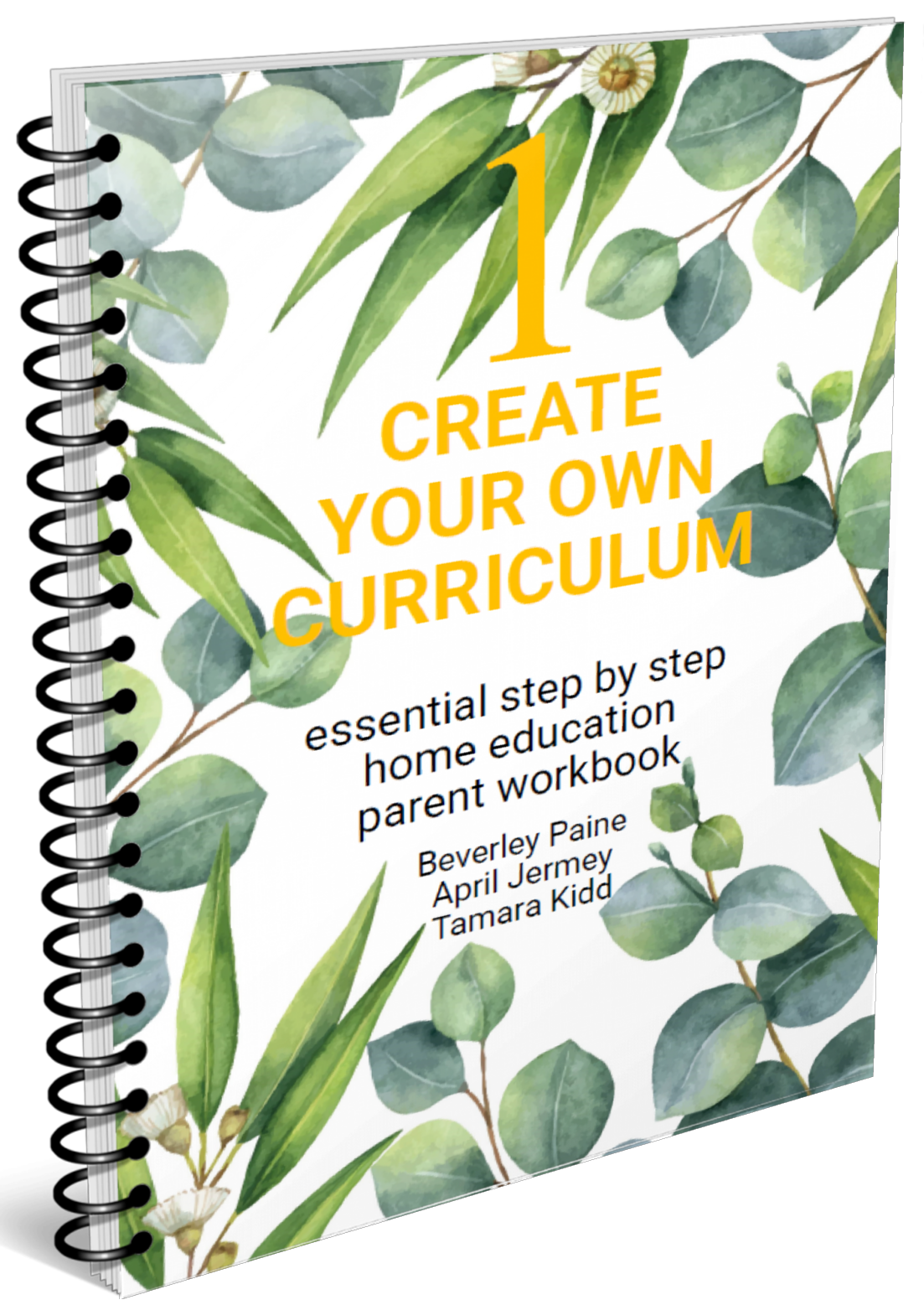
3 ESSENTIAL STEP BY STEP GUIDES
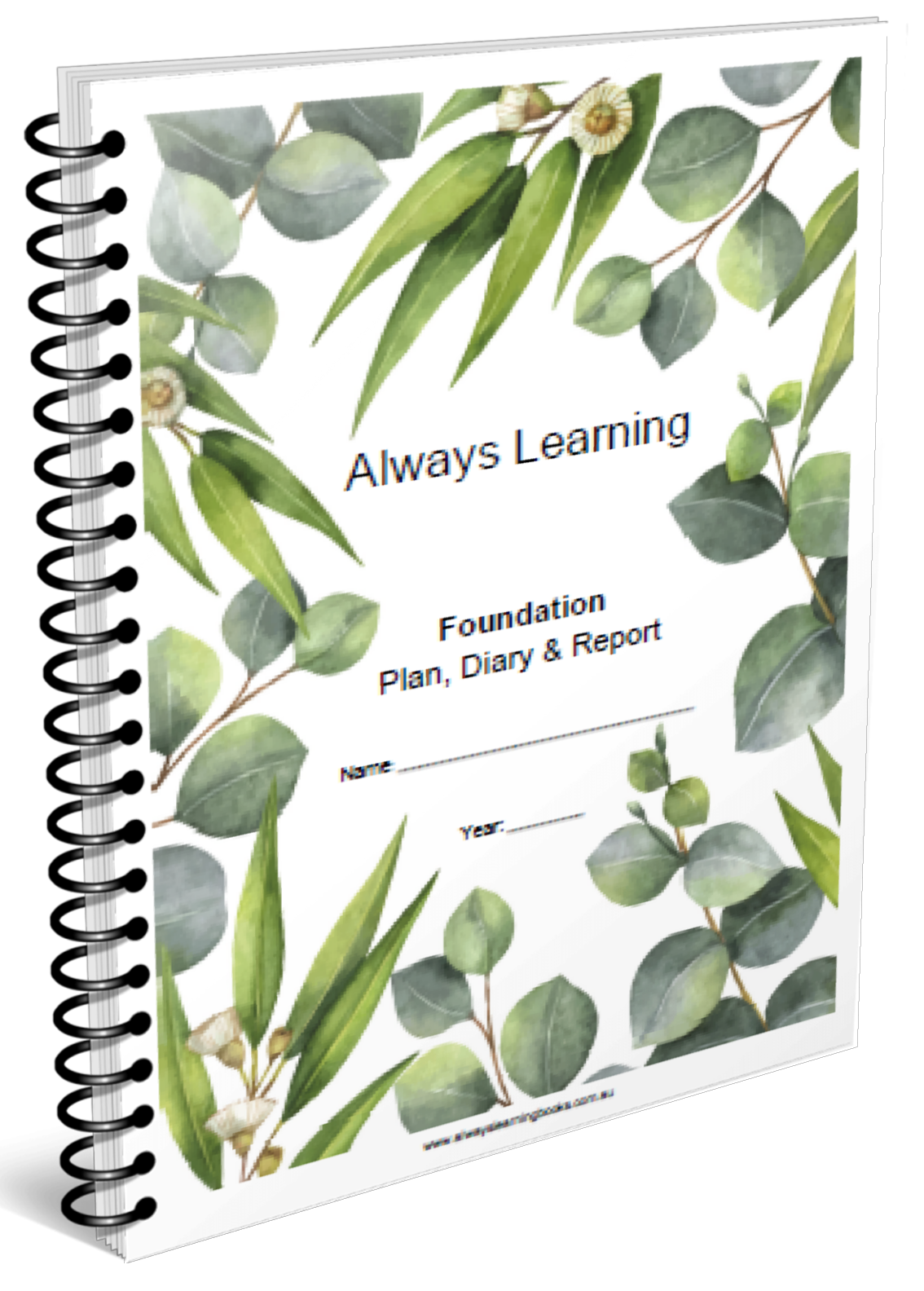
Let experienced home educators Beverley, Tamara and April walk you through HOW to create a learning plan that builds on solid foundations that works for YOUR family AND ticks all the boxes for home educaton registration!
|

Tap into Beverley's
experience
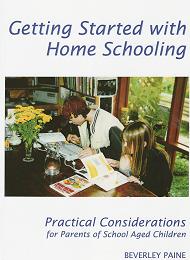
through her books
"Your books, your blogs helped me beyond words... they helped me to find comfort in knowing it is ok to choose exactly what is best for my family." Nisha
"Your books and information are mind blowing and already I am feeling good about this new experience." Diane
"Your guidance, understanding, support & words of wisdom changed our lives." Leslie
"I feel specially inspired by Beverley's words and, the more I read her comments, the more inspired I feel, since my need for support, respect for different parenting styles, and information are fully met." Marijo
|
 |
|

The information on this website is of a general nature only and is not intended as personal or professional advice. This site merges and incorporates 'Homeschool Australia' and 'Unschool Australia'.
The Educating Parent acknowledges the Traditional Aboriginal and Torres Strait Islander Owners, the Custodians of Australia, and pay our respects to Elders past and present and extend that respect to Aboriginal and Torres Strait Islander people viewing this website.
Advertise on this site.






Australia's premier online annual conferences, lifetime access to video and audio recordings, freebies, notes and associated resource guides.
EVERY SUMMIT IS UNIQUE!
$29 each  2023 2023  2022 2021 2022 2021
$25 each 2020 2019 2017
"Biggest and best Aussie homeschool event of the year!"
Home education is a legal alternative
to school education in Australia.
State and Territory governments are responsible
for regulating home education and have different
requirements, however home educating families
are able to develop curriculum and learning programs
to suit the individual needs of their children.

Without revenue from advertising
by educational suppliers and Google Ads
we could not continue to provide information
to home educators. Please support us by letting
our advertisers know that you found them on
The Educating Parent. Thanks!
|
 About
About


 Thank you for visiting!