|
Hints for homeschooling children with complex or individual needs
By Vanessa Whittaker, September 2011
In our family this meant one child had been treated for a childhood cancer and numerous coexisting issues (he is doing well now thankyou), a second child with significant learning issues and me with my own autoimmune issues.
Firstly: Believe that you can!
Secondly, know that home educating or homeschooling is completely legal and a positive, viable option in planning to meet your child's education needs. These first two provide the confidence to keep going if it becomes difficult. No-one is able to deny you this choice if you are able to provide evidence of a 'regular, consecutive and appropriate educational program'. The appropriate is excellent as it enables parents to provide for the needs of their child not just to a child of a particular chronological age. How to provide the evidence I will cover later in this article.
Often in choosing to home educate your child you find you are meeting other needs your child has; the emotional, psychological and even spiritual needs and just possibly the child's physical needs can be more easily met. We noted very quickly how much more relaxed and happy our children were as their confidence and self esteem improved. Our children became confident that their opinions would be valued and respected as they learned how to frame those opinions respectfully. Home education has also been positive in terms of family interactions and relationships. To be blunt in this topic, some families have a reality where sometimes a child may not be going to have a long life so then go for quality. The family time for families facing these issues it is even more valuable. home educating in these circumstances is a very positive option.
It was important to understand and even more importantly, to KNOW that as parents we do know our children's needs very well and we understand that different people have different learning needs and learning styles. Our knowledge of our children enabled us to know our children's needs so we planned a program to work to their strengths to address their weaknesses. We also worked to their passions. In the beginning for one child it was anything connected to geology and for the other it was anything connected to history, particularly military history.
For some reason the parents of children with complex and/or very individual needs are made to feel that they couldn't possible meet their child's needs.. The 'professionals' have spent years learning how to do that so parents should step aside and leave their child to these 'professionals'! This perspective is particularly offensive to me. Whether a child meets the type of label per this topic or not: PARENTS STILL KNOW THEIR CHILDREN BEST AND CAN MEET THEIR CHILDREN'S NEEDS! When children have complex and special needs, parents will become experts on those issues as they usually seek out all the information available and are usually co-ordinating treatment plans from multiple professionals and keep track of everyone's plans. Do not presume different departments talk to each other.
It goes back to the KNOWING mentioned previously as opposed to just thinking, possibly you can. It is the understanding that your family is your child's safe & soft place to fall and it is the parents' role to maintain that for always.
We were willing to accept advice from people but felt under no obligation to follow it if we believed it to be not in our children's best interests. Once we had made the decision to home educate we did not tolerate people trying to get us to change our minds with any form of negativity. We looked for people whose opinion we trusted along the journey and we were very fortunate to find them.
A great thing about home educating is the flexibility in scheduling. We do not have to keep to an 8:30 to 3pm timetable. In the beginning, when one child was still not in the best of health &sleeping very poorly we could start 'work' after lunch for as long as possible. If a sleep was required it was possible and more work completed later in the day. If we wanted to travel at any time around our family's needs &work schedules, appointments, it was not difficult and there was no need to justify our actions or activities to others. If we had to attend an appointment the children didn't miss an important idea/concept/activity. we would get to it. If I was having a bad day I could help them whether from a chair, my bed or whatever, I was present. If we attended to a school type day activity on a Sunday we could have our weekend on a Tuesday and Wednesday.
We could address life skills as well as formal learning under the 8 areas of learning.
Due to needs in our family, it was useful for our children to see & do as much as read and write so we utilised community space whenever possible. ie studying animals visit the zoo or museum, studying Aust. Political system go to Canberra and plan places to visit. Likewise for a science topic we would work out places to go to assist with their learning and still do.
Eventually our severely dyslexic child did learn to read and writes stories constantly. A significant moment for this child was an opportunity to meet a favourite author and to discuss with the author, just how she plans out her books and it was a huge moment when this author told our child just how many times she needs to rewrite/correct/edit one of her books. This gave our child confidence to write and the moment occurred due to a community contact who knew our child was enjoying the author's books and she happened to be in town on a promotional tour. It was a positive to learn of other famous people who are dyslexic to give hope of possible success if one worked hard. It took a while for our children to recover from negative school experiences and the comparisons which go on. even more so these days with programs like the NAPLAN testing, often children with special needs can not experience success with how these programs are set up and are made to feel less than.
Our children have needed a formalised type programming for their security. Due to this, everyday began with reading; shared, guided, and quiet reading, followed by grammar and/or comprehension activities, then a few pages of math. The afternoon was given our theme or topic of the moment, or social activities like bowling, iceskating etc.
We use a thematic approach to our home education programming and over time have used prepared units, lapbooks and/or thematic units I pulled together myself. We have used literature units using quality reading books covering all sorts of issues. For example: they are of high school age now and they are about to do a unit on Afghanistan using the books Shauzia, Parvana and Parvana's Journey. These books are a jump off point to geography (where they use the 5 themes of geography), history, the style of government, treatment of females within the culture (SOSE) effects of war (SOSE) What is the difference between refugees, migrants and immigrants (the children will meet with a few different people who have come here as refugees or migrants and will interview them before writing a report on why those people came here, what are the similarities, differences, the difficulties they faced, what the people feel about being Australian now) as well as looking at what Muslims believe (Also all SOSE). Then as a contrast they will come back to Australia look at our political system and tiers of government and contrast that with perhaps China or Russia. These units would include activities covering as many of the areas of learning as possible.
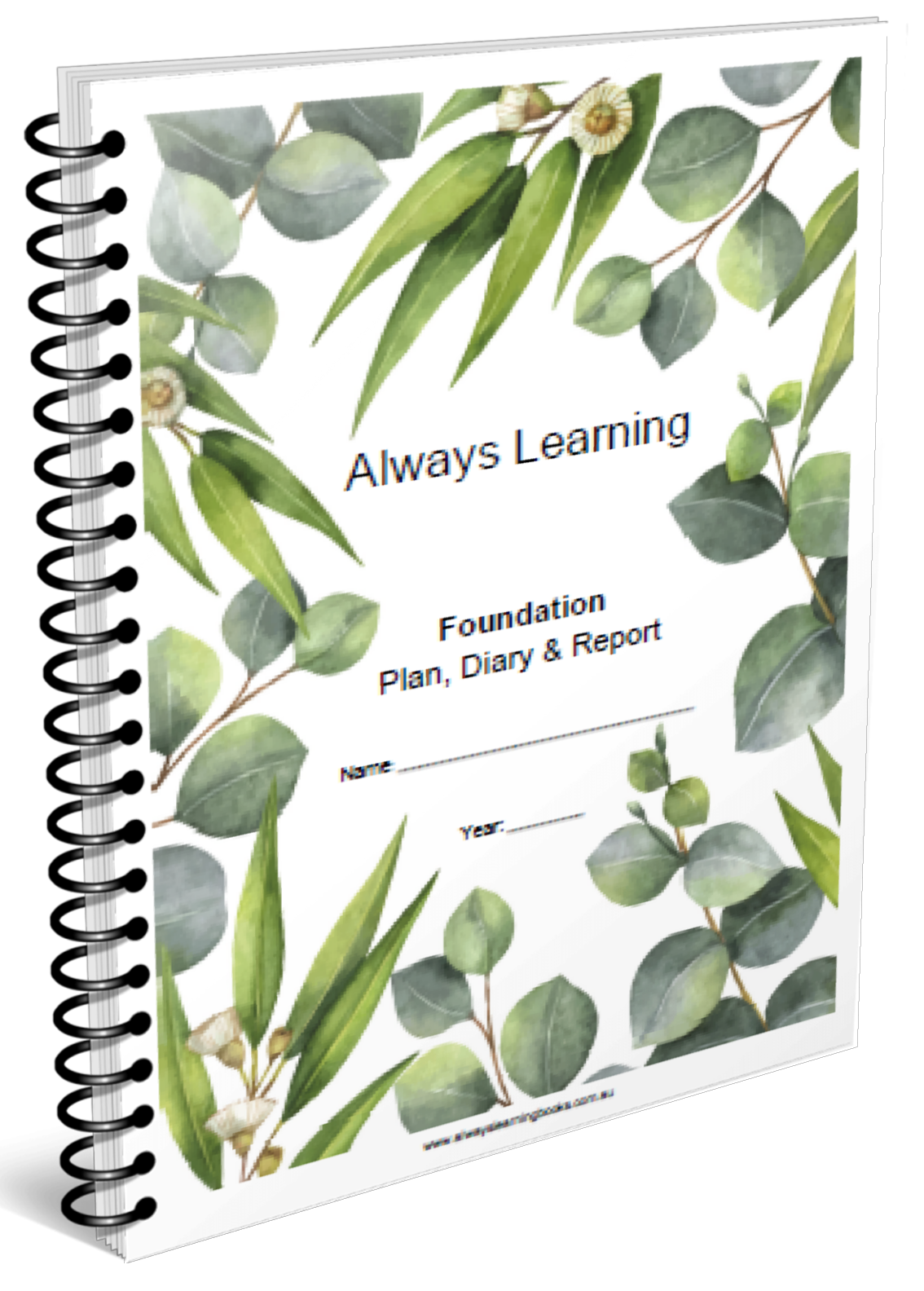
I have prepared my own proformas over time which kept track which areas of learning were covered in each theme or topic to ensure balance and that we are not doing more science than geography, that health and fitness is covered as well as media and technology (see sample).
Other tips I have are about record keeping (being able to provide evidence of a regular and consecutive learning program):
- Keep track of the days you spend on learning. This is as simple as creating a chart on your computer for the year and putting in a symbol each day according to a legend you create. Ie a tick for a day spent on a learning activity, S for a day the child was sick, H for family holiday, M for doctor's appointment and any others you need. It is possible to buy a printed fold out calendar for a binder to keep a hard copy record. Our legal advice was that any records kept for home schooling should be completely separate from a diary where family, work commitments, medical appointments etc are kept in the event they are required as evidence.
- Keep track of your child's learning activities under the 8 areas of learning. Some people like to do this at the end of the day/week and record what they did rather than what they plan to do. Do this either on the computer and print out a hard copy at the end of the year or store on a flash drive (remember to backup important files) or make up a proforma and keep them in a binder. (this was also legal advice) (I was a bit obsessive and planned and then also recorded. I just plan now and then tick off when completed)
- Keep your child's completed work in some sort of system as evidence of work completed and proof of time spent working/learning. Some could be photographed and put into a scrapbook or a file could be kept on the computer and be available as evidence of activities completed including moments of socialisation, sporting or community activities.
- All these can assist you in preparing for the exemption process or the yearly review if you are in SA or other states, presumably.
- For any interactions with officialdom, make and keep a file of the paper trail. You are not protected in the use of phone calls. People can deny they said something on the phone but if they put it in writing you can use that to pursue a point or to protect yourself.
- All requests for meetings, by officialdom or yourself, should be asked for and confirmed in writing, reasons should be obvious.
- If you have to attend meetings with officialdom ALWAYS take an uninvolved third person. In the disability sector advocates are available. I know some people have taken a lawyer, some a friend, while others have taken their local member of parliament. That person should not necessarily speak but should quietly take notes especially of anything asked of you and that you either agree/disagree to follow up on or an issue of concern for you or from officialdom. You should talk to the advocate/lawyer etc, before the meeting and agree on their role or stance. We had an issue once where all our advocate would ask was 'so are you happy with what you have just been told..and at the end of the meeting statement were made along the lines of 'so just confirming you are okay on this, this and this? You would like further information is requested on...' and it was all recorded and written up after meetings.
Again the most important thing to know and be reassured about is that home education is a positive legal choice to take for any child but even more so if you have a child that meets the criteria of this topic.
All the very best!

Was this article helpful? Was it worth $1.00 to you?
Your gift of $1 or more helps to keep this site operating
offering encouragement
and reassurance to families
wanting
better outcomes for their children.

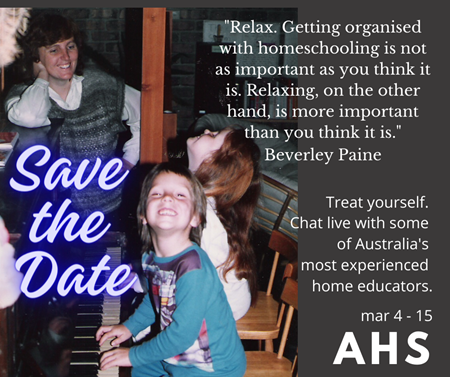
Beverley Paine with her children, and their home educated children, relaxing at home.
Together with the support of my family, my aim is to help parents educate their children in stress-free, nurturing environments. In addition to building and maintaing this website, I continue to create and manage local and national home educating networks, help to organise conferences and camps, as well as write for, edit and produce newsletters, resource directories and magazines. I am an active supporter of national, state, regional and local home education groups.
"You've been an inspiration to me, I love the way
you really listen to people." Vanessa
"Whenever I read your writing I always come away
with increased confidence in my ability to provide and
share a wonderful learning journey with my family!" Davina
"Your guidance, understanding, support and words of
wisdom changed our lives. We now offer support and
organise many homeschooling events for others." Lesley
"Thank you once again for your prompt and friendly service.
I am convinced that your books are going to add
quality and peace of mind to my journey of teaching my kids
at home! Just from studying your website, until almost
2am
in the morning, I 've been encouraged!" Louisa
"Thank you for all your many,many reassuring words
over many, many years. You probably don't know exactly how
valuable you are to the Australian Home Education community.
I've been reading your stuff for maybe 8 years or more now.
And I'm very grateful." Gythaa

CLICK HERE
if you want to learn
how to write your own education plans
to suit
your unique children's
individual learning needs?
Or you are looking for quality curriculum and teaching tips...
|
|
Welcome to the World of Home Education
and Learning without School!
We began educating our children in 1985, when our eldest was five. In truth, we had helped them learn what they need to learn since they were born. I am a passionate advocate of allowing children to learn unhindered by unnecessary stress and competition, meeting developmental needs in ways that suit their individual learning styles and preferences. Ours was a homeschooling, unschooling and natural learning family! There are hundreds of articles on this site to help you build confidence as a home educating family. We hope that your home educating adventure is as satisfying as ours was! Beverley Paine
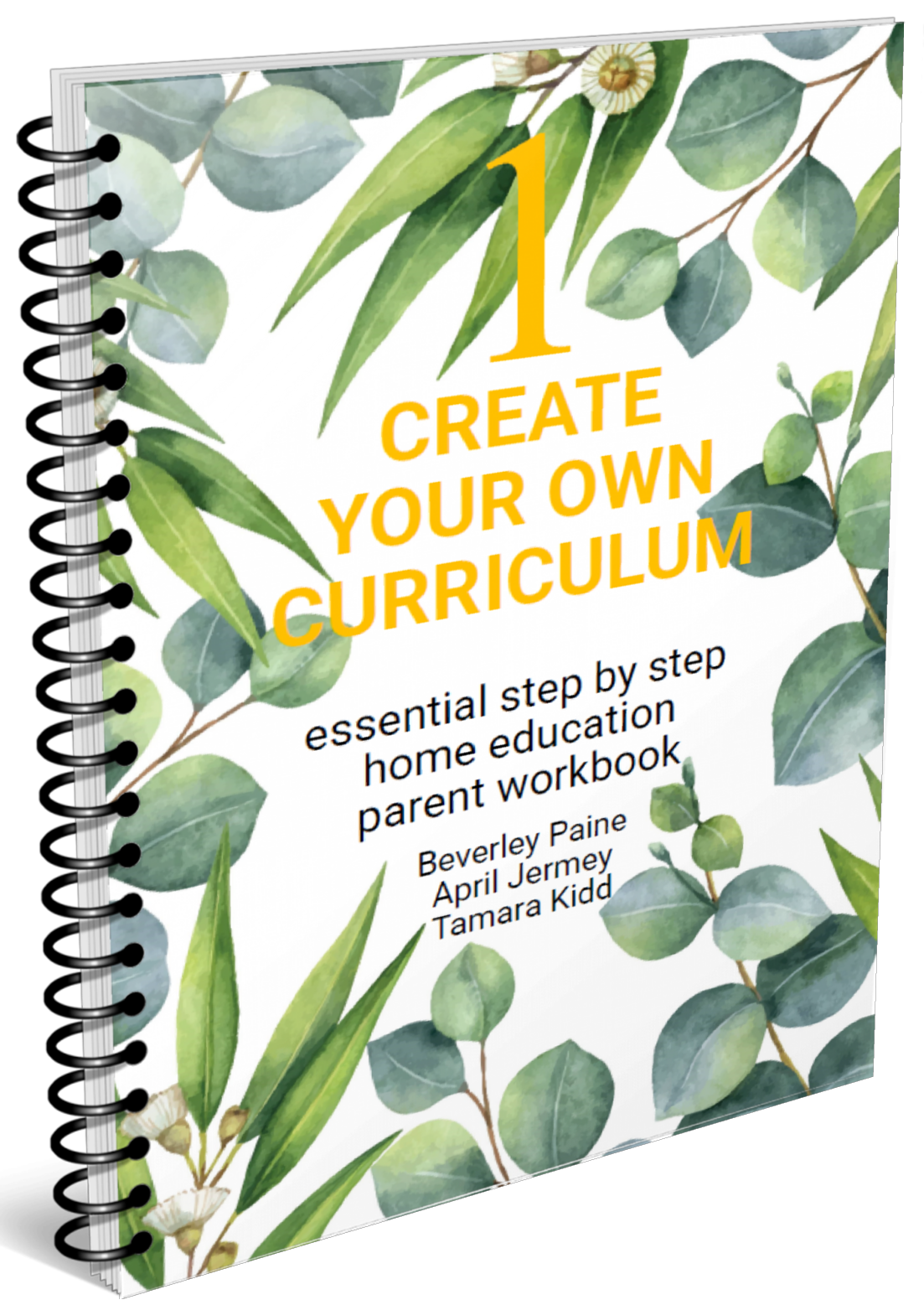
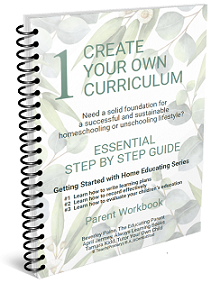
3 ESSENTIAL STEP BY STEP GUIDES
Let experienced home educators Beverley, Tamara and April walk you through HOW to create a learning plan that builds on solid foundations that works for YOUR family AND ticks all the boxes for home educaton registration!
|

Tap into Beverley's
experience
through her books
"Your books, your blogs helped me beyond words... they helped me to find comfort in knowing it is ok to choose exactly what is best for my family." Nisha
"Your books and information are mind blowing and already I am feeling good about this new experience." Diane
"Your guidance, understanding, support & words of wisdom changed our lives." Leslie
"I feel specially inspired by Beverley's words and, the more I read her comments, the more inspired I feel, since my need for support, respect for different parenting styles, and information are fully met." Marijo
|
 |
|

The information on this website is of a general nature only and is not intended as personal or professional advice. This site merges and incorporates 'Homeschool Australia' and 'Unschool Australia'.
The Educating Parent acknowledges the Traditional Aboriginal and Torres Strait Islander Owners, the Custodians of Australia, and pay our respects to Elders past and present and extend that respect to Aboriginal and Torres Strait Islander people viewing this website.
Advertise on this site.









Australia's premier online annual conferences, lifetime access to video and audio recordings, freebies, notes and associated resource guides.
EVERY SUMMIT IS UNIQUE!
$29 each  2023 2023  2022 2021 2022 2021
$25 each 2020 2019 2017
"Biggest and best Aussie homeschool event of the year!"
Home education is a legal alternative
to school education in Australia.
State and Territory governments are responsible
for regulating home education and have different
requirements, however home educating families
are able to develop curriculum and learning programs
to suit the individual needs of their children.

Without revenue from advertising
by educational suppliers and Google Ads
we could not continue to provide information
to home educators. Please support us by letting
our advertisers know that you found them on
The Educating Parent. Thanks!
|
 About
About


 Thank you for visiting!