|
Why I am Against Standardised Testing
© Beverley Paine
Over the years I have had lots of conversations with friends who are teachers about the pros and cons of standardised testing. While they generally find little positive about the educational benefits of testing, only one refused to test the children in their classrooms, and that was because this one teacher belonged to a small alternative school that did their best to use natural learning techniques.
This annoys me, but nowhere near as much as teachers' absolute opposition to standardised testing or similar evaluation practices used to grade their performance as teachers. It seems to me that if standardised testing is good enough for the children in their care then it should be good enough for them!
Universally teachers oppose the use of standardized tests as a means to evaluate staff or schools or to decide how money is allocated to schools. Here in Australia we've even seen teachers go on strike or conduct 'go slow' or 'stop work' campaigns to protest at any hint that such practices will be put in place. They also loudly protest at any movement toward using the results of standardised tests to compare schools, just in case their school 'does badly' and parents begin to move children to 'better performing' schools.
Yet comparative testing of children is endorsed as a useful tool for measuring children's educational and developmental performance.
My question is how effective is standardised testing at evaluating learning?
Standardised testing is used to judge the growth of knowledge and skills by measuring performance on one test in one moment of time. It is a snapshot. What can we tell about a person from a photograph? Few of us would be keen to pronounce judgements about a persons character - particularly if we had to write them down in a report that would last several years and quite possibly having a lasting impact on that person's future, based on snapshot image.
Yet this is what happens to children as a result of testing and exams. Even a series of tests, given over time, will only capture snapshots of performance. At best they are an aid to the evaluation process. At worst they can be used to undermine the educational process.
Too much emphasis on the results of standardized testing usually translates into the practice of teachers "teaching to the test". Instead of building life long learning skills and ability they stuff children with a set menu of disconnected bits of information that can memorised and regurgitated on the day of the test. The aim of this exercise is to make the teacher look successful and the curriculum effective. Good grades keep politicians happy - arming them with ammunition to further cut the education budget. The children of our nation deserve better than these petty cost cutting measures.
The use and reliance on standardised testing erodes the quality of education.
True learning is interest-driven and highly individualised. This makes it very difficult to measure. Portfolios and continuous assessment will do the job but these take time and when classrooms are full of up to thirty children teachers don't have that time.
Furthermore, tests test test-taking ability. It doesn't take bright students long to work out how to ace test, or write formulaic essays or reports that are easy for teachers to mark. Tests erode the capacity for creativity, innovation and imagination.
Many tests are poorly written. Often the answers are incorrect. Apart from making a mockery of the educational process, errors in tests and answers erodes students' confidence in the education process. In addition, many tests are culturally and educationally biased. Worst of all, tests are used as blunt instruments to label children, and fit them into social hierarchies that have a lasting effect, well beyond their schooling years into adult life.
The political reality for educational administrators is that the public will support school systems only when they see demonstrable results. But it has nothing to do with learning. When will we stop harming our kids with such misguided bureaucratic practices?
In her excellent article on "why tests don't measure your children's important strengths" - The Fallacy of Good Grades - Marlyn Price-Mitchell, PhD, lists the following important internal strengths school testing can't measure:
- "Effort
- Critical thinking
- Creativity
- Collaboration
- Curiosity
- Respect
- Kindness
- Capacity to love
- Social and emotional intelligence
- Honesty
- Open-mindedness
- Initiative"
I know what I'd rather be evaluating in our homeschooling learning program! 100% results for a teach-to-the-test exam or a well-rounded report based on observation and work samples collected over a period of time. According to Price Mitchell, "Despite a strong body of research on the value of internal strengths, we continue to measure kids using standardized, quantitative tests." This is because, she says in her article, it is too "difficult to measure quantitatively across large populations" whereas it is easier to collect statistics on scores from spelling, reading, maths and science tests.
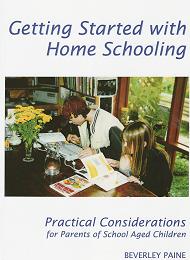
Beverley has written extensively about evaluating and recording home education learning programs. Her Getting Started with Homeschooling includes a chapter with samples taken from her personal records.

Was this article helpful? Was it worth $1.00 to you?
Your gift of $1 or more helps to keep this site operating
offering encouragement
and reassurance to families
wanting
better outcomes for their children.
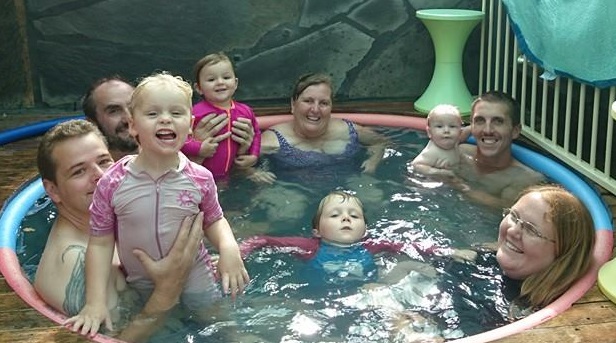
Beverley Paine with her children, and their home educated children, relaxing at home.
Together with the support of my family, my aim is to help parents educate their children in stress-free, nurturing environments. In addition to building and maintaing this website, I continue to create and manage local and national home educating networks, help to organise conferences and camps, as well as write for, edit and produce newsletters, resource directories and magazines. I am an active supporter of national, state, regional and local home education groups.
"You've been an inspiration to me, I love the way
you really listen to people." Vanessa
"Whenever I read your writing I always come away
with increased confidence in my ability to provide and
share a wonderful learning journey with my family!" Davina
"Your guidance, understanding, support and words of
wisdom changed our lives. We now offer support and
organise many homeschooling events for others." Lesley
"Thank you once again for your prompt and friendly service.
I am convinced that your books are going to add
quality and peace of mind to my journey of teaching my kids
at home! Just from studying your website, until almost
2am
in the morning, I 've been encouraged!" Louisa
"Thank you for all your many,many reassuring words
over many, many years. You probably don't know exactly how
valuable you are to the Australian Home Education community.
I've been reading your stuff for maybe 8 years or more now.
And I'm very grateful." Gythaa

CLICK HERE
if you want to learn
how to write your own education plans
to suit
your unique children's
individual learning needs?
Or you are looking for quality curriculum and teaching tips...
|
|
Welcome to the World of Home Education
and Learning without School!
We began educating our children in 1985, when our eldest was five. In truth, we had helped them learn what they need to learn since they were born. I am a passionate advocate of allowing children to learn unhindered by unnecessary stress and competition, meeting developmental needs in ways that suit their individual learning styles and preferences. Ours was a homeschooling, unschooling and natural learning family! There are hundreds of articles on this site to help you build confidence as a home educating family. We hope that your home educating adventure is as satisfying as ours was! Beverley Paine
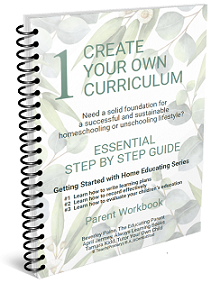
3 ESSENTIAL STEP BY STEP GUIDES
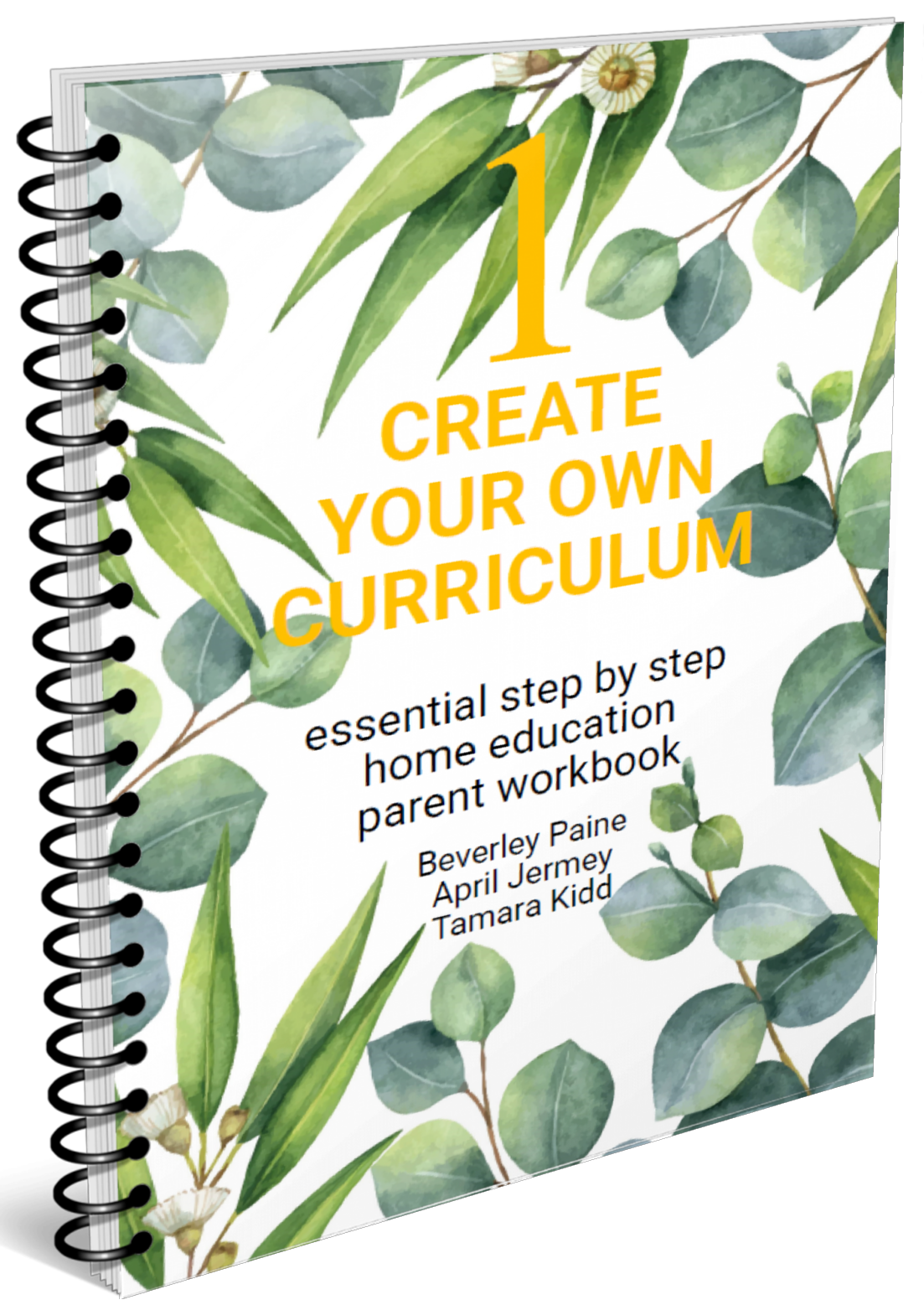
Let experienced home educators Beverley, Tamara and April walk you through HOW to create a learning plan that builds on solid foundations that works for YOUR family AND ticks all the boxes for home educaton registration!
|

Tap into Beverley's
experience
through her books
"Your books, your blogs helped me beyond words... they helped me to find comfort in knowing it is ok to choose exactly what is best for my family." Nisha
"Your books and information are mind blowing and already I am feeling good about this new experience." Diane
"Your guidance, understanding, support & words of wisdom changed our lives." Leslie
"I feel specially inspired by Beverley's words and, the more I read her comments, the more inspired I feel, since my need for support, respect for different parenting styles, and information are fully met." Marijo
|
 |
|

The information on this website is of a general nature only and is not intended as personal or professional advice. This site merges and incorporates 'Homeschool Australia' and 'Unschool Australia'.
The Educating Parent acknowledges the Traditional Aboriginal and Torres Strait Islander Owners, the Custodians of Australia, and pay our respects to Elders past and present and extend that respect to Aboriginal and Torres Strait Islander people viewing this website.
Advertise on this site.





Australia's premier online annual conferences, lifetime access to video and audio recordings, freebies, notes and associated resource guides.
EVERY SUMMIT IS UNIQUE!
$29 each  2023 2023  2022 2021 2022 2021
$25 each 2020 2019 2017
"Biggest and best Aussie homeschool event of the year!"
Home education is a legal alternative
to school education in Australia.
State and Territory governments are responsible
for regulating home education and have different
requirements, however home educating families
are able to develop curriculum and learning programs
to suit the individual needs of their children.

Without revenue from advertising
by educational suppliers and Google Ads
we could not continue to provide information
to home educators. Please support us by letting
our advertisers know that you found them on
The Educating Parent. Thanks!
|
 About
About


 Thank you for visiting!