|
Observation and Inter-action, Tools for Natural Learning
Beverley Paine
David Holmgren in his new book Permaculture Principles and Pathways Beyond Sustainability encourages us to experience life first hand, to observe and interact rather than passively digest the experiences of others.
Conversation and story-telling are the most significant learning tools we use in our lives. Talking about what we've experienced, or observed, requires little effort - it's something we all do naturally. Charlotte Mason extolled the virtues of 'narration' - the ability to retell what we've read, seen or experienced. Retelling is how we make sense of what we observe. With narration the trick is to start simply, always at the child's level of understanding and ability, and slowly build until a high level of understanding and comprehension has been reached in adolescence. This technique definitely reflects a permaculture 'zone' approach to planning and design.
Respectful listening and guided open-ended questions are the tools we use to hone observation and narrative skills. Questions need to be genuine inquiries that provide scaffolds and incentive for future learning, not simply 'tests' of knowledge or understanding. The aim is to gently building the child's ability to notice and remember greater detail.
Recording our observations underpins our culture. Humans have always left images for others to gaze upon and try to understand their meaning. Little children love leaving sticky marks, be it chocolate handprints or early attempts at writing (scribbles). Symbols are powerful ways of communicating ideas and emotions. Only a century ago the ability to draw accurately what the eye could see was essential to the development of scientific knowledge and understanding.
Drawing has benefits beyond artistic ability. Try sketching a bowl of fruit: different parts of the brain are required to work together to produce a recognisable, let alone reasonably accurate, portrayal. You can't draw this picture in seconds, it's a complex task and requires the development of many skills.
Keeping a 'nature journal' is a powerful learning technique that marries observation with recording and teaches skills across the educational curriculum.
I brainstormed some more ways we can help our children to 'observe and interact':
- growth charts - we did a calendar with one month to a large sheet of cardboard which April illustrated as well as recorded growth figures. We still have this - a wonderful record of her fifth year. Early writing and drawing examples as well as a wealth of information about April and how we lived back then!
- keeping a weather chart;
- writing action plans (lists, goal setting, wish lists, birthday/Christmas lists, holiday itineraries, etc);
- gardening diaries - records of what we're planting, how they're growing and changing, and harvest quantities, types, etc.;
- shopping lists and menus;
- observing the behaviour of others to predict emotional responses and mediate behaviour during play;
- using and creating identification charts - birds, invertebrates, insects, etc.

P13 Permaculture Design Principle #1, book "Permaculture Principles and Pathways Beyond Sustainability" by David Holmgren, Holmgren Design Services, 2002 www.holmgren.com.au
Debbie Dunn, Message #2 , http://groups.yahoo.com/group/learningnaturally/ May 16, 2006

Was this article helpful? Was it worth $1.00 to you?
Your gift of $1 or more helps to keep this site operating
offering encouragement
and reassurance to families
wanting
better outcomes for their children.
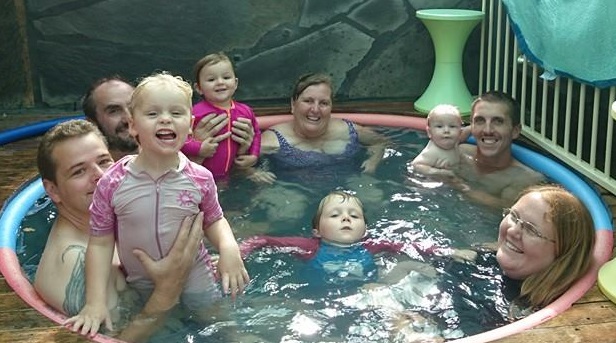
Beverley Paine with her children, and their home educated children, relaxing at home.
Together with the support of my family, my aim is to help parents educate their children in stress-free, nurturing environments. In addition to building and maintaing this website, I continue to create and manage local and national home educating networks, help to organise conferences and camps, as well as write for, edit and produce newsletters, resource directories and magazines. I am an active supporter of national, state, regional and local home education groups.
"You've been an inspiration to me, I love the way
you really listen to people." Vanessa
"Whenever I read your writing I always come away
with increased confidence in my ability to provide and
share a wonderful learning journey with my family!" Davina
"Your guidance, understanding, support and words of
wisdom changed our lives. We now offer support and
organise many homeschooling events for others." Lesley
"Thank you once again for your prompt and friendly service.
I am convinced that your books are going to add
quality and peace of mind to my journey of teaching my kids
at home! Just from studying your website, until almost
2am
in the morning, I 've been encouraged!" Louisa
"Thank you for all your many,many reassuring words
over many, many years. You probably don't know exactly how
valuable you are to the Australian Home Education community.
I've been reading your stuff for maybe 8 years or more now.
And I'm very grateful." Gythaa

CLICK HERE
if you want to learn
how to write your own education plans
to suit
your unique children's
individual learning needs?
Or you are looking for quality curriculum and teaching tips...
|
|
Welcome to the World of Home Education
and Learning without School!
We began educating our children in 1985, when our eldest was five. In truth, we had helped them learn what they need to learn since they were born. I am a passionate advocate of allowing children to learn unhindered by unnecessary stress and competition, meeting developmental needs in ways that suit their individual learning styles and preferences. Ours was a homeschooling, unschooling and natural learning family! There are hundreds of articles on this site to help you build confidence as a home educating family. We hope that your home educating adventure is as satisfying as ours was! Beverley Paine
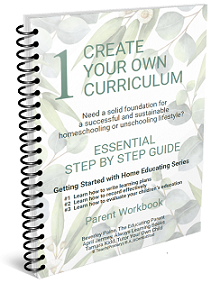
3 ESSENTIAL STEP BY STEP GUIDES
Let experienced home educators Beverley, Tamara and April walk you through HOW to create a learning plan that builds on solid foundations that works for YOUR family AND ticks all the boxes for home educaton registration!
|

Tap into Beverley's
experience
through her books
"Your books, your blogs helped me beyond words... they helped me to find comfort in knowing it is ok to choose exactly what is best for my family." Nisha
"Your books and information are mind blowing and already I am feeling good about this new experience." Diane
"Your guidance, understanding, support & words of wisdom changed our lives." Leslie
"I feel specially inspired by Beverley's words and, the more I read her comments, the more inspired I feel, since my need for support, respect for different parenting styles, and information are fully met." Marijo
|
 |
|

The information on this website is of a general nature only and is not intended as personal or professional advice. This site merges and incorporates 'Homeschool Australia' and 'Unschool Australia'.
The Educating Parent acknowledges the Traditional Aboriginal and Torres Strait Islander Owners, the Custodians of Australia, and pay our respects to Elders past and present and extend that respect to Aboriginal and Torres Strait Islander people viewing this website.
Advertise on this site.






Australia's premier online annual conferences, lifetime access to video and audio recordings, freebies, notes and associated resource guides.
EVERY SUMMIT IS UNIQUE!
$29 each  2023 2023  2022 2021 2022 2021
$25 each 2020 2019 2017
"Biggest and best Aussie homeschool event of the year!"
Home education is a legal alternative
to school education in Australia.
State and Territory governments are responsible
for regulating home education and have different
requirements, however home educating families
are able to develop curriculum and learning programs
to suit the individual needs of their children.

Without revenue from advertising
by educational suppliers and Google Ads
we could not continue to provide information
to home educators. Please support us by letting
our advertisers know that you found them on
The Educating Parent. Thanks!
|
 About
About


 Thank you for visiting!