|
How Drawing Can Help Children to Learn to Write
© Beverley Paine, September 2007
Many children, from toddlers to early teenagers, find it tedious to write and will often complain that it is boring. Some even find it hard work and tire quickly. Such children are miserable when writing and grumble often. The quality of their homeschool work is poor and everyone is unhappy.
One way to motivate children to practice handwriting or to write legibly in full sentences is to encourage them to draw. Drawing uses the same set of penmanship skills: by drawing every day children are without realising it overcoming many of the problems associated with learning to write well.
Nagging children to practice writing carefully and regularly can be very draining. It's easy to feel overwhelmed and that you are a failure as a homeschooling parent when things don't go according to plan. Lightening the learning atmosphere by encouraging drawing as a way of communicating ideas and thoughts - even the odd doodle on the page - can go a long way to overcoming homeschooling writing blues.
Drawing is an activity that most children welcome. Find a medium that your child enjoys most. This might be doodling with texta pens, or shading with different grade lead pencils, or colouring in, or using fine paint brushes and different kinds of paints. Your child might prefer crayons, or thicker pencils and colour pencils, to help them develop a firm but relaxed pen grip. Try oil pastel crayons for a different feel and effect. Make sure you stock a range of different writing and drawing materials and keep them where you child can easily access them.
The correct pencil grip is the one produces the least amount of stress on the hand and arm when writing. The pencil should be positioned so that there is equal pressure between the thumb, the side of the middle finger and the tip of the index finger. All fingers are bent slightly. This is called a "tripod grip" or "tripod pencil grasp". Not all children will master this grip. Gently coax your child to give a try, and if necessary, buy one or more different types of pen grip aids to help. A correct grip will help develop neat and legible handwriting.
Check for tension in your child's hands or fingers. Tension indicates weak fine-motor skills. These can be strengthened with activities like cutting and pasting, beadwork, modelling, playing games that require picking up with a pinching motion, play with construction toys, playing with playdough, etc.
Often children will be inspired to write once they've drawn a picture. Encourage this by talking about the drawing in an imaginative way. Don't simply ask what the picture is about, or make inane comments that are obvious: find out what happened before or will happen next, as though the picture is a moment captured in time. Get the full story! Young children often like their stories recorded as captions somewhere on their drawing. You could write the story for your child: this models writing. It takes time and patience but this gentle approach really does work.
Always take the time to read the story back to the child and make any corrections they suggest. You may like to point to each word as you read, to help them make the connection between the sounds within the word and the way it looks - the basis of learning to spell. Reading the story aloud is a technique that helps to teach essential editing skills that will last a lifetime.
Use pictures and photos as writing prompts. We made "I can..." booklets for our children. They would draw a picture of themselves doing something and then complete the sentence "I can...". At age six, Thomas happily drew a picture of a peanut, put some wheels beneath it and then wrote "I can drive a peanut." There is no end to the imaginative life of young children!
A friend of mine created a book of photos of her young daughter and then together they wrote the text. Over time this young child completed about a dozen story books about herself, some imaginative and the rest of a historical nature. A great record to show her own children one day!
Don't forget that drawing is a basic form of communication. Once upon a time people didn't write using letters, they used a pictorial code. Sit down one day and develop your own pictorial code with your children. Take a look at the Chinese alphabet and try to work out what each letter/symbol might mean from what it looks like... You might like to explore illuminated texts of old - these are delightful and children who love to doodle will thoroughly enjoy and be inspired by the decorated letters and pages. Check the Internet or ask your local librarian on how and where to find resources for these activities.
Talking about your children's drawings helps them develop their speaking and listening skills. Avoid 'yes' and 'no' answers by asking open-ended questions such as:
- Where is the semi-trailer going today?
- What is the dog doing now? What will he do when he finds the gate is closed?
Prompt further exploration while your child is drawing with suggestions and questions such as:
- Is it hot or cold? Windy? How can you show that it is a windy day?
- What is the planet like? Does it have trees like ours? That's a really big hole, is a mine?
When you are writing words for your child, especially single words or those in simple sentences, you may like to show your child how to correctly form and pronounce the letter. Verbalise what you are doing; "See how I begin at the top and draw a straight line all the way down, and then go up and around to form the loop?". "The letter B sounds 'buh' in 'bat', 'buh'." I liked to emphasise to my children that each letter had a name as well as one or more sounds depending on how it is used. I found it helpful not to teach the alphabet by the names of the letters - ABCDE, etc - or by the lower case sounds, abcde, etc as this often caused confusiong when letters had different sounds in different words.
Don't get too hung up in the early years of writing by letter reversals and capitalisation. If your child is writing copious amounts by age eight and is still including one or the other, then a few weeks focussing on eliminating them, one at a time, might be necessary. Children usually naturally conform to writing conventions if they are exposed to the printed word on a daily basis. If your child resists or can't stop using capitals or letter reversals it may be time to look into the different possible causes, such as dyslexia.
Most children want to emulate how adults write and will write 'words' with spaces between them, even if the words are jumbled strings of half formed letters. We usually call this scribbling but it's actually proto-writing - a prototype of writing. At this stage you can even introduce the concept of full stops and complete sentences, or if your child is keen, question and exclamation marks. Be interested in any kind of writing your child does.
Some families like to encourage their children to copy short sentences. You can incorporate this when writing captions for your child's drawings. Make sure you write legibly in the style you want your child to emulate and leave enough room for them to write below your sentence. Keep this kind of activity short enough to hold your child's attention. If your child's grip is too tight she will find writing tedious and painful, so watch carefully and suggest different ways to hold the pencil or crayon. Painting the letters with a brush will give your child a different feel and may offer more freedom to explore what works best for her. Of course, it takes more time for you, but if you are having uphappy writing sessions anything is worth trying!
Gradually increase the complexity and quantity of writing until the child can do it comfortably. The aim is for enjoyment of writing in a relaxed atmosphere. It's not a fun activity - too much education is premised on the basis that it must be fun for the child. Children often find writing a chore, especially if it's not immediately useful or meaningful to their lives. Children will write when there is a need. This means that it's up to you to create opportunities that encourage them to write that are meaningful to them.
Five or ten minutes is usually enough writing practice for a child under six years of age. Some children will love to write more and most will happily draw for a lot longer. Some educators feel that fifteen minutes of uninterupted writing is adequate for a nine-year-old. Naturally a child of that age can write a lot more througout the day in several sessions. Keep the handwriting or writing sessions short and sweet, finishing them before the child's hand has the opportunity to tire or the task becomes less interesting. Alternate writing and drawing to give the hand a chance to rest.
Even in the age of messaging on mobile phones and typing emails in chat rooms online, handwriting is an essential skill.

Was this article helpful? Was it worth $1.00 to you?
Your gift of $1 or more helps to keep this site operating
offering encouragement
and reassurance to families
wanting
better outcomes for their children.
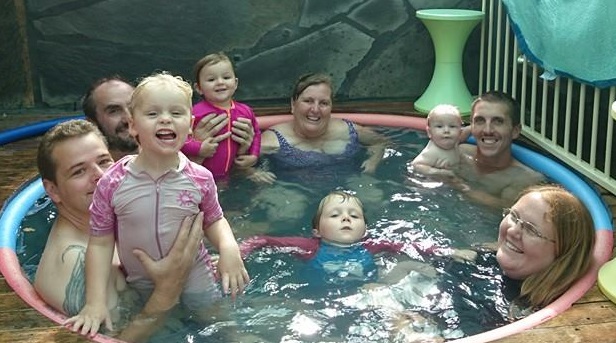
Beverley Paine with her children, and their home educated children, relaxing at home.
Together with the support of my family, my aim is to help parents educate their children in stress-free, nurturing environments. In addition to building and maintaing this website, I continue to create and manage local and national home educating networks, help to organise conferences and camps, as well as write for, edit and produce newsletters, resource directories and magazines. I am an active supporter of national, state, regional and local home education groups.
"You've been an inspiration to me, I love the way
you really listen to people." Vanessa
"Whenever I read your writing I always come away
with increased confidence in my ability to provide and
share a wonderful learning journey with my family!" Davina
"Your guidance, understanding, support and words of
wisdom changed our lives. We now offer support and
organise many homeschooling events for others." Lesley
"Thank you once again for your prompt and friendly service.
I am convinced that your books are going to add
quality and peace of mind to my journey of teaching my kids
at home! Just from studying your website, until almost
2am
in the morning, I 've been encouraged!" Louisa
"Thank you for all your many,many reassuring words
over many, many years. You probably don't know exactly how
valuable you are to the Australian Home Education community.
I've been reading your stuff for maybe 8 years or more now.
And I'm very grateful." Gythaa

CLICK HERE
if you want to learn
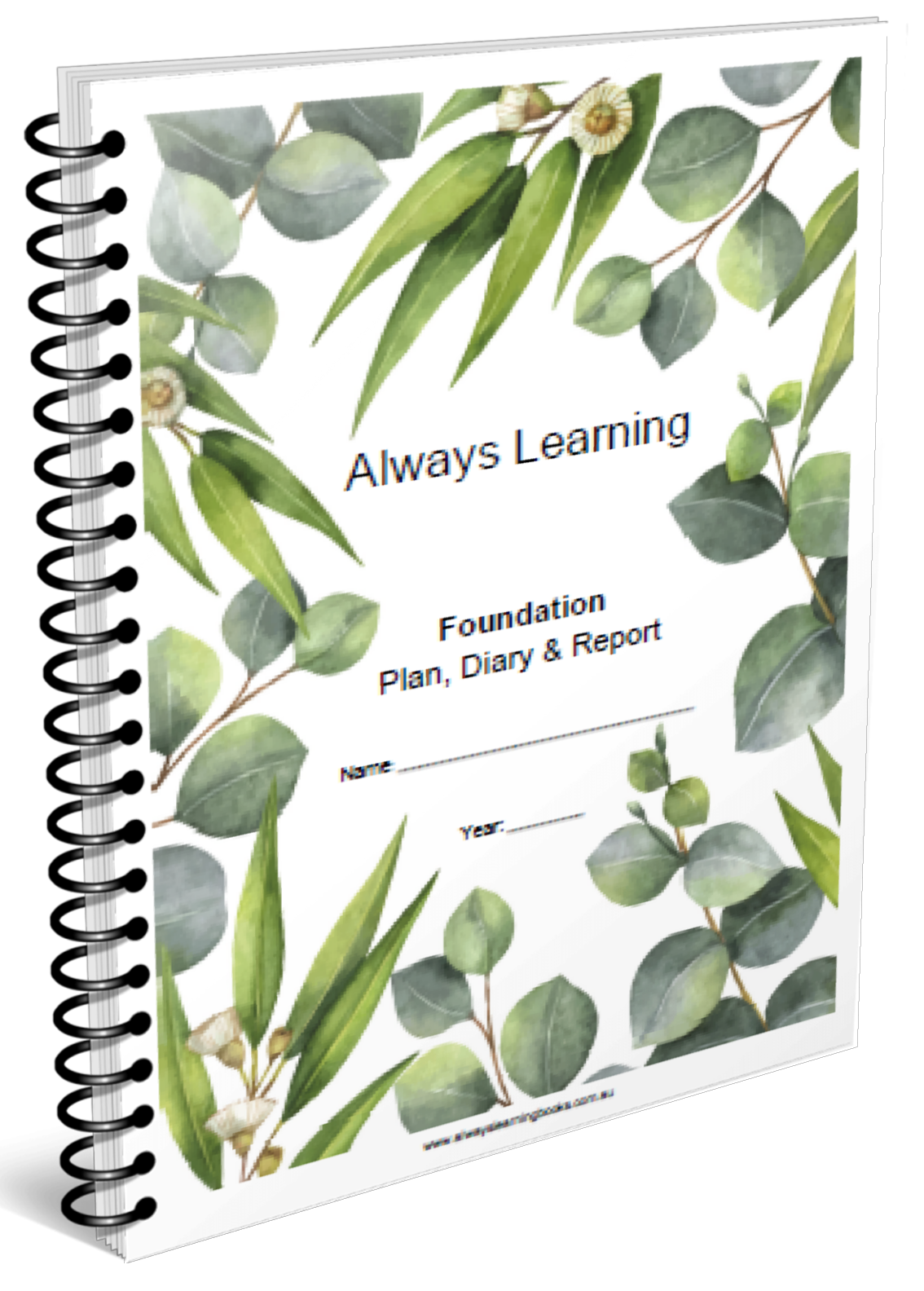
how to write your own education plans
to suit
your unique children's
individual learning needs?
Or you are looking for quality curriculum and teaching tips...
|
|
Welcome to the World of Home Education
and Learning without School!
We began educating our children in 1985, when our eldest was five. In truth, we had helped them learn what they need to learn since they were born. I am a passionate advocate of allowing children to learn unhindered by unnecessary stress and competition, meeting developmental needs in ways that suit their individual learning styles and preferences. Ours was a homeschooling, unschooling and natural learning family! There are hundreds of articles on this site to help you build confidence as a home educating family. We hope that your home educating adventure is as satisfying as ours was! Beverley Paine
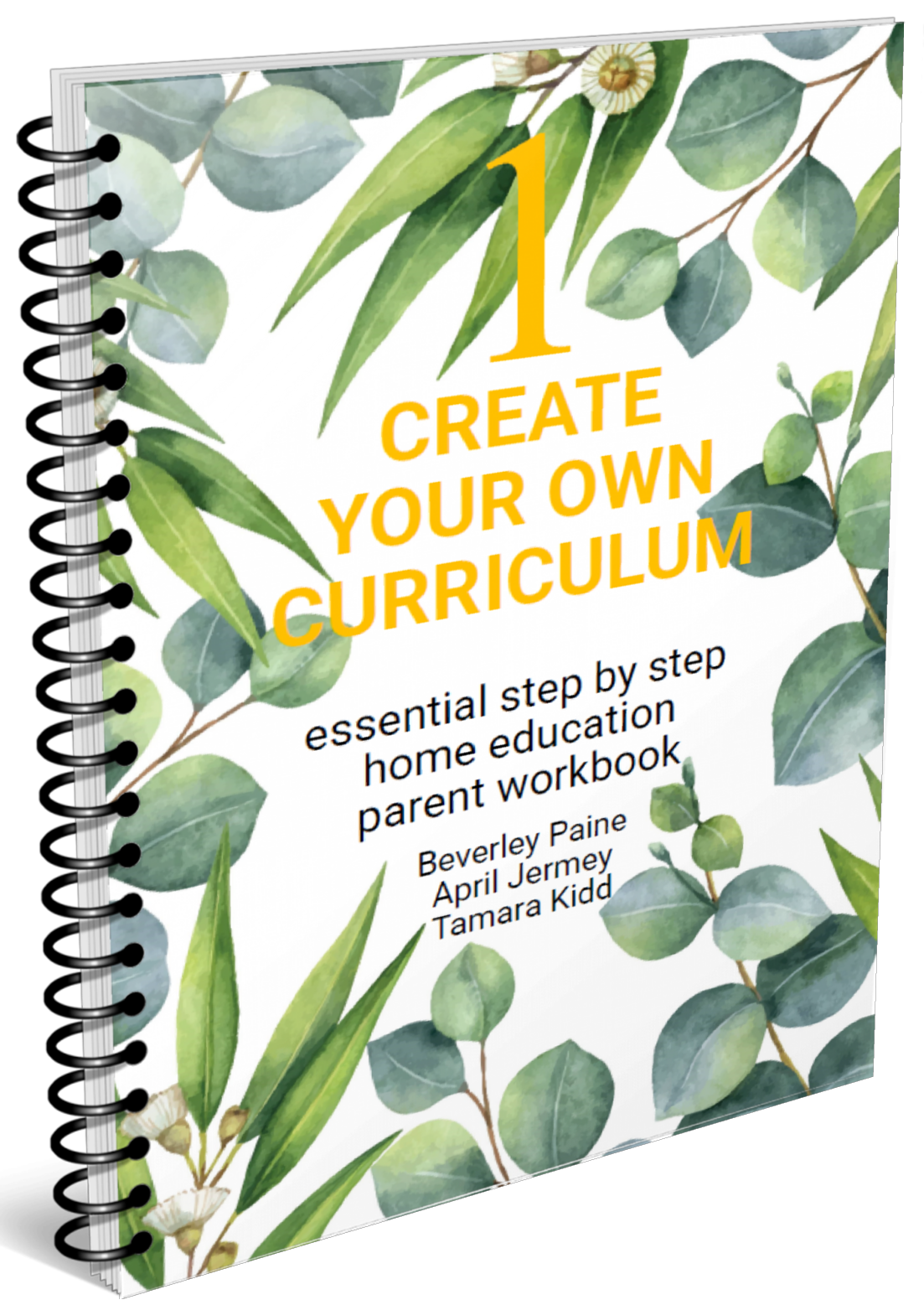
3 ESSENTIAL STEP BY STEP GUIDES
Let experienced home educators Beverley, Tamara and April walk you through HOW to create a learning plan that builds on solid foundations that works for YOUR family AND ticks all the boxes for home educaton registration!
|

Tap into Beverley's
experience
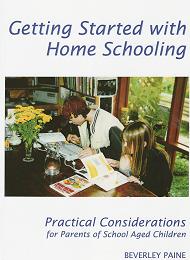
through her books
"Your books, your blogs helped me beyond words... they helped me to find comfort in knowing it is ok to choose exactly what is best for my family." Nisha
"Your books and information are mind blowing and already I am feeling good about this new experience." Diane
"Your guidance, understanding, support & words of wisdom changed our lives." Leslie
"I feel specially inspired by Beverley's words and, the more I read her comments, the more inspired I feel, since my need for support, respect for different parenting styles, and information are fully met." Marijo
|
 |
|

The information on this website is of a general nature only and is not intended as personal or professional advice. This site merges and incorporates 'Homeschool Australia' and 'Unschool Australia'.
The Educating Parent acknowledges the Traditional Aboriginal and Torres Strait Islander Owners, the Custodians of Australia, and pay our respects to Elders past and present and extend that respect to Aboriginal and Torres Strait Islander people viewing this website.
Advertise on this site.










Australia's premier online annual conferences, lifetime access to video and audio recordings, freebies, notes and associated resource guides.
EVERY SUMMIT IS UNIQUE!
$29 each  2023 2023  2022 2021 2022 2021
$25 each 2020 2019 2017
"Biggest and best Aussie homeschool event of the year!"
Home education is a legal alternative
to school education in Australia.
State and Territory governments are responsible
for regulating home education and have different
requirements, however home educating families
are able to develop curriculum and learning programs
to suit the individual needs of their children.

Without revenue from advertising
by educational suppliers and Google Ads
we could not continue to provide information
to home educators. Please support us by letting
our advertisers know that you found them on
The Educating Parent. Thanks!
|
 About
About


 Thank you for visiting!