|
Introduction to Handwriting in the Homeschool
© Beverley Paine, September 2007
Our aim with handwriting was to encourage legibility. If this is your goal your child definitely don't need lots of practice. Handwriting, like many other aspects of child development, has a large genetic component. I discovered that our daughter's natural handwriting style at age eight was identical to her father's at the same age. We were lucky enough to have samples of his writing in a photo album where he had written captions under the photos. My first thought was that she'd written in his album until I read the captions.
It's more important to help your child master the best pen grip, and I'd say that lots of practice painting and drawing will be less painful than lots of writing, unless the child is keen on writing. Calligraphy - a lovely blend of art and handwriting, and can be done with paint brushes as well as pens - is another approach.
Some of the tactics I used to encourage early writing included "I can..." books, daily journal, and lists.
If children understand the need for something it's likely they will be more motivated to comply. We visited museums and read pages from journals and documents written by explorers and scientists. The handwriting of these pioneers in their fields of endeavour was unbelievably neat. Different people had different handwriting styles, but all could be classed as artistic and pleasant to read. Some was so tiny though it was difficult to read - a lot of words crammed into a page to save on a precious resource not easily available in inhospitable, far away places! Captains' logs are another source of fascinating historical handwriting. Capturing children's imagination about the reasons for clear handwriting is one way to encourage them to write legibly.
Our children learned an important lesson about writing so that others can read it (the purpose of writing and reading is always communication) when instructions on a paper chase their father made for them were indecipherable. Even he had problems reading a couple of words in one of the clues he'd written!
I made a 'handwriting file' for each of my children and kept it with different writing utensils and different writing media (different colours and grades of paper, card, etc.). Our file contained:
- examples of a particular handwriting style and practice worksheets
- pattern cards with basic shapes and patterns for copying
- tracing cards with tracing paper (or tracing picture books from supermarkets or newsagents)
- activities to do with examples to copy, e.g. postcards, shopping lists, birthday and other celebration cards, envelopes for addressing, etc.
Some other ideas to encourage handwriting are:
- an A4 laminated card with upper and lower case letters of the alphabet your child can trace over a marker pen or texta then wipe off.
- write letters in the sand at the beach or in the sand pit
- make letters out of clay or dough
- make letters from biscuit or cheese dough then bake and eat
- play with letter blocks and magnetic letters (we made our own - it was a lot of fun as well as educational)
- teach your child to write her full name
- use unlined as well as lined paper, draw your own lines and include a mid-line to help form letters in correct proportions
- limit handwriting practice to 3-5 minutes to avoid burnout.
In the first year or three of homeschooling we used workbooks as a kind of 'skeleton' learning program and fleshed out learning in those areas with lots of activities that reinforced or added to the skills and content covered in the books. You'll find a description of the kinds of things we did for reading and writing in my two practical homeschooling series booklets, and I cover spelling, writing, reading and maths for that period of homeschooling in my Learning in the Absence of Education.
The children would often complete a page in a workbook in less than ten minutes, or sometimes the would work a lot slower. How long often depended on on how much there was on each page. For the first couple of grades it isn't much, but handwriting skills are imperfect and it takes a fair bit of time for the child to get a whole word, let alone a sentence, written! By grade six the pages were packed full, the writing a lot smaller and it took a bit longer. A lot more to read too!
Most of the children's writing and handwriting arose from activities generated by other subjects, such as social studies and science. Whenever the children wrote anything I'd be looking to see how their skills were developing and improving. This would give me clues on what sort of reinforcement they needed. Sometimes it might mean I'd ask them to do a particular page in their workbooks, if I thought they needed to learn that skill or content now. For instance, Thomas was keen on apostrophes before he knew about fullstops and commas, so I taught him about apostrophes.
See also

Was this article helpful? Was it worth $1.00 to you?
Your gift of $1 or more helps to keep this site operating
offering encouragement
and reassurance to families
wanting
better outcomes for their children.
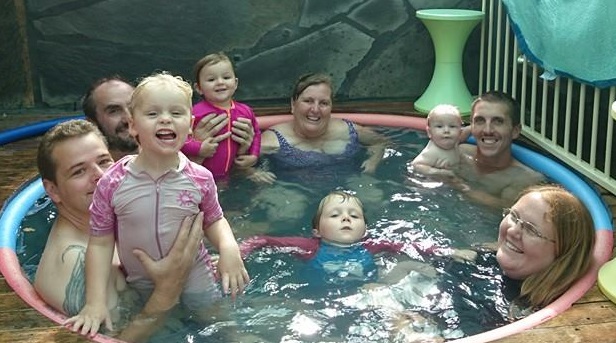
Beverley Paine with her children, and their home educated children, relaxing at home.
Together with the support of my family, my aim is to help parents educate their children in stress-free, nurturing environments. In addition to building and maintaing this website, I continue to create and manage local and national home educating networks, help to organise conferences and camps, as well as write for, edit and produce newsletters, resource directories and magazines. I am an active supporter of national, state, regional and local home education groups.
"You've been an inspiration to me, I love the way
you really listen to people." Vanessa
"Whenever I read your writing I always come away
with increased confidence in my ability to provide and
share a wonderful learning journey with my family!" Davina
"Your guidance, understanding, support and words of
wisdom changed our lives. We now offer support and
organise many homeschooling events for others." Lesley
"Thank you once again for your prompt and friendly service.
I am convinced that your books are going to add
quality and peace of mind to my journey of teaching my kids
at home! Just from studying your website, until almost
2am
in the morning, I 've been encouraged!" Louisa
"Thank you for all your many,many reassuring words
over many, many years. You probably don't know exactly how
valuable you are to the Australian Home Education community.
I've been reading your stuff for maybe 8 years or more now.
And I'm very grateful." Gythaa

CLICK HERE
if you want to learn
how to write your own education plans
to suit
your unique children's
individual learning needs?
Or you are looking for quality curriculum and teaching tips...
|
|
Welcome to the World of Home Education
and Learning without School!
We began educating our children in 1985, when our eldest was five. In truth, we had helped them learn what they need to learn since they were born. I am a passionate advocate of allowing children to learn unhindered by unnecessary stress and competition, meeting developmental needs in ways that suit their individual learning styles and preferences. Ours was a homeschooling, unschooling and natural learning family! There are hundreds of articles on this site to help you build confidence as a home educating family. We hope that your home educating adventure is as satisfying as ours was! Beverley Paine
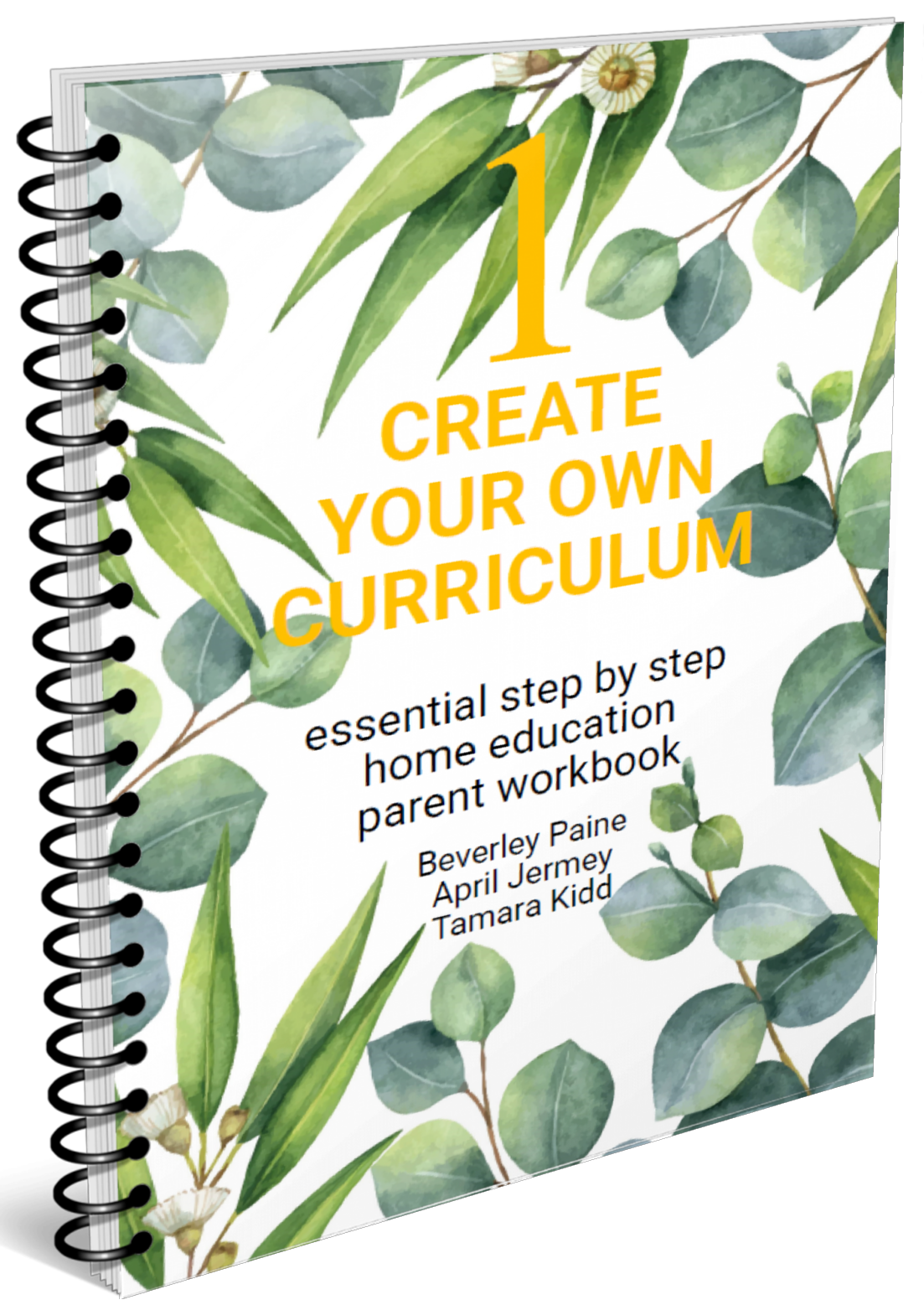
3 ESSENTIAL STEP BY STEP GUIDES
Let experienced home educators Beverley, Tamara and April walk you through HOW to create a learning plan that builds on solid foundations that works for YOUR family AND ticks all the boxes for home educaton registration!
|

Tap into Beverley's
experience
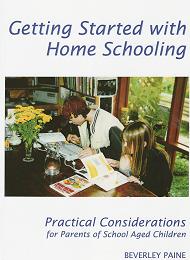
through her books
"Your books, your blogs helped me beyond words... they helped me to find comfort in knowing it is ok to choose exactly what is best for my family." Nisha
"Your books and information are mind blowing and already I am feeling good about this new experience." Diane
"Your guidance, understanding, support & words of wisdom changed our lives." Leslie
"I feel specially inspired by Beverley's words and, the more I read her comments, the more inspired I feel, since my need for support, respect for different parenting styles, and information are fully met." Marijo
|
 |
|

The information on this website is of a general nature only and is not intended as personal or professional advice. This site merges and incorporates 'Homeschool Australia' and 'Unschool Australia'.
The Educating Parent acknowledges the Traditional Aboriginal and Torres Strait Islander Owners, the Custodians of Australia, and pay our respects to Elders past and present and extend that respect to Aboriginal and Torres Strait Islander people viewing this website.
Advertise on this site.








Australia's premier online annual conferences, lifetime access to video and audio recordings, freebies, notes and associated resource guides.
EVERY SUMMIT IS UNIQUE!
$29 each  2023 2023  2022 2021 2022 2021
$25 each 2020 2019 2017
"Biggest and best Aussie homeschool event of the year!"
Home education is a legal alternative
to school education in Australia.
State and Territory governments are responsible
for regulating home education and have different
requirements, however home educating families
are able to develop curriculum and learning programs
to suit the individual needs of their children.

Without revenue from advertising
by educational suppliers and Google Ads
we could not continue to provide information
to home educators. Please support us by letting
our advertisers know that you found them on
The Educating Parent. Thanks!
|
 About
About


 Thank you for visiting!