|
Conversation Is Learning Too!
© Beverley Paine 1997
an excerpt from Learning in the Absence of Education
All too often I forget where most of my children's learning originates - in our everyday conversations! Most of the reading I have done over the last couple of months has reinforced this belief in me, and with the hindsight of twelve years of home-based learning I know the truth of it. April, Roger and Thomas know a lot about the world they live in, not because they have read about it, or even seen it on the television, but because we talk about things a lot. Anything can spark a conversation, and conversations often lead to in-depth research, experiments and activities.
Although quite often we already know the answers to many of our children's questions, there are times Robin and I have taken a topic much further for our own interest. The children get on what whatever they are doing, having had their curiosity sated, while we discover much more about the world than we knew before. I love this aspect of home education.
Learning through conversation, with a little research thrown in when necessary, is fun and spontaneous. It certainly seems to cover all of the important things without the need to closely follow a prescribed curriculum. All too often reading, writing and arithmetic, the traditional 'basics', take precedence in our minds when we are thinking about education. I believe learning suffers as a result.
'Book work', because it leaves a tangible collection of records that can be looked at by anyone, and judged as evidence of learning, is usually considered more important than the everyday learning derived from conversation. How can anyone prove they have 'covered' a subject if all he or she has ever done is talk about it? Such demotion of conversation for the sake of 'evidence' is a sad fact of school education.
Books have dominated learning for more than a century. That civilisation progressed before the advent of mass publication of texts is beyond refute. And it was able to do so because of a long tradition of storytelling and passing on relevant life and community building skills by demonstration and conversation.
Talk is still the primary method we learn by. It is sometimes very hard for home educating parents to put down the books and to get on with the real work of learning - simply enjoying the conversations as they flow in, around and out of, the interests of the family.
Some of the ways in which I try to encourage conversation in our family are:
- By making our conversation relevant to what we are doing - that is, talking about what we are doing, why and how. This is often hard for Robin and I - our preferred learning and working styles are in silence! But to facilitate learning in the children we try hard to remember to talk to the children while we do things.
- Giving answers to what I have been asked, no more - leaving lots of room for the children to initiate more questions in their own words. I usually ask a leading question to encourage the children to come up with more questions.
- Invite the children to think of their own answers.
- I try not to turn every answer into a mini lecture, exploring in-depth every little interesting thing or event. I gauge the child's interest and only answer as much as he or she wants to know at that time.
- I hold back information to see what the children can think of before I give the most correct answer - sometimes the kids hate this, if accuracy is what they want immediately (like when spelling a new word!) But often the guesses are far more interesting, creative and inventive, and lead to wide and varied discussions, or an in-depth exploration of the topic.
- I constantly challenge concepts and ideas wherever we find them - it usually starts with me saying something like "and who says that is true?" or "does that hold true for every example you can think off - what about ...?" This really promotes respect for diversity and generates tolerant attitudes.
- We've tried to develop some active listening skills. This has proven to be my greatest educational challenge and has taken more than a decade to fully understand and implement. We still have a long way to go, but are improving exponentially, at last!
- I have a collection (somewhere) of useful conversation starters, like "what if something else happened...?", "how could we do this differently?", "what do you think about ...?" and "imagine if ....". There are many more. All are leading questions that can't be answered with a simple "yes" or "no".
- And finally, there is always the much maligned "why?" I know a lot of parents cringe when they hear this word, but I turn it around and ask the children back "why do you think?" This helps develop their language skills, not mine! I love the answers the children 'invent', which demonstrate just how much my children understand their world and what they know. I often don't correct them, unless pushed for an answer - their ideas are so creative and imaginative, and I know they will work things out by experience soon enough.
However, I know we don't talk enough in our house. Probably more than many others and about a lot of very interesting things. But not enough. I love a quiet house, and find it suits my own learning style as I am emotionally sensitive to noise. I can't stand conversation and music at the same time, and definitely not conversation with talk-back radio or television in the background. I know a quiet house has had a slight negative effect on my children's language development.
I also recognise that my children also need more people to talk to in stress free situations, different types and ages of people for different purposes. For many reasons we have been unable to access a variety of suitable social situations, and this hasn't helped. Not that most people notice, just their fussy mum!
Given that things could always improve I am still amazed at the amount of knowledge my children have accumulated through conversation alone.

Was this article helpful? Was it worth $1.00 to you?
Your gift of $1 or more helps to keep this site operating
offering encouragement
and reassurance to families
wanting
better outcomes for their children.
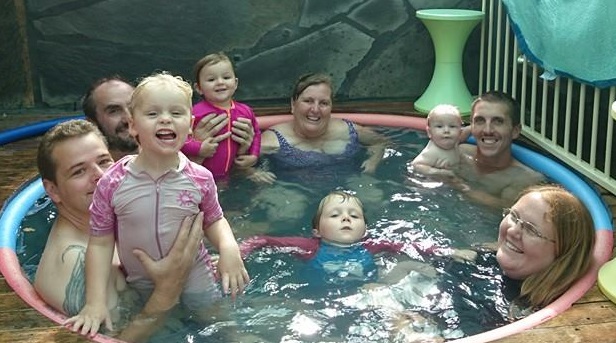
Beverley Paine with her children, and their home educated children, relaxing at home.
Together with the support of my family, my aim is to help parents educate their children in stress-free, nurturing environments. In addition to building and maintaing this website, I continue to create and manage local and national home educating networks, help to organise conferences and camps, as well as write for, edit and produce newsletters, resource directories and magazines. I am an active supporter of national, state, regional and local home education groups.
"You've been an inspiration to me, I love the way
you really listen to people." Vanessa
"Whenever I read your writing I always come away
with increased confidence in my ability to provide and
share a wonderful learning journey with my family!" Davina
"Your guidance, understanding, support and words of
wisdom changed our lives. We now offer support and
organise many homeschooling events for others." Lesley
"Thank you once again for your prompt and friendly service.
I am convinced that your books are going to add
quality and peace of mind to my journey of teaching my kids
at home! Just from studying your website, until almost
2am
in the morning, I 've been encouraged!" Louisa
"Thank you for all your many,many reassuring words
over many, many years. You probably don't know exactly how
valuable you are to the Australian Home Education community.
I've been reading your stuff for maybe 8 years or more now.
And I'm very grateful." Gythaa

CLICK HERE
if you want to learn
how to write your own education plans
to suit
your unique children's
individual learning needs?
Or you are looking for quality curriculum and teaching tips...
|
|
Welcome to the World of Home Education
and Learning without School!
We began educating our children in 1985, when our eldest was five. In truth, we had helped them learn what they need to learn since they were born. I am a passionate advocate of allowing children to learn unhindered by unnecessary stress and competition, meeting developmental needs in ways that suit their individual learning styles and preferences. Ours was a homeschooling, unschooling and natural learning family! There are hundreds of articles on this site to help you build confidence as a home educating family. We hope that your home educating adventure is as satisfying as ours was! Beverley Paine
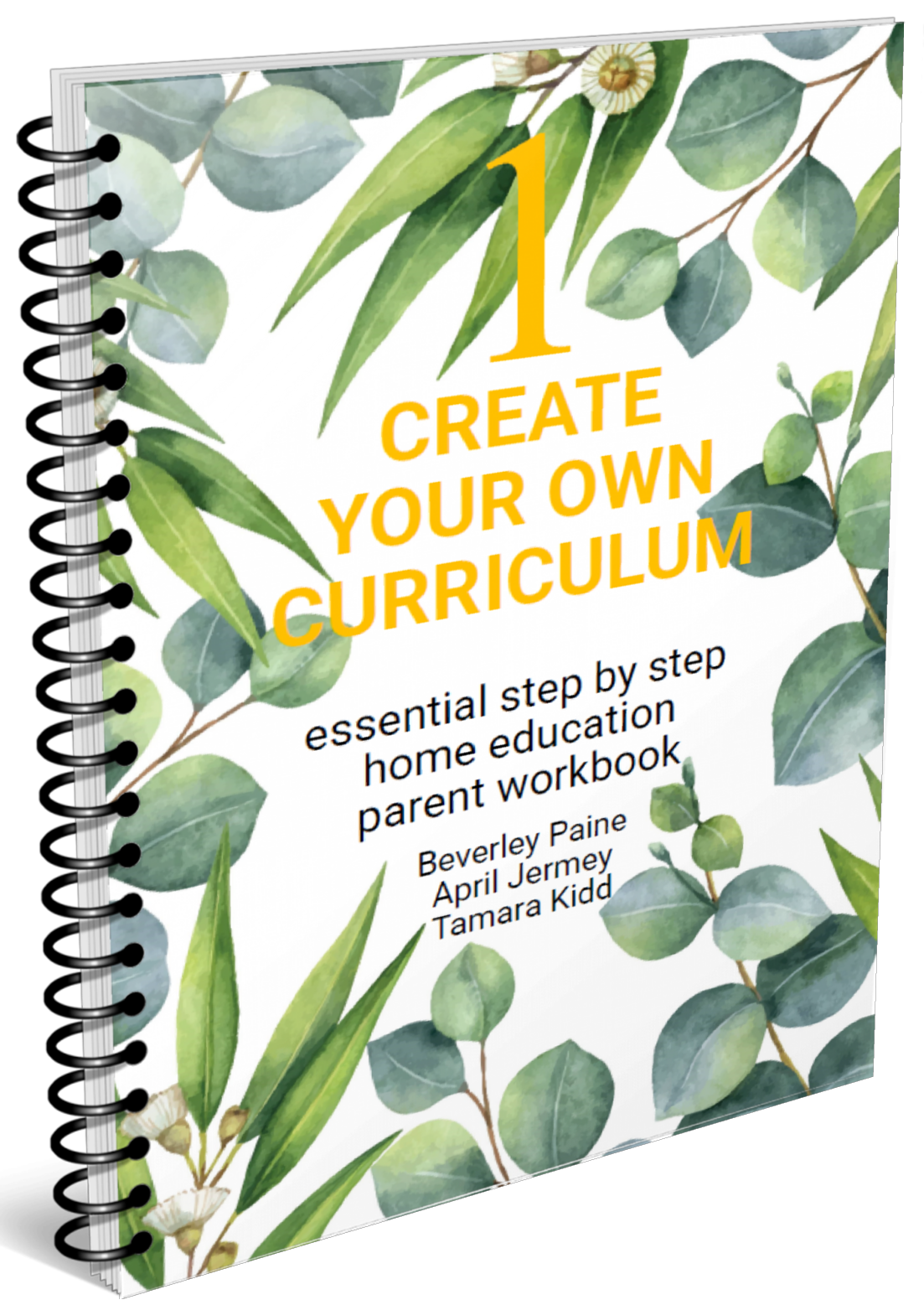
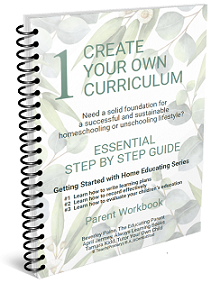
3 ESSENTIAL STEP BY STEP GUIDES
Let experienced home educators Beverley, Tamara and April walk you through HOW to create a learning plan that builds on solid foundations that works for YOUR family AND ticks all the boxes for home educaton registration!
|

Tap into Beverley's
experience
through her books
"Your books, your blogs helped me beyond words... they helped me to find comfort in knowing it is ok to choose exactly what is best for my family." Nisha
"Your books and information are mind blowing and already I am feeling good about this new experience." Diane
"Your guidance, understanding, support & words of wisdom changed our lives." Leslie
"I feel specially inspired by Beverley's words and, the more I read her comments, the more inspired I feel, since my need for support, respect for different parenting styles, and information are fully met." Marijo
|
 |
|

The information on this website is of a general nature only and is not intended as personal or professional advice. This site merges and incorporates 'Homeschool Australia' and 'Unschool Australia'.
The Educating Parent acknowledges the Traditional Aboriginal and Torres Strait Islander Owners, the Custodians of Australia, and pay our respects to Elders past and present and extend that respect to Aboriginal and Torres Strait Islander people viewing this website.
Advertise on this site.





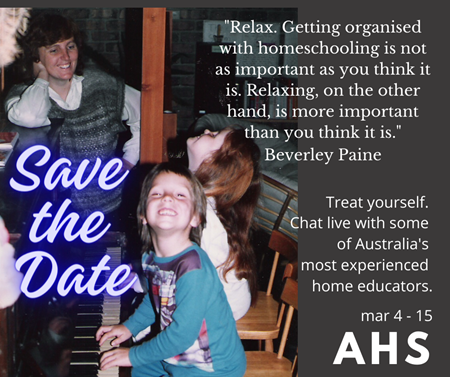
Australia's premier online annual conferences, lifetime access to video and audio recordings, freebies, notes and associated resource guides.
EVERY SUMMIT IS UNIQUE!
$29 each  2023 2023  2022 2021 2022 2021
$25 each 2020 2019 2017
"Biggest and best Aussie homeschool event of the year!"
Home education is a legal alternative
to school education in Australia.
State and Territory governments are responsible
for regulating home education and have different
requirements, however home educating families
are able to develop curriculum and learning programs
to suit the individual needs of their children.

Without revenue from advertising
by educational suppliers and Google Ads
we could not continue to provide information
to home educators. Please support us by letting
our advertisers know that you found them on
The Educating Parent. Thanks!
|
 About
About


 Thank you for visiting!