|
Want to be a Homeschooling Contact Person but Worried about Being Inundated by Spam?
by Beverley Paine
You'd like to offer to be a contact person but don't want your email address posted on a website, vulnerable for collection by a rogue 'robot' looking for email addresses to spam. It's a real worry, but one that can be overcome if you take a few precautions. My email address has been in the public domain on the internet for over a decade and, because I'm careful, I don't have problems with too many unwanted emails or sneaky spyware slowing down my internet enjoyment. And my computer has only ever been infected with one virus.
Spam emails are like the junk mail that lands in your letter box. That's annoying enough, but unless you fall for some of the slick advertising copy and send off money for something you don't really want, or respond to chain letters (which are illegal), there is a limit to the damage done. Spam emails, on the other hand, have the potential to do considerable damage to your computer's operating system by downloading spyware, viruses and other forms of malware.
You have two main strategies for fighting spam. The first is to become educated about how spam works. Like junk mail it preys on the unwary. Your best protection is to become aware of the tricks and techniques spammers use to get your attention. They pretend to come from authoritative sites, such as banks or credit card companies, or from websites such as Ebay or Facebook. They always ask you do to do something, and usually ask you to click on a link to fix a 'problem'. If an offer of easy money looks good to be true, it usually is. Some of these annoying emails are organised rackets for laundering money, or designed to steal your bank account details and password. A quick tip is to check spelling and grammar: many of these spam emails have incredibly poor English.
How can you have an online presence as a contact person and stay unharmed by spam emails? Try these tactics - they really do work:
- Be careful about when and where you give out your email address. Have a 'free' email account as your public email address - use hotmail, yahoo or gmail, etc. Remember to check your online mail box regularly and delete unwanted emails. If you publish your email address online there are tricks that you can use to hide it from bots that regularly roam the internet searching for unprotected email addresses. Use an image instead of text, or write 'at' instead of @ - I first saw this on the HEA website where they employed this technique on its online support group directory to protect HEA members.
- When you sign up for online newsletters or services don't use your home or business email addresses. Click any 'opt out' boxes when registering as a user on websites and always read privacy statements, terms and conditions. Make sure they explicitly say they don't sell or give away their email databases.
- Learn to recognize spam messages. If you don't know the sender, chances are it is spam. If you can tell from the subject line the email is spam, delete it without opening it. That is the safest way. Typical words to watch out for are 'love', 'money', sexual references, or offers that are unsolicited. Don't answer emails from email addresses you don't recognise if the subject line is overly familiar, as if the sender knows you. As a homeschool contact person I generally feel safe if the words 'homeschool' or 'home education' are used in the subject line.
- Never reply to a spam message. Not even to complain. This is what they want you to do. If you do you are almost sure to regret it.
- Never click on a link in an email without hovering over it first with your cursor to check that the web address is the same as the link purports to be: often they are not! Clicking on a link tells the spammer that they have a 'live' email address. It can also open a 'back door' to your computer's operating system.
- Resist the urge to forward emails to several of your friends. Particularly chain emails that demand you forward them on to 20 of your friends or else. These chain mails are illegal - even the fun, friendly ones. And be wary of petitions: only sign those you know are truly legitimate and that you can check by tracking back to the original source.
- Finally, use email programs that allow you to safely preview messages before you open them.
You can also use technology to help filter spam emails. I filter my emails and that's why I only get two or three spam emails a day. Filters are easy to set up and personalize - click the 'help' file in your email program if you have any questions, or search for an answer online. Hundreds of free or low cost spam filters are available. Before downloading filter software check that it is compatible with your computer's operating system and do a search for reviews about it online. Find one that has favourable reviews - you'll know it is legitimate then. Although your ISP provider uses spam filters and other techniques to protect you from spam and unwanted or illegal internet content, you would be unwise to rely on their technology alone to keep spam away.
If you aren't convinced that it is a wise idea to have your email address published on the internet, another way to help new families or share your homeschooling experience is to join an online forum or support group. Privacy is protected in different ways. Some groups are closed and moderated. Most hide member's email addresses, or allow you to set the level of privacy you want. Being a member of an online community of home educators can be a rewarding experience.

Was this article helpful? Was it worth $1.00 to you?
Your gift of $1 or more helps to keep this site operating
offering encouragement
and reassurance to families
wanting
better outcomes for their children.
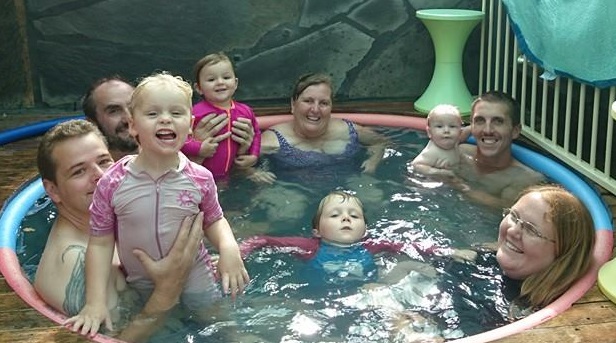
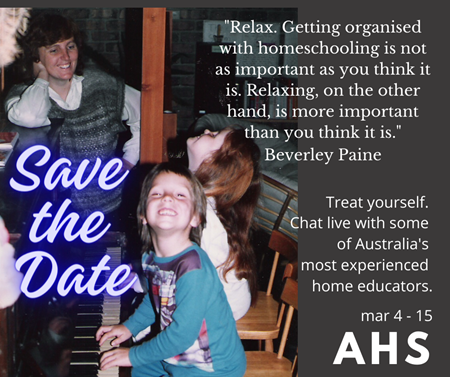
Beverley Paine with her children, and their home educated children, relaxing at home.
Together with the support of my family, my aim is to help parents educate their children in stress-free, nurturing environments. In addition to building and maintaing this website, I continue to create and manage local and national home educating networks, help to organise conferences and camps, as well as write for, edit and produce newsletters, resource directories and magazines. I am an active supporter of national, state, regional and local home education groups.
"You've been an inspiration to me, I love the way
you really listen to people." Vanessa
"Whenever I read your writing I always come away
with increased confidence in my ability to provide and
share a wonderful learning journey with my family!" Davina
"Your guidance, understanding, support and words of
wisdom changed our lives. We now offer support and
organise many homeschooling events for others." Lesley
"Thank you once again for your prompt and friendly service.
I am convinced that your books are going to add
quality and peace of mind to my journey of teaching my kids
at home! Just from studying your website, until almost
2am
in the morning, I 've been encouraged!" Louisa
"Thank you for all your many,many reassuring words
over many, many years. You probably don't know exactly how
valuable you are to the Australian Home Education community.
I've been reading your stuff for maybe 8 years or more now.
And I'm very grateful." Gythaa

CLICK HERE
if you want to learn
how to write your own education plans
to suit
your unique children's
individual learning needs?
Or you are looking for quality curriculum and teaching tips...
|
|
Welcome to the World of Home Education
and Learning without School!
We began educating our children in 1985, when our eldest was five. In truth, we had helped them learn what they need to learn since they were born. I am a passionate advocate of allowing children to learn unhindered by unnecessary stress and competition, meeting developmental needs in ways that suit their individual learning styles and preferences. Ours was a homeschooling, unschooling and natural learning family! There are hundreds of articles on this site to help you build confidence as a home educating family. We hope that your home educating adventure is as satisfying as ours was! Beverley Paine
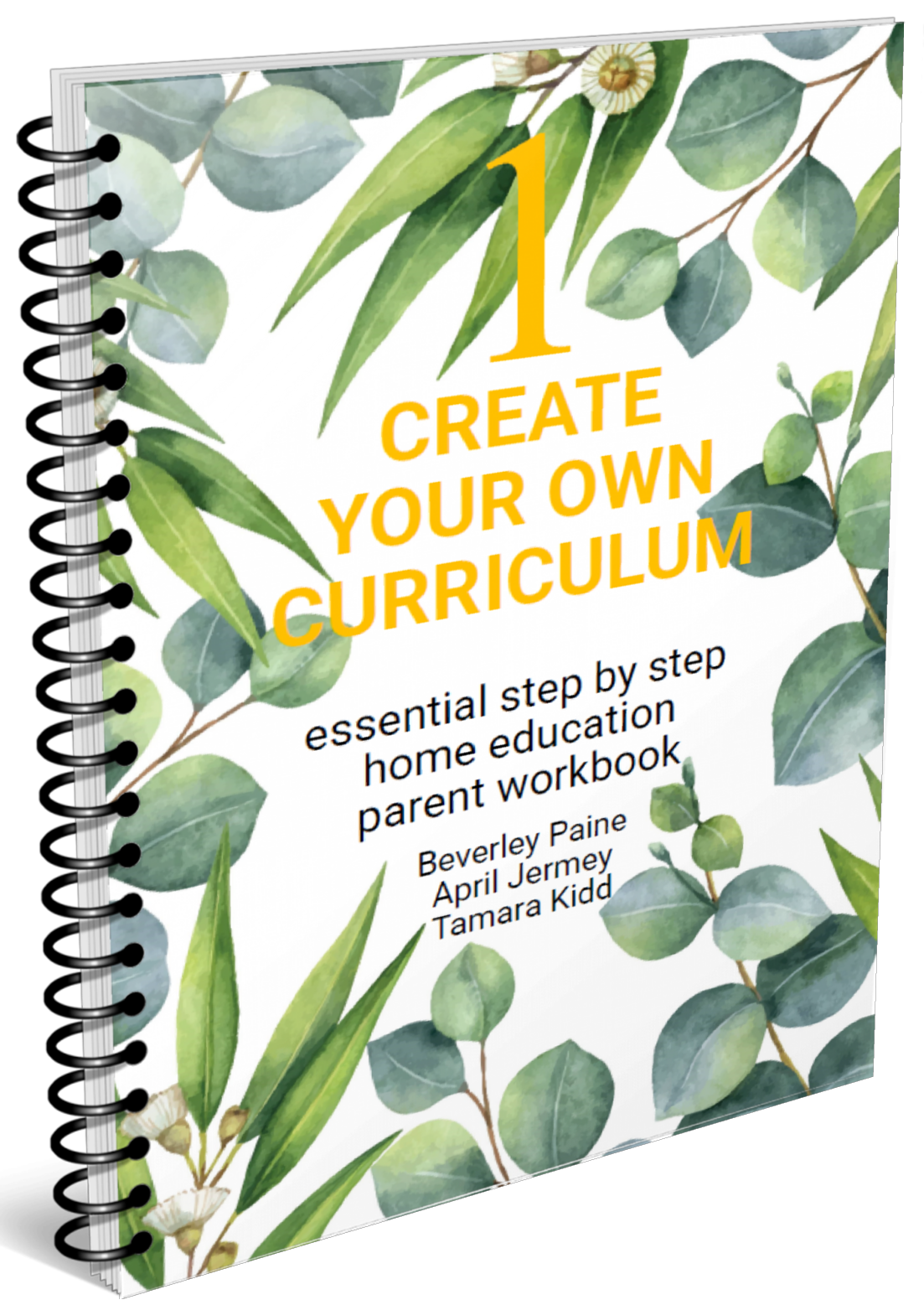
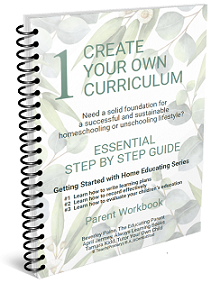
3 ESSENTIAL STEP BY STEP GUIDES
Let experienced home educators Beverley, Tamara and April walk you through HOW to create a learning plan that builds on solid foundations that works for YOUR family AND ticks all the boxes for home educaton registration!
|

Tap into Beverley's
experience
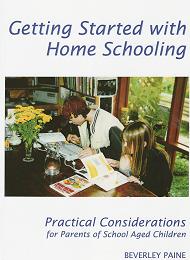
through her books
"Your books, your blogs helped me beyond words... they helped me to find comfort in knowing it is ok to choose exactly what is best for my family." Nisha
"Your books and information are mind blowing and already I am feeling good about this new experience." Diane
"Your guidance, understanding, support & words of wisdom changed our lives." Leslie
"I feel specially inspired by Beverley's words and, the more I read her comments, the more inspired I feel, since my need for support, respect for different parenting styles, and information are fully met." Marijo
|
 |
|

The information on this website is of a general nature only and is not intended as personal or professional advice. This site merges and incorporates 'Homeschool Australia' and 'Unschool Australia'.
The Educating Parent acknowledges the Traditional Aboriginal and Torres Strait Islander Owners, the Custodians of Australia, and pay our respects to Elders past and present and extend that respect to Aboriginal and Torres Strait Islander people viewing this website.
Advertise on this site.




Australia's premier online annual conferences, lifetime access to video and audio recordings, freebies, notes and associated resource guides.
EVERY SUMMIT IS UNIQUE!
$29 each  2023 2023  2022 2021 2022 2021
$25 each 2020 2019 2017
"Biggest and best Aussie homeschool event of the year!"
Home education is a legal alternative
to school education in Australia.
State and Territory governments are responsible
for regulating home education and have different
requirements, however home educating families
are able to develop curriculum and learning programs
to suit the individual needs of their children.

Without revenue from advertising
by educational suppliers and Google Ads
we could not continue to provide information
to home educators. Please support us by letting
our advertisers know that you found them on
The Educating Parent. Thanks!
|
 About
About


 Thank you for visiting!