|
Solid Evidence to Support Home Schooling
© Michael Farris
Article from the Wall Street Journal, 5th March, 1997 circulated in Home Education newsletters in Australia a few years ago.
Secretary of Education Richard Riley has announced that this spring he will host a national forum to bring "the nation's best teachers" together to address our country's education challenges. If he is willing to break through institutional prejudice, Mr. Riley will include a number of home-schooling parents in his forum: A new study by the National Home Education Research Institute again shows that home education is far more successful than public education.
Home-school students score significantly higher on standardized achievement tests than their public-school counterparts do. While by definition public school students average at the 50th percentile on standardized tests, this nationwide study conducted by Brian Ray, president of National Home Education Research Institute, reveals that home-schoolers have average scores between the 80th and 87th percentiles on every subtest (including reading, listening, language, math, science, social studies and study skills). The average score on the basic battery of skills is in the 85th percentile, while the average complete battery score is in the 87th percentile - a phenomenal 37 percentile differential.
And no one should think that home schooling is limited to a few former hippies and fundamentalist Christians There are 1.2 million school-age children home schooled in America. This is more students than are enroled in New Jersey, the state with the 10th largest public school enrollment. There are also more home schoolers nationally than there are public school students in Arkansas, Delaware, Hawaii, Montana, North Dakota, South Dakota, Rhode Island, Vermont and Wyoming combined.
Public school defenders will undoubtedly chafe at our test scores, arguing that public schools have more minority students than home-schools do. But the study quickly dispels the myth that minorities cannot achieve as well as whites.
Ethnic minorities make up 5% of home-school students, and home-schooled minorities and whites both score on average in the 87th percentile on reading tests. In public schools however, whites significantly outpace minorities in reading scores (whites: 57th percentile; blacks: 28th percentile; Hispanics: 28th percentile) In math, home-school whites score only marginally better than minorities do (82nd percentile vs. 77th percentile). In public schools, the disparity in maths scores is huge: 59th percentile for whites; 24th percentile for blacks; and 29th percentile for Hispanics.
Public school officials have some explaining to do. Why is is that despite their constant lip service to the goal of equal opportunity, public schools continue to deliver abysmally low academic quality to minority students? Home schoolers have broken out of the ugly, demeaning stereotype of racial nderachievement. Why can't government schools do the same? What ever the reasons for the dilemma of public-education failure, they don't include inadequate funding. For each home-schooled child, the average schooling cost is $546 per year; the annual public-school per-pupil expenditure is $5,325. Both figures exclude the capital costs of the building in which each child is taught.
"But what about socialisation?" you ask. There is no need to fear that home-schoolers are isolated at home all day. Home-schooled children are involved in an average of 5.2 outside activities, including scouts, ballet, church activities, sports and 4-H clubs, each week; 98% are involved in two or more outside functions on a weekly basis.
The No. 1 political goal of home-schoolers is quite modest. We just want to be left alone. Those who believe government regulation is essential for success would do well to look at the cold, hard numbers that prove otherwise. There is no significant statistical difference in student test scores between those taught by a parent who is or has been a certified teacher and those whose parents were never certified. And there is no significant statistical difference in student test scores between those taught by parents with a college degree and those who have never attended college. In fact, students taught by parents who have not finished high school score 30 percentiles higher than students in the public schools. Students from states that highly regulate home- schooling score exactly the same as students from states with little or no regulation.
The success of the modern home-schooling movement can be explained with a couple of old-fashioned concepts: Hard work and parental involvement lead to the best individual academic achievement. But perhaps there is an even more fundamental reason. Home-schooling, by its nature, focuses on the individual child. Public school reformers are constantly scheming with new ideas for "all children." Such programs, like the federal government's Goals 2000, invariably lead to one-size-fits-all mediocrity. Programs that allow each child to maximise his or her own individual abilities lead to success.
There is no reason that public schools cannot also adopt the "each child' theory that underlies home education. No reason, that is, except the politically difficult obstacles that the centralized bureaucrats pose to parents and teachers. If Mr. Riley is serious about learning from educational success, he'll find that the home is a pretty good place to start looking.
 Michael P Farris is president of the Home School Legal Defense Association in Purcellville, Va. Michael P Farris is president of the Home School Legal Defense Association in Purcellville, Va.

Was this article helpful? Was it worth $1.00 to you?
Your gift of $1 or more helps to keep this site operating
offering encouragement
and reassurance to families
wanting
better outcomes for their children.
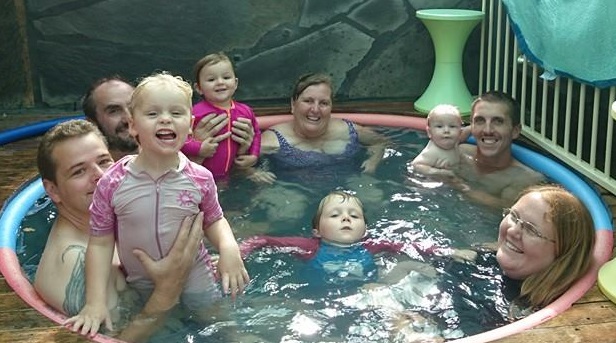
Beverley Paine with her children, and their home educated children, relaxing at home.
Together with the support of my family, my aim is to help parents educate their children in stress-free, nurturing environments. In addition to building and maintaing this website, I continue to create and manage local and national home educating networks, help to organise conferences and camps, as well as write for, edit and produce newsletters, resource directories and magazines. I am an active supporter of national, state, regional and local home education groups.
"You've been an inspiration to me, I love the way
you really listen to people." Vanessa
"Whenever I read your writing I always come away
with increased confidence in my ability to provide and
share a wonderful learning journey with my family!" Davina
"Your guidance, understanding, support and words of
wisdom changed our lives. We now offer support and
organise many homeschooling events for others." Lesley
"Thank you once again for your prompt and friendly service.
I am convinced that your books are going to add
quality and peace of mind to my journey of teaching my kids
at home! Just from studying your website, until almost
2am
in the morning, I 've been encouraged!" Louisa
"Thank you for all your many,many reassuring words
over many, many years. You probably don't know exactly how
valuable you are to the Australian Home Education community.
I've been reading your stuff for maybe 8 years or more now.
And I'm very grateful." Gythaa

CLICK HERE
if you want to learn
how to write your own education plans
to suit
your unique children's
individual learning needs?
Or you are looking for quality curriculum and teaching tips...
|
|
Welcome to the World of Home Education
and Learning without School!
We began educating our children in 1985, when our eldest was five. In truth, we had helped them learn what they need to learn since they were born. I am a passionate advocate of allowing children to learn unhindered by unnecessary stress and competition, meeting developmental needs in ways that suit their individual learning styles and preferences. Ours was a homeschooling, unschooling and natural learning family! There are hundreds of articles on this site to help you build confidence as a home educating family. We hope that your home educating adventure is as satisfying as ours was! Beverley Paine
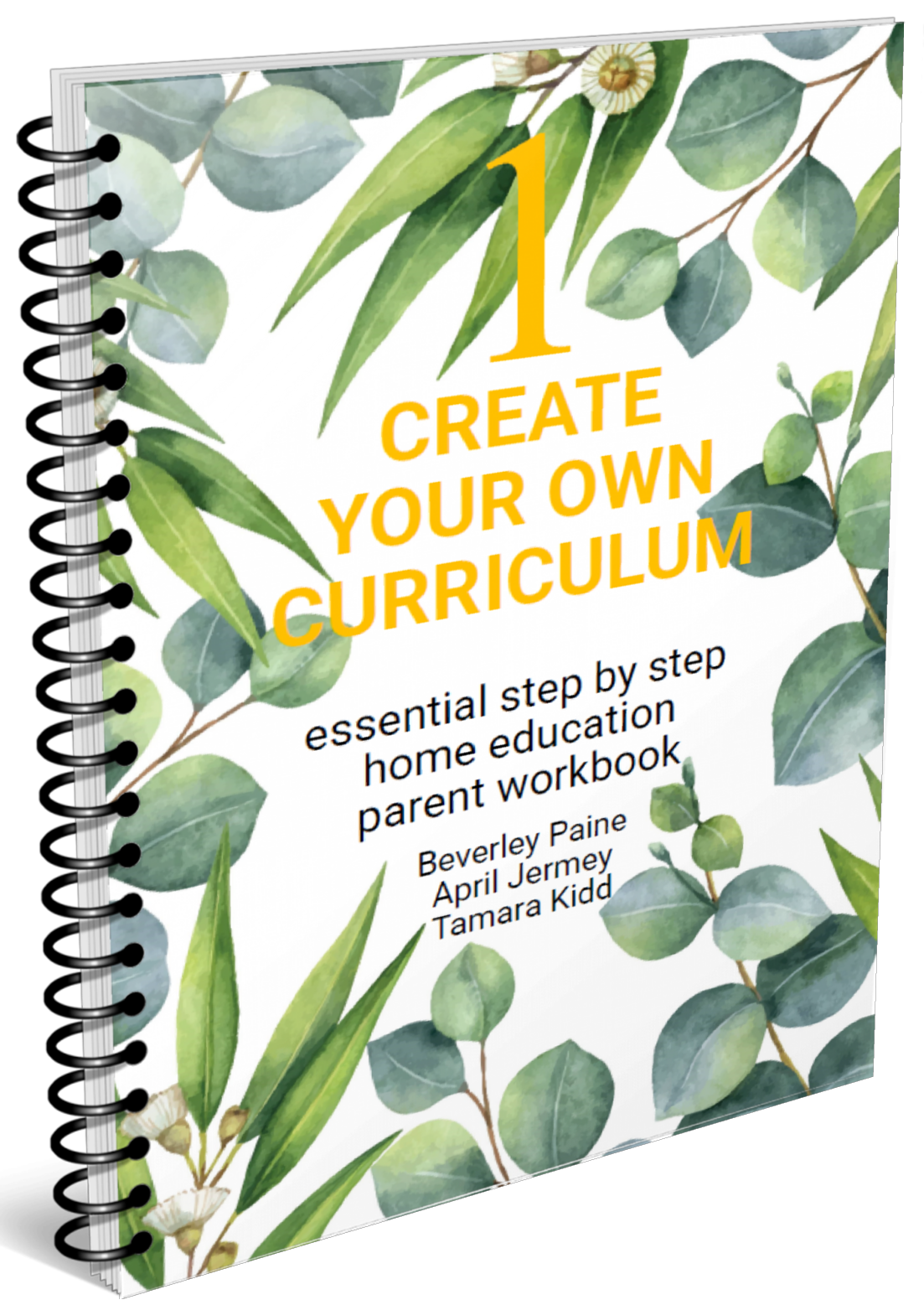
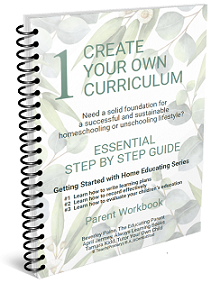
3 ESSENTIAL STEP BY STEP GUIDES
Let experienced home educators Beverley, Tamara and April walk you through HOW to create a learning plan that builds on solid foundations that works for YOUR family AND ticks all the boxes for home educaton registration!
|

Tap into Beverley's
experience
through her books
"Your books, your blogs helped me beyond words... they helped me to find comfort in knowing it is ok to choose exactly what is best for my family." Nisha
"Your books and information are mind blowing and already I am feeling good about this new experience." Diane
"Your guidance, understanding, support & words of wisdom changed our lives." Leslie
"I feel specially inspired by Beverley's words and, the more I read her comments, the more inspired I feel, since my need for support, respect for different parenting styles, and information are fully met." Marijo
|
 |
|

The information on this website is of a general nature only and is not intended as personal or professional advice. This site merges and incorporates 'Homeschool Australia' and 'Unschool Australia'.
The Educating Parent acknowledges the Traditional Aboriginal and Torres Strait Islander Owners, the Custodians of Australia, and pay our respects to Elders past and present and extend that respect to Aboriginal and Torres Strait Islander people viewing this website.
Advertise on this site.





Australia's premier online annual conferences, lifetime access to video and audio recordings, freebies, notes and associated resource guides.
EVERY SUMMIT IS UNIQUE!
$29 each  2023 2023  2022 2021 2022 2021
$25 each 2020 2019 2017
"Biggest and best Aussie homeschool event of the year!"
Home education is a legal alternative
to school education in Australia.
State and Territory governments are responsible
for regulating home education and have different
requirements, however home educating families
are able to develop curriculum and learning programs
to suit the individual needs of their children.

Without revenue from advertising
by educational suppliers and Google Ads
we could not continue to provide information
to home educators. Please support us by letting
our advertisers know that you found them on
The Educating Parent. Thanks!
|
 About
About


 Thank you for visiting!