|
Can Natural Learning Be Planned?
© Beverley Paine
October 28th, 2002 - Unschooling Discussion List
Lisa wrote: "I thought that unschooling was not planned. Do you know if it is planned or not?"
Our unschooling was planned. In practice this meant year long goals, like learning to read simple sentences, know the times tables, learn first aid, etc; and short term goals. Our short term goals might be stated as projects - build a fox proof duck yard; learn about the solar system; history of SA (that was a four month project based on excursions) - or even very short term goals such as a daily list of things we wanted to do that day. Our days, weeks, months and years were definitely planned and structured, although from an observer's viewpoint it would have looked like we were doing whatever we wanted to each day based on what our immediate needs were. The results are stunning, I must say. We did a lot of stuff, learned a lot of stuff.
Does it mean you refuse to teach your children things and make them do it themselves?
No. 'Teaching' children is something parents naturally do, from birth. The methods used in those first few years of life are very effective and get results. Why should people change this just because a child turns five or six? Children learn so much, so effortlessly, in those first five years. Our 'teaching' practice didn't change. We taught the children what they needed to know, what we needed them to know, what society needs them to know, by applying those same methods.
This generally meant talking to them, showing them, helping them, challenging them, encouraging them, listening attentively to them. I never left my children to learn things by themselves - I always made sure they had guidance and help at hand.
Or do you just teach them what they want to know?
What they want to know (kids ask a million questions!) and what they need to know. School curriculum's are based on child development and what society needs children to learn - our curriculum isn't much different. I usually capitalised on the children's interests and passions to introduce skills and knowledge I knew they needed or would be useful to them.
I question the direction and intent of school curriculum's, and the emphasis on 'success' in education in general. I'm not happy with the push for young people to 'reach their full potential' by age 18. I think the pressure on young people to achieve unrealistic goals begins with the school curriculum and is reinforced by the media and natural parental desires. Australia has the second highest youth suicide rate in the world.
The traditional curriculum doesn't value or reflect the learning styles of a good many young people - and it fails those people miserably. There are very many ways to learn and the most effective is hands on activity combined with intelligent and respectful conversation. It is better to learn mathematics with someone who needs to use it for a meaningful purpose than to pour over a silent book trying to make sense of abstract figures. Mentoring is far superior to passive teaching. Society was constructed this way two centuries ago and produced great minds, great progress. We've forgotten the merits of other ways.
Sometimes homeschooling can be hit and miss. Sometimes who aren't 'educated' to the standard that society aspires to may end up being brilliant in their own right, in their own way. We can't tell where the next inspirational hero will come from. It is possible to discriminate against naturally learning families because their environment or background doesn't fit the accepted 'norm'. It's hard to imagine that unorthodox family situations might just be providing the catalyst for brilliance to emerge. History shows that this is often the case. A diverse, creative society needs a mix of backgrounds - uniformity (as prescribed by school - one suit fits all type thinking) can't be good in the long term.
Angie wrote: "Can children learn basic skills in their teens? I've heard it's more difficult to learn basic skills when you are in your teens and want to be moving on to other things."
It depends upon what skills they are and how relevant they are to one's life. I don't believe that it is easier to learn certain things at certain ages, or before certain ages. I have 80 year old friends that, when they apply themselves diligently to a learning task, experience success, in the same time it would take a child to learn the same task. In many ways it is easier to learn when a teenager as learning can be more meaningful and purposeful - related to personal goals.
Is it true that if children are "unschooled" they will often choose not to learn subjects that are unpleasant to them at the time.
Unschoolers often question the need to learn specific things in a specific order at specific times in a young person's life. We instruct or help our children to learn things when learning them is most meaningful to the learner. This means that the order of a traditional curriculum is mixed up, but over the 15 years or so years of education, most things are covered. When education moves into the high school years and the young person begins to specialise some traditional curriculum subjects may be missed or dropped, in preference for other skills and knowledge not covered by school subjects. The basics - 3rs if you like - should be covered by the age of 14 o4 15 to allow a young person to spring into whatever direction he or she wants. Most of the Unschoolers I know have achieved this, and their children are confidently moving into the world of work and further education from the age of 14 or 15. Some of these children aren't academically brilliant, but they aren't inclined that way.
For example, I know a young girl who is about 12-13 who has refused to learn to write.
Just because she can't or won't write now doesn't mean to say she will not have mastered it by age 18. I've seen this happen, and it's quite a shock. Spelling is something my eldest boy improved without any practice at all, and hardly any writing. He simply picked it up as he read more widely and saw the need to conform to convention. This was teaching at its simplest and most effective and couldn't occur until the teenage years - it takes a different, mature way of looking at spelling and writing. It takes a tremendous amount of faith in an individual's ability to continuously learn to allow learning to occur this way.
But it's important that the parent needs to know what he or she is doing and needs to be totally supportive and continuously presenting opportunities for growth and learning. A parent also teaches by example - a powerful teaching tool. My children have learned much by observing others doing - while not practicing these skills themselves, they have nonetheless learned them to a high degree of performance. I've seen this too, and it shocked me, because it undermined everything I understood about the need for sustained practice.
RE maths, I meet teenagers every day who are daily taught maths at school who can't work out their change at the local shop. Being taught doesn't necessarily equate with learning. It's not the curriculum that's at fault in either schooling or unschooling - it's something else completely different. It's the amount of care and attention given to the child, and timing the learning to coincide with a child's interest and learning style. Homeschooling makes this easy, which is why homeschooling is often far superior to school.
I've taught my children that they can learn anything anytime, and they do. They truly believe this. They know that if they need a skill they can put time and energy into learning it and that learning it may be hard, but rewarding. They are not daunted by obstacles or challenges and if they need something to achieve something else then they get on with it. This is the essence of a learning naturally approach.

Was this article helpful? Was it worth $1.00 to you?
Your gift of $1 or more helps to keep this site operating
offering encouragement
and reassurance to families
wanting
better outcomes for their children.
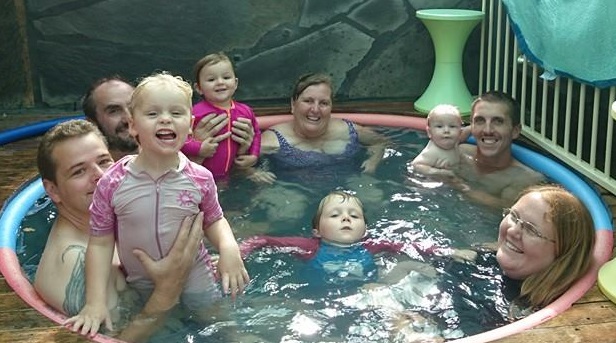
Beverley Paine with her children, and their home educated children, relaxing at home.
Together with the support of my family, my aim is to help parents educate their children in stress-free, nurturing environments. In addition to building and maintaing this website, I continue to create and manage local and national home educating networks, help to organise conferences and camps, as well as write for, edit and produce newsletters, resource directories and magazines. I am an active supporter of national, state, regional and local home education groups.
"You've been an inspiration to me, I love the way
you really listen to people." Vanessa
"Whenever I read your writing I always come away
with increased confidence in my ability to provide and
share a wonderful learning journey with my family!" Davina
"Your guidance, understanding, support and words of
wisdom changed our lives. We now offer support and
organise many homeschooling events for others." Lesley
"Thank you once again for your prompt and friendly service.
I am convinced that your books are going to add
quality and peace of mind to my journey of teaching my kids
at home! Just from studying your website, until almost
2am
in the morning, I 've been encouraged!" Louisa
"Thank you for all your many,many reassuring words
over many, many years. You probably don't know exactly how
valuable you are to the Australian Home Education community.
I've been reading your stuff for maybe 8 years or more now.
And I'm very grateful." Gythaa

CLICK HERE
if you want to learn
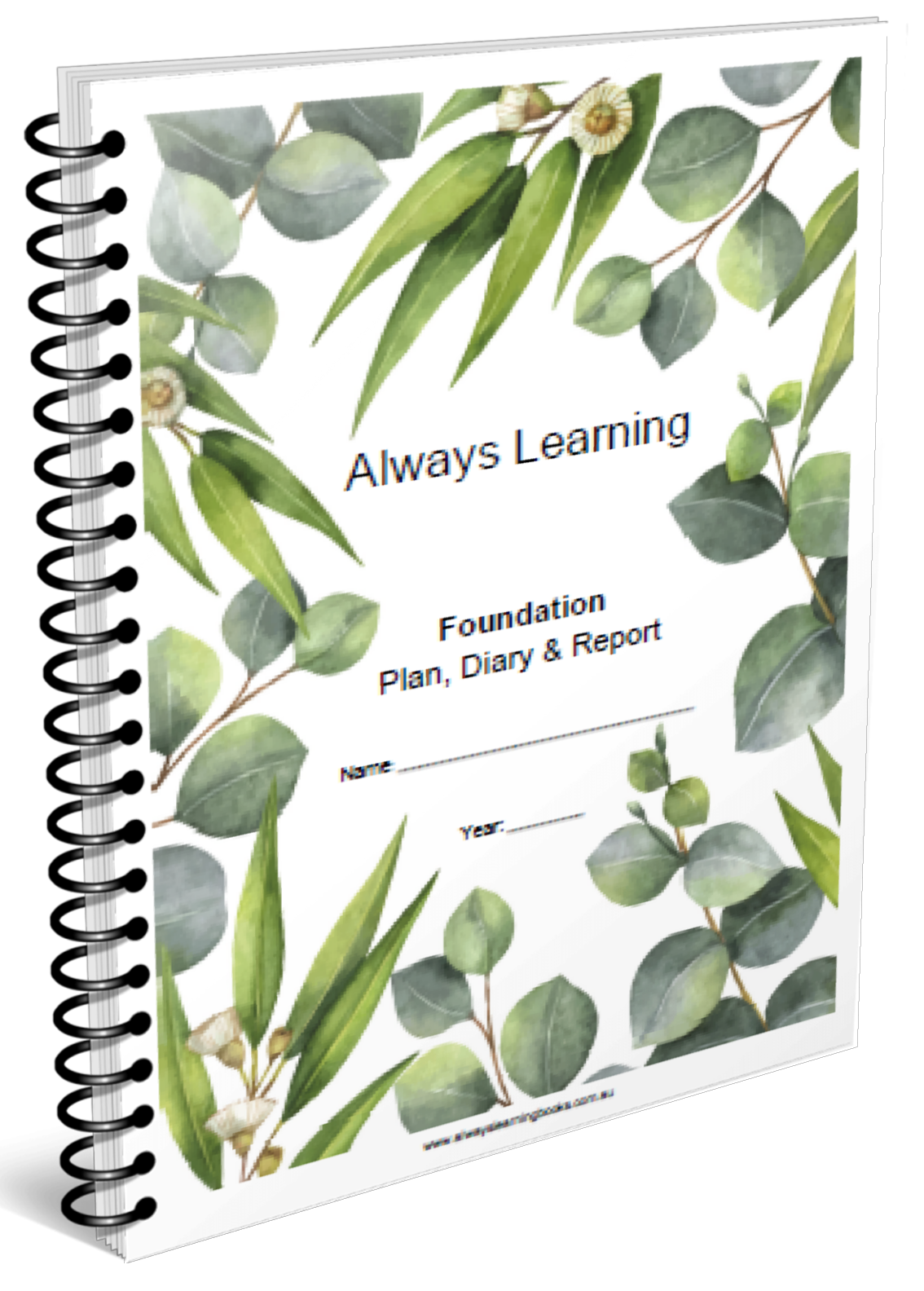
how to write your own education plans
to suit
your unique children's
individual learning needs?
Or you are looking for quality curriculum and teaching tips...
|
|
Welcome to the World of Home Education
and Learning without School!
We began educating our children in 1985, when our eldest was five. In truth, we had helped them learn what they need to learn since they were born. I am a passionate advocate of allowing children to learn unhindered by unnecessary stress and competition, meeting developmental needs in ways that suit their individual learning styles and preferences. Ours was a homeschooling, unschooling and natural learning family! There are hundreds of articles on this site to help you build confidence as a home educating family. We hope that your home educating adventure is as satisfying as ours was! Beverley Paine
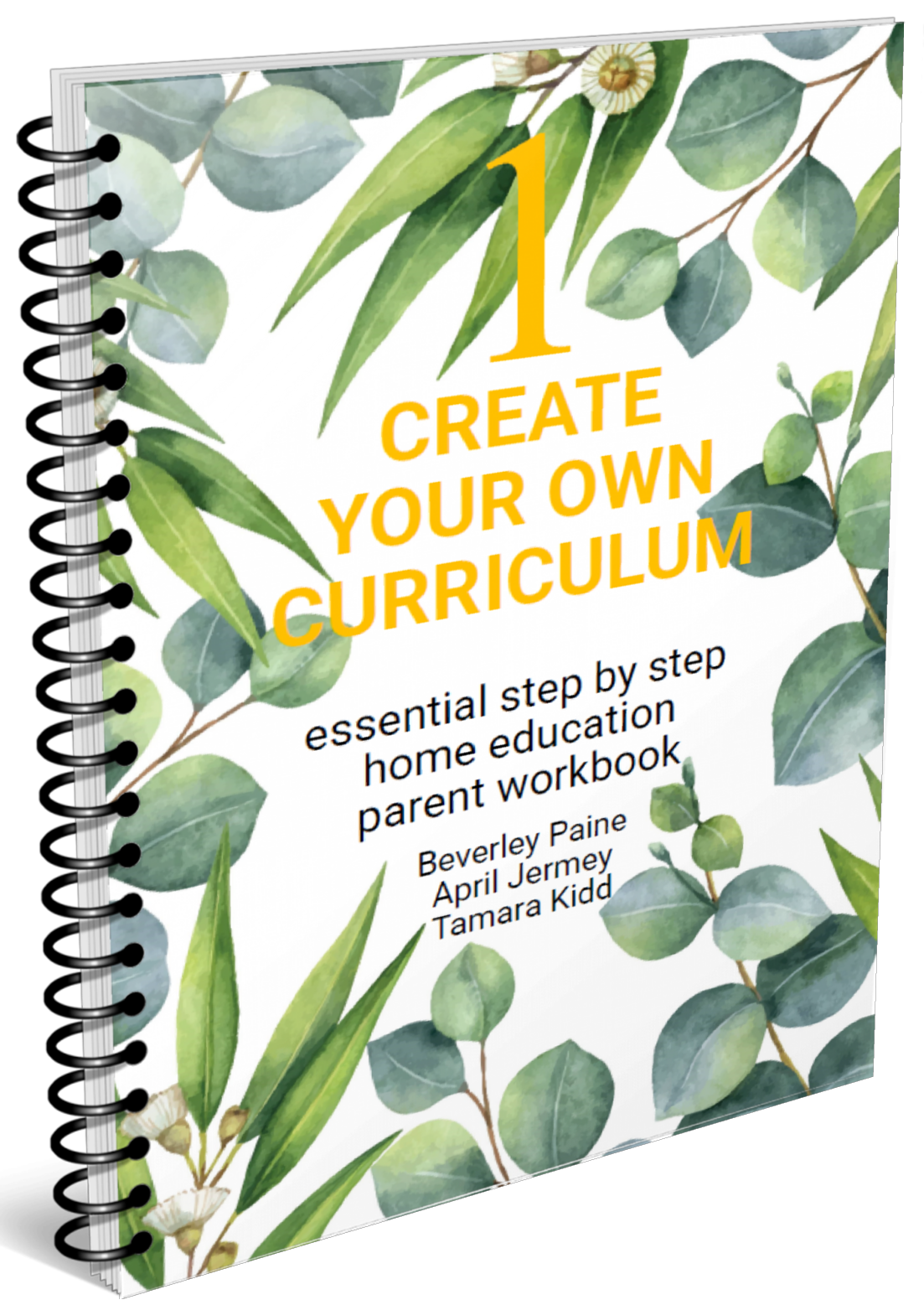
3 ESSENTIAL STEP BY STEP GUIDES
Let experienced home educators Beverley, Tamara and April walk you through HOW to create a learning plan that builds on solid foundations that works for YOUR family AND ticks all the boxes for home educaton registration!
|

Tap into Beverley's
experience
through her books
"Your books, your blogs helped me beyond words... they helped me to find comfort in knowing it is ok to choose exactly what is best for my family." Nisha
"Your books and information are mind blowing and already I am feeling good about this new experience." Diane
"Your guidance, understanding, support & words of wisdom changed our lives." Leslie
"I feel specially inspired by Beverley's words and, the more I read her comments, the more inspired I feel, since my need for support, respect for different parenting styles, and information are fully met." Marijo
|
 |
|

The information on this website is of a general nature only and is not intended as personal or professional advice. This site merges and incorporates 'Homeschool Australia' and 'Unschool Australia'.
The Educating Parent acknowledges the Traditional Aboriginal and Torres Strait Islander Owners, the Custodians of Australia, and pay our respects to Elders past and present and extend that respect to Aboriginal and Torres Strait Islander people viewing this website.
Advertise on this site.






Australia's premier online annual conferences, lifetime access to video and audio recordings, freebies, notes and associated resource guides.
EVERY SUMMIT IS UNIQUE!
$29 each  2023 2023  2022 2021 2022 2021
$25 each 2020 2019 2017
"Biggest and best Aussie homeschool event of the year!"
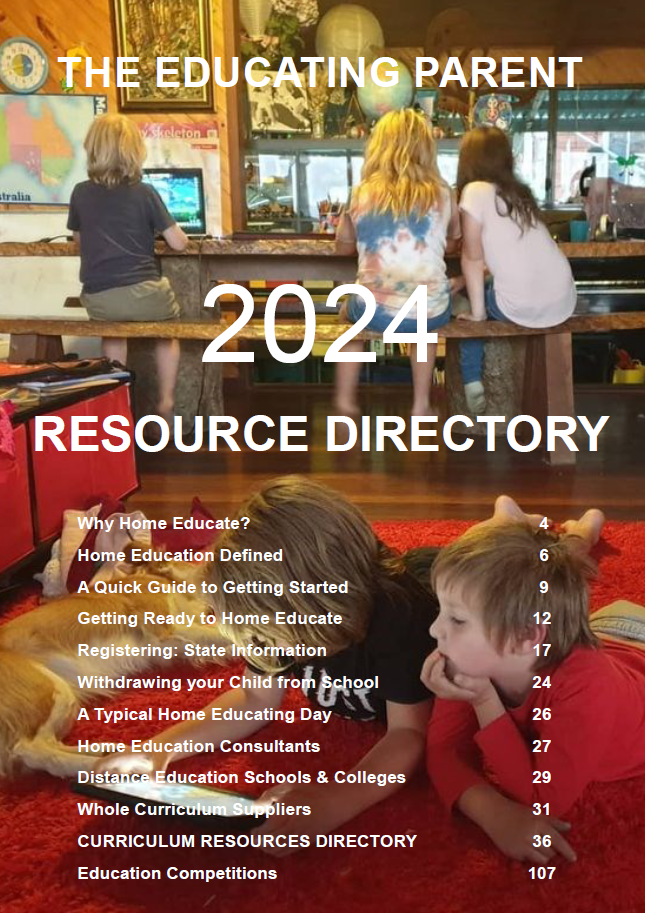
Home education is a legal alternative
to school education in Australia.
State and Territory governments are responsible
for regulating home education and have different
requirements, however home educating families
are able to develop curriculum and learning programs
to suit the individual needs of their children.

Without revenue from advertising
by educational suppliers and Google Ads
we could not continue to provide information
to home educators. Please support us by letting
our advertisers know that you found them on
The Educating Parent. Thanks!
|
 About
About


 Thank you for visiting!