|
Get Ready, Get Set... Go Reading!
© Beverley Paine, 2004
A child's readiness for reading is predicated on a number of factors, such as gender, health, verbal ability, visual and auditory perception, experience, and desire to read.
Not all children develop at the same rate. Even within a single family, children can differ widely in development, attention span, likes and dislikes. It may take longer for your child to perceive the difference between some letters of the alphabet. We found enormous difference in the way our children learned to read, as well as the age they began reading. Recognise and appreciate those differences. Minimise comparison between siblings, or between your child and other children of the same age. Resist the temptation to compare your ability as a youngster to your child. We're all different.
Clear diction when speaking is essential if you want to develop spelling skills. I learned this lesson when all three of my children left letters out in the same type of words. I wasn't pronouncing my words clearly! Talking too fast can also lead to confusion in children.
Physical, gross and fine motor problems or delayed development may cause difficulties in acquiring reading skills. Patience is required, and if necessary, further investigation. Nonetheless it is always possible to read to children, to tell stories and recite poetry, to point out what it says on signs and to help them write. My youngest didn't learn to read until age ten; his homeschooling saved him from the behavioural problems I am sure so many of schooled counterparts develop and we were able to keep his self-esteem intact. He always thought of himself as a reader and writer and had confidence that one day he'd be able to do both independently. At seventeen he is a confident writer and has published tutorials on his website and writes regularly on Internet forums. As he grew, we had his eyesight and hearing checked regularly and kept abreast of possible disorders and symptoms, just in case.
Children's background knowledge and experiences are key factors in their readiness to read. Often families purchase overseas curriculum materials and notice that their children don't immediately grasp a concept because they are unfamiliar with the content. A child familiar with Australian animals may not necessarily know about 'deer', 'moose' or 'elk', but these may be familiar to Canadian children. By widening a child's experiences you will not only increase their knowledge and understanding of the world around them, you will improve their vocabulary and get them ready for reading.
Television can be aid in developing reading readiness too. Discuss concepts that are new to your child as you view programs together. Encourage your child to ask questions, if not during the program itself, then during the ad break. If you want to pay attention and don't want to answer a question straight or chat about something away, write the question or topic down on a notepad on the coffee table and bring the subject up again after the program or at the next convenient time.
Building your child's vocabulary through conversation and by reading to him is an excellent way to prepare for reading. Read, read, read - anything and everything, from the daily paper to cereal packets to great literature. Children soak up information like sponges. They don't have to learn or remember everything, especially those things you particularly want them to remember, but I bet you'll be amazed at what they do recall when you make a habit of reading aloud. Talk about what you read too; get a conversation going. I can't emphasise this point enough!
Children learn how language fits together by listening to it; for this reason I always had the radio on the ABC during the day. The constant flow of information quietly reinforced my children's language skills, without any effort on my behalf.
There are many factors that can temporarily 'cloud' a mind: exhaustion, physical tiredness, late night, too much television or computer, lack of fresh air, dehydrations (our brains need oodles of water to think clearly), hunger, incorrect nutrition, allergies and intolerances to food, airborne particles and smells, pain, and emotional or physical stress. Check for these first before you begin to worry about developmental delay. The remedy to reluctant reading may easier than you first thought!
My children loved doing all the reading readiness activities I'd prepared for them, from doing jigsaw puzzles, playing 'old maid' and 'donkey' card games, 'twenty questions', copying and tracing shapes and pictures, playing with construction toys - anything that built their visual perception skills. Rhymes, chants, songs, tongue twisters, word games and music helped to build auditory perception skills.

Was this article helpful? Was it worth $1.00 to you?
Your gift of $1 or more helps to keep this site operating
offering encouragement
and reassurance to families
wanting
better outcomes for their children.
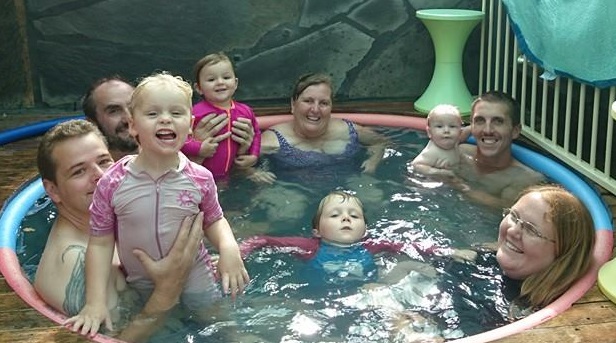
Beverley Paine with her children, and their home educated children, relaxing at home.
Together with the support of my family, my aim is to help parents educate their children in stress-free, nurturing environments. In addition to building and maintaing this website, I continue to create and manage local and national home educating networks, help to organise conferences and camps, as well as write for, edit and produce newsletters, resource directories and magazines. I am an active supporter of national, state, regional and local home education groups.
"You've been an inspiration to me, I love the way
you really listen to people." Vanessa
"Whenever I read your writing I always come away
with increased confidence in my ability to provide and
share a wonderful learning journey with my family!" Davina
"Your guidance, understanding, support and words of
wisdom changed our lives. We now offer support and
organise many homeschooling events for others." Lesley
"Thank you once again for your prompt and friendly service.
I am convinced that your books are going to add
quality and peace of mind to my journey of teaching my kids
at home! Just from studying your website, until almost
2am
in the morning, I 've been encouraged!" Louisa
"Thank you for all your many,many reassuring words
over many, many years. You probably don't know exactly how
valuable you are to the Australian Home Education community.
I've been reading your stuff for maybe 8 years or more now.
And I'm very grateful." Gythaa

CLICK HERE
if you want to learn
how to write your own education plans
to suit
your unique children's
individual learning needs?
Or you are looking for quality curriculum and teaching tips...
|
|
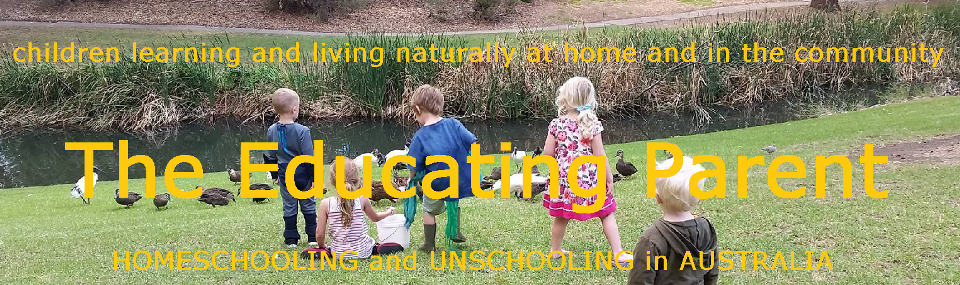
Welcome to the World of Home Education
and Learning without School!
We began educating our children in 1985, when our eldest was five. In truth, we had helped them learn what they need to learn since they were born. I am a passionate advocate of allowing children to learn unhindered by unnecessary stress and competition, meeting developmental needs in ways that suit their individual learning styles and preferences. Ours was a homeschooling, unschooling and natural learning family! There are hundreds of articles on this site to help you build confidence as a home educating family. We hope that your home educating adventure is as satisfying as ours was! Beverley Paine
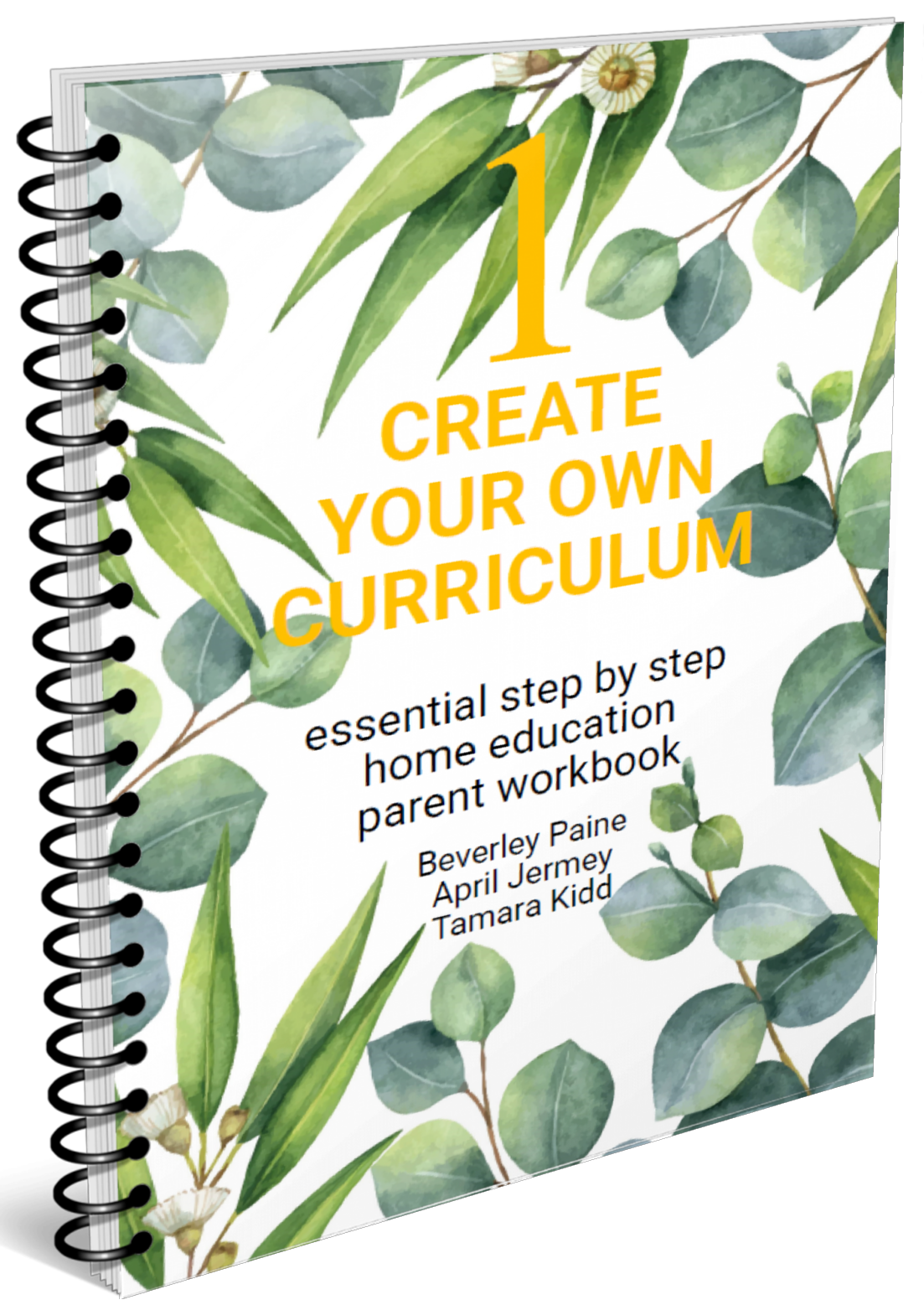
3 ESSENTIAL STEP BY STEP GUIDES
Let experienced home educators Beverley, Tamara and April walk you through HOW to create a learning plan that builds on solid foundations that works for YOUR family AND ticks all the boxes for home educaton registration!
|

Tap into Beverley's
experience
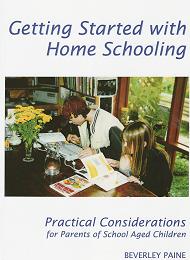
through her books
"Your books, your blogs helped me beyond words... they helped me to find comfort in knowing it is ok to choose exactly what is best for my family." Nisha
"Your books and information are mind blowing and already I am feeling good about this new experience." Diane
"Your guidance, understanding, support & words of wisdom changed our lives." Leslie
"I feel specially inspired by Beverley's words and, the more I read her comments, the more inspired I feel, since my need for support, respect for different parenting styles, and information are fully met." Marijo
|
 |
|

The information on this website is of a general nature only and is not intended as personal or professional advice. This site merges and incorporates 'Homeschool Australia' and 'Unschool Australia'.
The Educating Parent acknowledges the Traditional Aboriginal and Torres Strait Islander Owners, the Custodians of Australia, and pay our respects to Elders past and present and extend that respect to Aboriginal and Torres Strait Islander people viewing this website.
Advertise on this site.








Australia's premier online annual conferences, lifetime access to video and audio recordings, freebies, notes and associated resource guides.
EVERY SUMMIT IS UNIQUE!
$29 each  2023 2023  2022 2021 2022 2021
$25 each 2020 2019 2017
"Biggest and best Aussie homeschool event of the year!"
Home education is a legal alternative
to school education in Australia.
State and Territory governments are responsible
for regulating home education and have different
requirements, however home educating families
are able to develop curriculum and learning programs
to suit the individual needs of their children.

Without revenue from advertising
by educational suppliers and Google Ads
we could not continue to provide information
to home educators. Please support us by letting
our advertisers know that you found them on
The Educating Parent. Thanks!
|
 About
About


 Thank you for visiting!