|
Tell Me Again! The Role of Narration
© Beverley Paine, 2004
Narration is the art of retelling. My husband narrates stories he's heard from customers at work when he comes home. My daughter narrates stories she's heard from friends. We all retell the plot from books and movies we loved or hated or that moved us in some way. Retelling our experiences is another way to prepare children for reading readiness, but the ability to narrate is a skill that will serve your child throughout life. Over time, learning to retell, in their own words, what they have read cements into a practical and effective study habit.
Most three-year-olds child can "tell back" a recent experience or their favourite stories read over and over by parents. Our daughter, April, "read" her favourite book, turning the pages lovingly, repeating the story she'd learned off by heart, to her teddy and younger brother. Through the process of repetition, which led to memorisation, in no time at all she was reading this book for real, and quickly moved on to other stories! Unprompted narration is natural for children and we can celebrate it for what it is - learning to read. Using narration as a tool to educate our children is simply a progression of this natural act. Our son, Roger, loved to retell stories using the pictures as prompts. If he faltered, I'd point out different elements in the picture and we'd work out why they were there. Picture book artists don't just illustrate the text - their art complements and adds to the text: often there are elements of the plot that are told only through the picture.
Begin with short or favourite story or poem, song or rhyme. The aim isn't to memorise the passage completely, but to retell, in their words what the passage says. When we make meaning from what we read or hear we will remember the content for a long time. The closer our retelling is to the original text the better our memory of that text becomes. As the child ability to retell improves move onto a single page, and gradually build his memory and language skills. Through narration, a child learns to think, to sift information and to choose what is important to remember and what is not. Gains are also made, in a natural way, in the areas of composition, reading comprehension, grammar, syntax, vocabulary, and expressive language skills.
If you encourage narration in short bursts throughout the day it won't seem like 'school work' or a chore. Charlotte Mason developed a complete educational philosophy based on narration skills. There are dozens of books written by homeschooling parents on the Charlotte Mason approach, including whole curricula. A quick search on the Internet will result in hundreds of excellent how to articles and support forums. Lauri offers these tips on the website www.home.att.net/~bandcparker
• Introduce a new passage or selection, define new words, or review as necessary.
• Remind your child that they will are going to retell the selection at the end.
• Read the passage or selection once.
• Have your child tell all he or she remembers about the passage.
• Write down the narration as your child dictates it, for later copying and/or his portfolio.
• Don't correct your child while he is narrating. Make a note of weaknesses to review at a later date.
• Sometimes narration can take a different form and incorporate a variety of skills and interests, in much the same fashion as a unit-study:
• Create a mural
• Record on cassette tape
• Draw sequence pictures (Sequencing)
• Dramatize the selection
• Draw a picture about selection
• Use a map to chart routes
• Tell the story on a flannel board to siblings
• Study any animals mentioned

Was this article helpful? Was it worth $1.00 to you?
Your gift of $1 or more helps to keep this site operating
offering encouragement
and reassurance to families
wanting
better outcomes for their children.
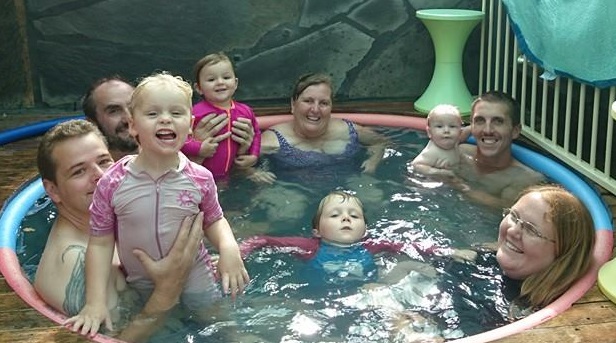
Beverley Paine with her children, and their home educated children, relaxing at home.
Together with the support of my family, my aim is to help parents educate their children in stress-free, nurturing environments. In addition to building and maintaing this website, I continue to create and manage local and national home educating networks, help to organise conferences and camps, as well as write for, edit and produce newsletters, resource directories and magazines. I am an active supporter of national, state, regional and local home education groups.
"You've been an inspiration to me, I love the way
you really listen to people." Vanessa
"Whenever I read your writing I always come away
with increased confidence in my ability to provide and
share a wonderful learning journey with my family!" Davina
"Your guidance, understanding, support and words of
wisdom changed our lives. We now offer support and
organise many homeschooling events for others." Lesley
"Thank you once again for your prompt and friendly service.
I am convinced that your books are going to add
quality and peace of mind to my journey of teaching my kids
at home! Just from studying your website, until almost
2am
in the morning, I 've been encouraged!" Louisa
"Thank you for all your many,many reassuring words
over many, many years. You probably don't know exactly how
valuable you are to the Australian Home Education community.
I've been reading your stuff for maybe 8 years or more now.
And I'm very grateful." Gythaa

CLICK HERE
if you want to learn
how to write your own education plans
to suit
your unique children's
individual learning needs?
Or you are looking for quality curriculum and teaching tips...
|
|
Welcome to the World of Home Education
and Learning without School!
We began educating our children in 1985, when our eldest was five. In truth, we had helped them learn what they need to learn since they were born. I am a passionate advocate of allowing children to learn unhindered by unnecessary stress and competition, meeting developmental needs in ways that suit their individual learning styles and preferences. Ours was a homeschooling, unschooling and natural learning family! There are hundreds of articles on this site to help you build confidence as a home educating family. We hope that your home educating adventure is as satisfying as ours was! Beverley Paine
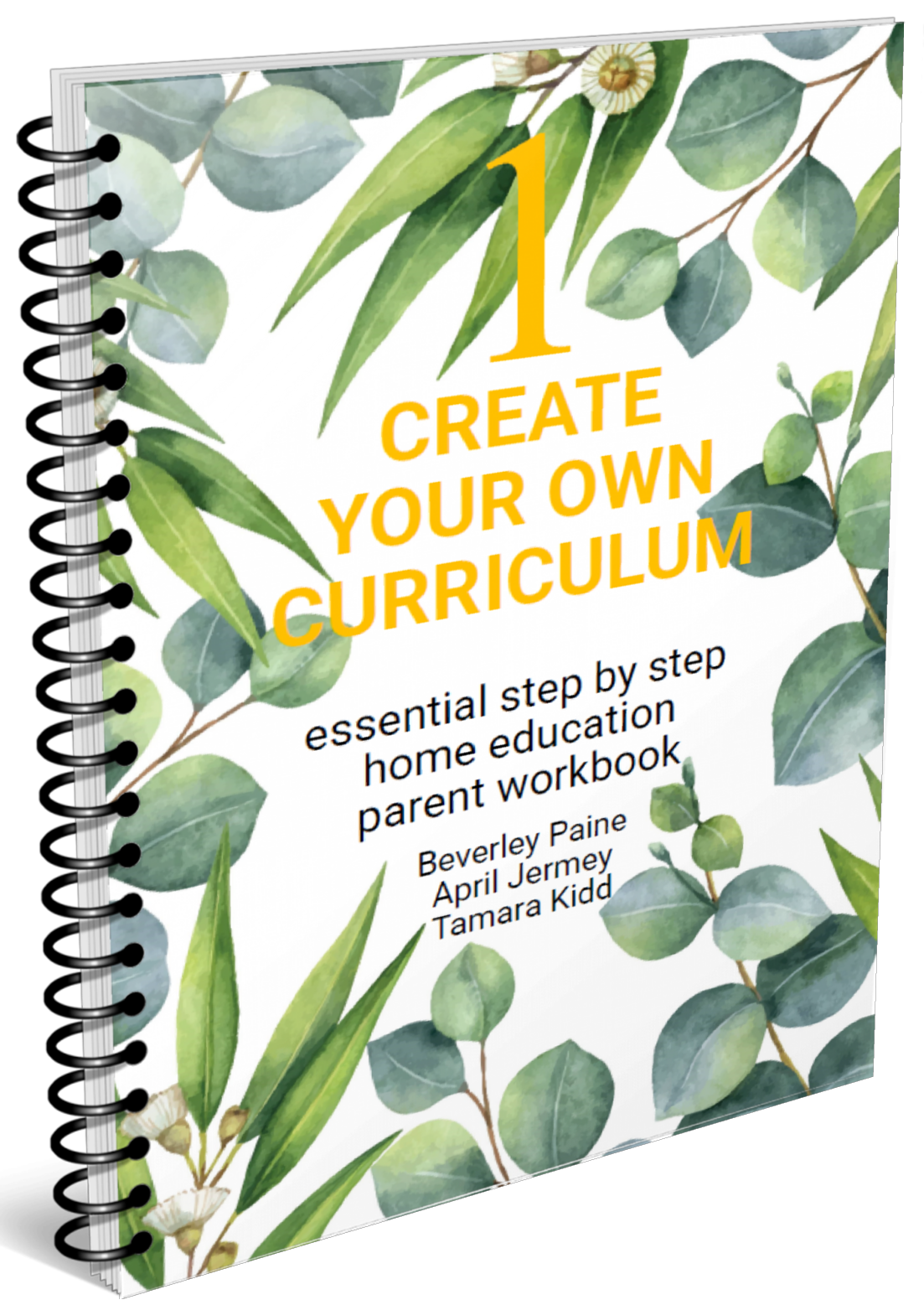
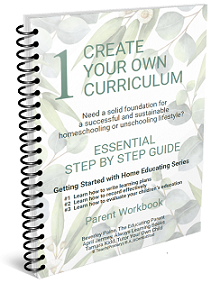
3 ESSENTIAL STEP BY STEP GUIDES
Let experienced home educators Beverley, Tamara and April walk you through HOW to create a learning plan that builds on solid foundations that works for YOUR family AND ticks all the boxes for home educaton registration!
|

Tap into Beverley's
experience
through her books
"Your books, your blogs helped me beyond words... they helped me to find comfort in knowing it is ok to choose exactly what is best for my family." Nisha
"Your books and information are mind blowing and already I am feeling good about this new experience." Diane
"Your guidance, understanding, support & words of wisdom changed our lives." Leslie
"I feel specially inspired by Beverley's words and, the more I read her comments, the more inspired I feel, since my need for support, respect for different parenting styles, and information are fully met." Marijo
|
 |
|

The information on this website is of a general nature only and is not intended as personal or professional advice. This site merges and incorporates 'Homeschool Australia' and 'Unschool Australia'.
The Educating Parent acknowledges the Traditional Aboriginal and Torres Strait Islander Owners, the Custodians of Australia, and pay our respects to Elders past and present and extend that respect to Aboriginal and Torres Strait Islander people viewing this website.
Advertise on this site.





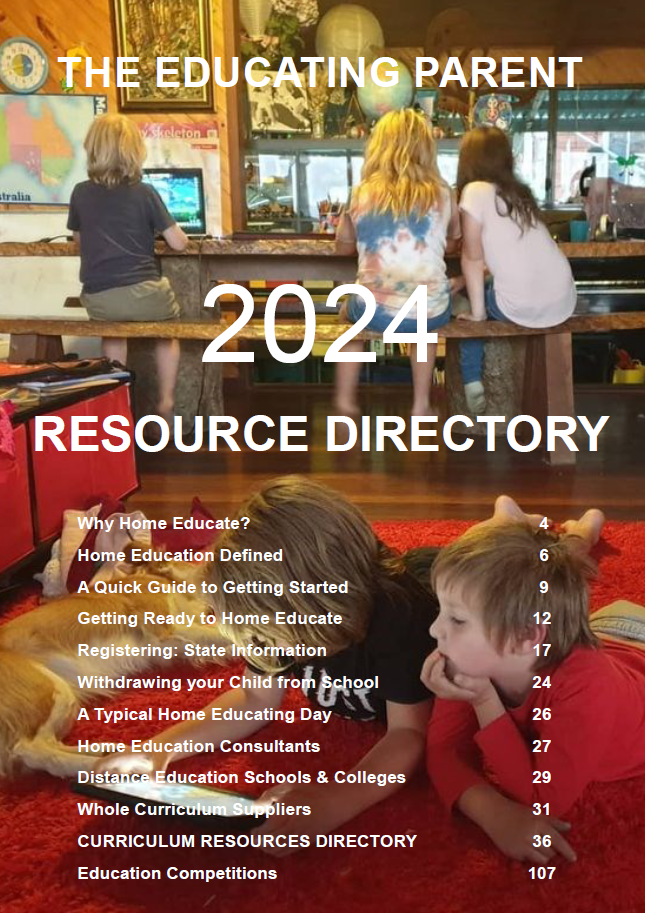
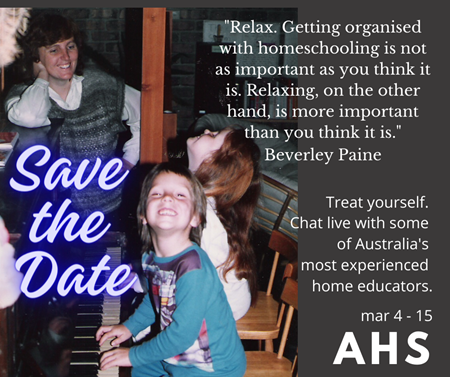
Australia's premier online annual conferences, lifetime access to video and audio recordings, freebies, notes and associated resource guides.
EVERY SUMMIT IS UNIQUE!
$29 each  2023 2023  2022 2021 2022 2021
$25 each 2020 2019 2017
"Biggest and best Aussie homeschool event of the year!"
Home education is a legal alternative
to school education in Australia.
State and Territory governments are responsible
for regulating home education and have different
requirements, however home educating families
are able to develop curriculum and learning programs
to suit the individual needs of their children.

Without revenue from advertising
by educational suppliers and Google Ads
we could not continue to provide information
to home educators. Please support us by letting
our advertisers know that you found them on
The Educating Parent. Thanks!
|
 About
About


 Thank you for visiting!