|
School Socialisation is Addictive
by Beverley Paine
From birth we are conditioned by the pervasiveness of the school system that it is necessary to be in the company of same aged children and that is how normal socialisation occurs. It isn't. It's warped and very unnatural.
No one hangs out with people all the same age year after year for 12-15 years, or didn't until compulsory education arrived only a dozen generations ago.
If every child was forced to drink cola for a dozen years and the natural alternative, water, was frowned on, drinking cola would become the social norm. After a few generations people would take it for granted that cola was essential to healthy development, despite mounting evidence that when consumed in these compulsory and large doses it was actually damaging and harmful. A few people would find cola doesn't affect adversely affect them and actually boosted their performance and enhanced their perception of success - these people would vigorously promote and promulgate the need for cola and call for greater regulation to ensure the benefits flow through to all children. However, the majority would exhibit some issues that would affect their overall health and performance but this lower standard would eventually be accepted as the norm. A few would suffer incredibly and a small amount of money might be spent trying to rehabilitate them and get them back into using it. Eventually no one would realise that their need for cola wasn't natural.
School socialisation is like that.
Because of our own school socialising experiences and those of our parents and their parents it is hard for us to feel okay about allowing our children to socialise differently.
We were taught that not having special or 'best' friends our own age means we are social failures. We're taught that the more special friends our own age we have the more successful we are: success based on popularity.
Because school is a competitive environment based on comparison the values upon which friendships are based are often distorted. For example, if our best friend this year is placed in another class next year we are no longer friends and don't hang out with each other during lunch and recess times, and possibly even after school. It's difficult to maintain the close relationship and we're expected to have friends within our own class.
School socialisation is based on the amount of time we spend with our friends. The frequency with which we are together with our friends is considered very important to maintaining those friendships. Constant companionship is reassuring because it proves loyalty which is more important than shared interests or personality.
Keeping up with the latest fashion and trends are important too. If one of our friends can't afford or her parents won't let her keep up with the latest fad then, in order to protect our 'image', we drift away from that friendship. It isn't socially good for us to be seen hanging out with 'losers'. We won't win the popularity contest that socialisation has become if we do...
Schools are deliberately structured this way. By alienating people from natural social situations, where friends are selected based on compatibility, interests, personal growth needs and companionship it is possible to manipulate whole sections of the population.
In the early years of school the bond between the child and the family (parents and siblings) need to be undermined so that the teacher and principal and school can replace the natural authority and responsibility of the family in order to manage large numbers of children.
Break that natural loyalty and the ties to family and you create additional consumers down the track, fodder for the 'economy'. In traditional societies where family bonds remain intact people - whole communities - share and recycle amongst themselves expensive resources. Economic 'growth' isn't the imperative that drives those societies.
If our children have been in the school system then they have been exposed to this very powerful and addictive socialisation process. The fact that we, their parents, have also been exposed and are in recovery means we are very vulnerable to self-doubt. We feel that what we are doing and asking of our children is radical. We feel that withdrawing our children from the socialising energies of school is a social experiment. In fact, in terms of human history compulsory schooling with its abnormal socialisation is the experiment. Given the increasing stress levels in society and accumulating incidences of mental illness I'd say the experiment is failing...
When we deschool our children and worry enormously that we're not meeting their needs, we can think about the cola example above. Our child might not be affected yet (or at all) by the addictive socialisation prevalent in society thanks to compulsory schooling and the attitude and beliefs it engenders. She might simply be an wonderfully social child who definitely needs a range of people in her life every day to thrive plus regular access to one or two special friends who are at the same developmental stage of life (not necessarily the same age!) Or she might be like the rest of us, craving something we've been coerced to believe we need, but when given in bulk and without alternatives, wears us out, makes us fractious and irritable, and leaves us confused, but still craving more.
If you liked this article and want more of the same, read:

Was this article helpful? Was it worth $1.00 to you?
Your gift of $1 or more helps to keep this site operating
offering encouragement
and reassurance to families
wanting
better outcomes for their children.
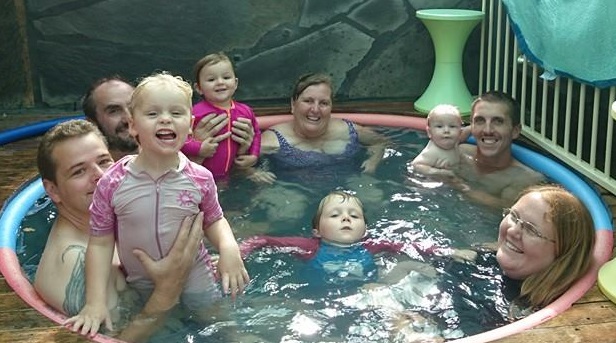
Beverley Paine with her children, and their home educated children, relaxing at home.
Together with the support of my family, my aim is to help parents educate their children in stress-free, nurturing environments. In addition to building and maintaing this website, I continue to create and manage local and national home educating networks, help to organise conferences and camps, as well as write for, edit and produce newsletters, resource directories and magazines. I am an active supporter of national, state, regional and local home education groups.
"You've been an inspiration to me, I love the way
you really listen to people." Vanessa
"Whenever I read your writing I always come away
with increased confidence in my ability to provide and
share a wonderful learning journey with my family!" Davina
"Your guidance, understanding, support and words of
wisdom changed our lives. We now offer support and
organise many homeschooling events for others." Lesley
"Thank you once again for your prompt and friendly service.
I am convinced that your books are going to add
quality and peace of mind to my journey of teaching my kids
at home! Just from studying your website, until almost
2am
in the morning, I 've been encouraged!" Louisa
"Thank you for all your many,many reassuring words
over many, many years. You probably don't know exactly how
valuable you are to the Australian Home Education community.
I've been reading your stuff for maybe 8 years or more now.
And I'm very grateful." Gythaa

CLICK HERE
if you want to learn
how to write your own education plans
to suit
your unique children's
individual learning needs?
Or you are looking for quality curriculum and teaching tips...
|
|
Welcome to the World of Home Education
and Learning without School!
We began educating our children in 1985, when our eldest was five. In truth, we had helped them learn what they need to learn since they were born. I am a passionate advocate of allowing children to learn unhindered by unnecessary stress and competition, meeting developmental needs in ways that suit their individual learning styles and preferences. Ours was a homeschooling, unschooling and natural learning family! There are hundreds of articles on this site to help you build confidence as a home educating family. We hope that your home educating adventure is as satisfying as ours was! Beverley Paine
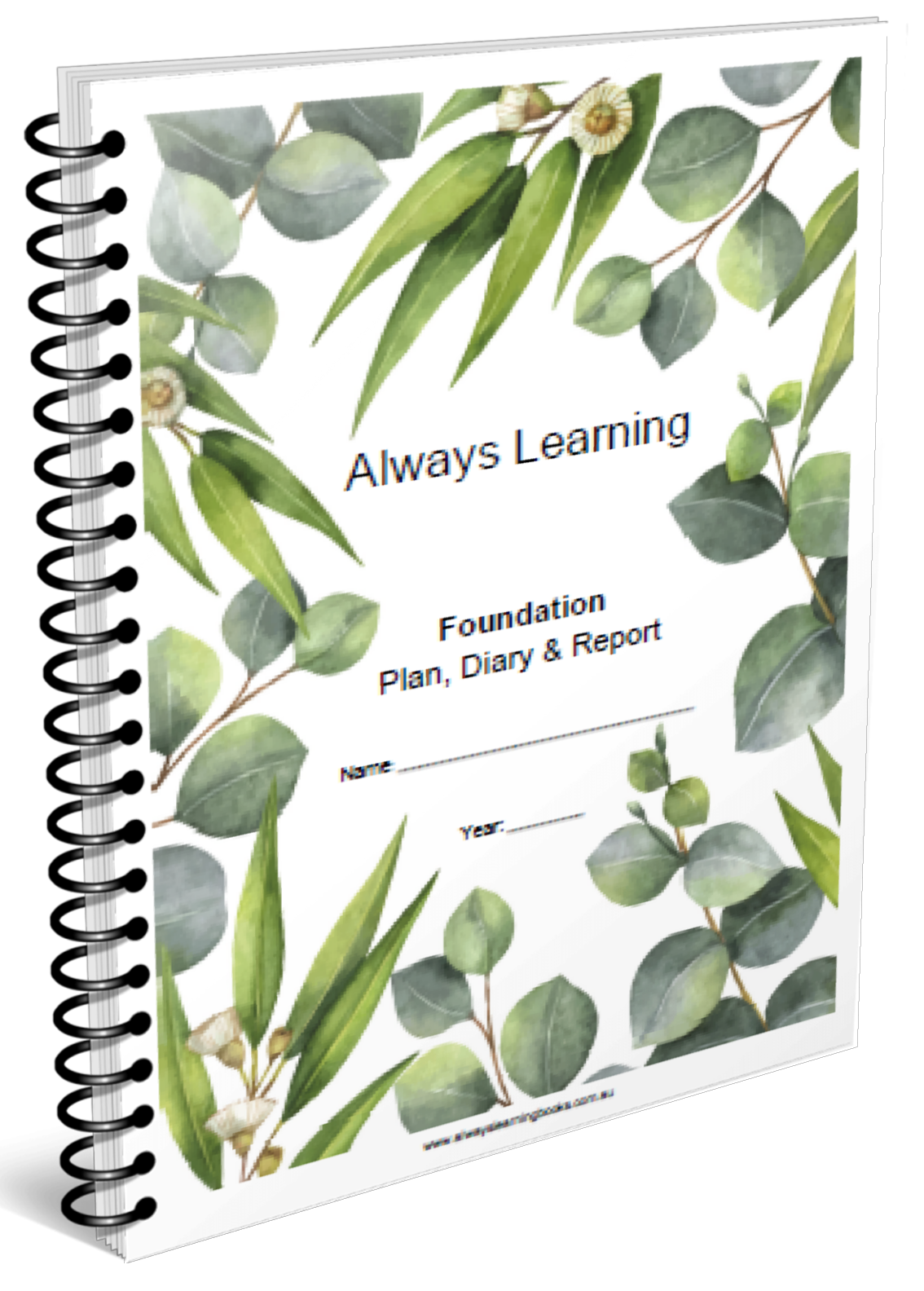
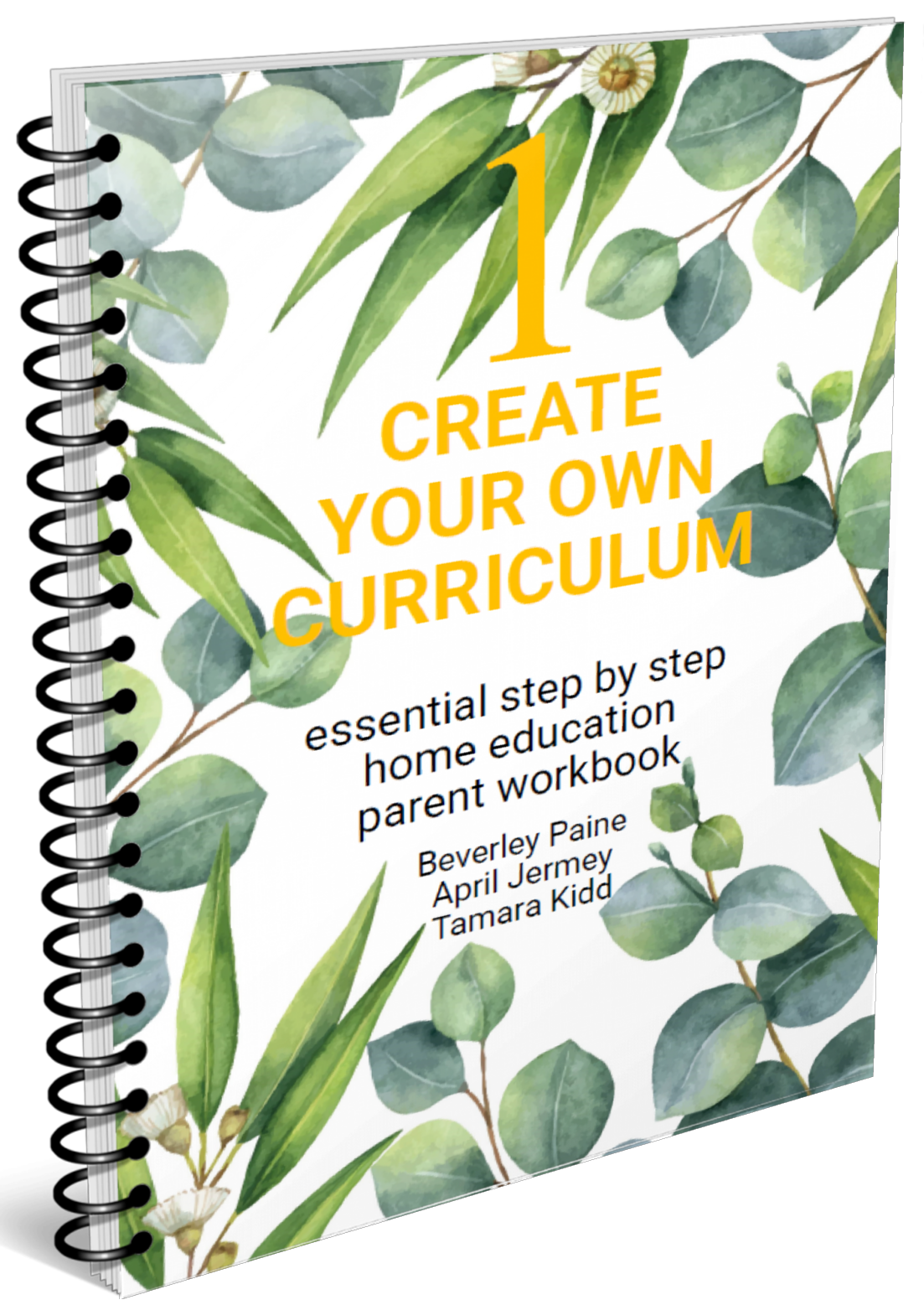
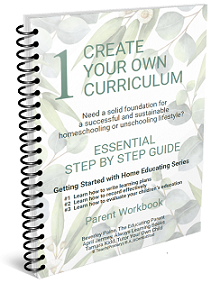
3 ESSENTIAL STEP BY STEP GUIDES
Let experienced home educators Beverley, Tamara and April walk you through HOW to create a learning plan that builds on solid foundations that works for YOUR family AND ticks all the boxes for home educaton registration!
|

Tap into Beverley's
experience
through her books
"Your books, your blogs helped me beyond words... they helped me to find comfort in knowing it is ok to choose exactly what is best for my family." Nisha
"Your books and information are mind blowing and already I am feeling good about this new experience." Diane
"Your guidance, understanding, support & words of wisdom changed our lives." Leslie
"I feel specially inspired by Beverley's words and, the more I read her comments, the more inspired I feel, since my need for support, respect for different parenting styles, and information are fully met." Marijo
|
 |
|

The information on this website is of a general nature only and is not intended as personal or professional advice. This site merges and incorporates 'Homeschool Australia' and 'Unschool Australia'.
The Educating Parent acknowledges the Traditional Aboriginal and Torres Strait Islander Owners, the Custodians of Australia, and pay our respects to Elders past and present and extend that respect to Aboriginal and Torres Strait Islander people viewing this website.
Advertise on this site.






Australia's premier online annual conferences, lifetime access to video and audio recordings, freebies, notes and associated resource guides.
EVERY SUMMIT IS UNIQUE!
$29 each  2023 2023  2022 2021 2022 2021
$25 each 2020 2019 2017
"Biggest and best Aussie homeschool event of the year!"
Home education is a legal alternative
to school education in Australia.
State and Territory governments are responsible
for regulating home education and have different
requirements, however home educating families
are able to develop curriculum and learning programs
to suit the individual needs of their children.

Without revenue from advertising
by educational suppliers and Google Ads
we could not continue to provide information
to home educators. Please support us by letting
our advertisers know that you found them on
The Educating Parent. Thanks!
|
 About
About


 Thank you for visiting!